
Behind the Cork™ - Book Review: Find Your Wine Identity by Sandra Guibord

Find Your Wine Identity by Sandra Guibord ($26)
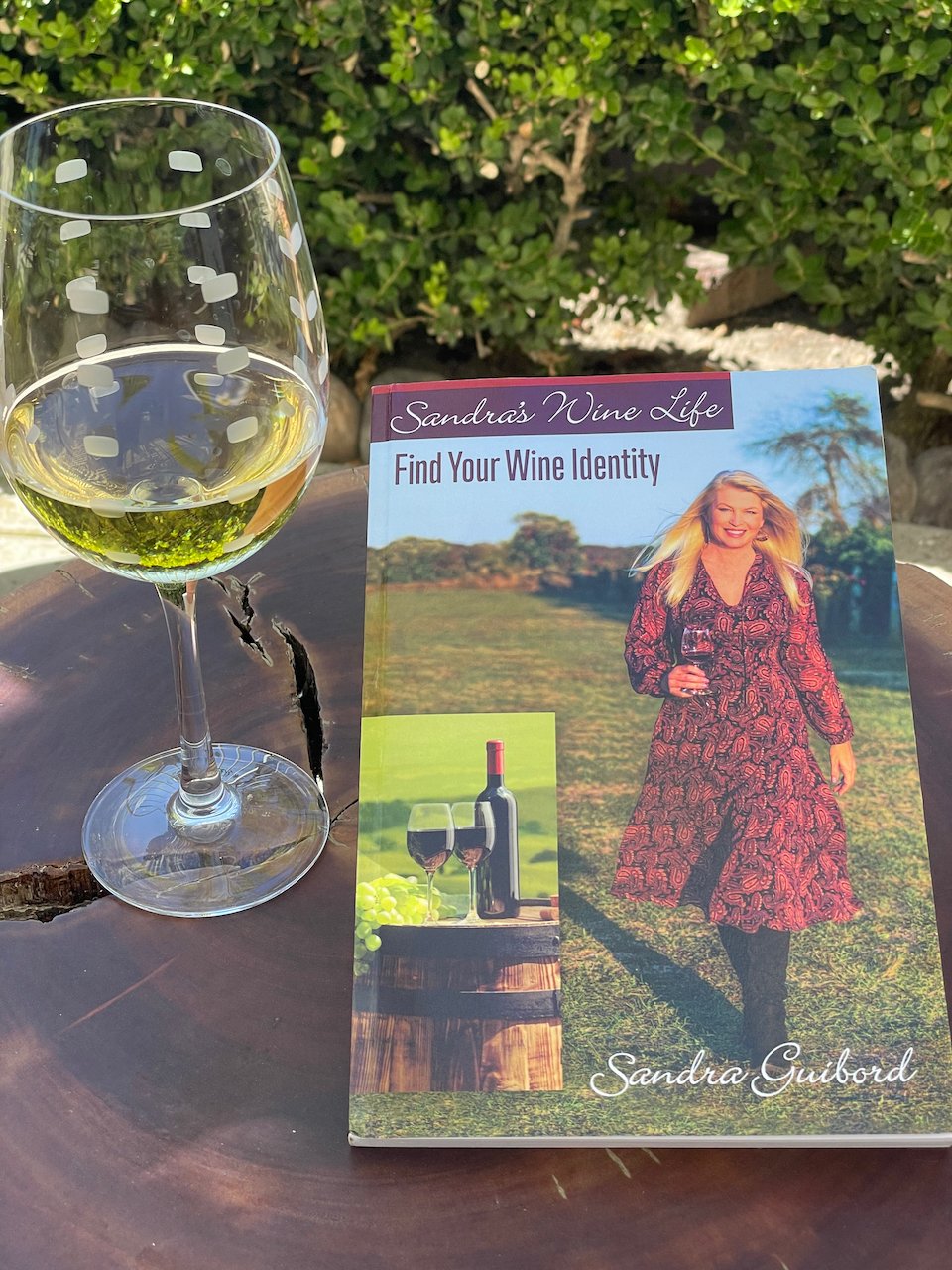
For a change of pace here on Behind the Cork™ let’s take a look at an interesting book on wines.

Sandra Guibord’s Find Your Wine Identity is an easy read that takes you through the seasons of the year and encourages you to explore new and different wines “…to break out of your ‘wine rut'.”

Find Your Wine Identity offers suggestions on how to turn your year-round entertaining into memorable events. With Sandra's natural, engaging style, she leads beginners and wine connoisseurs through the seasons, sharing ideal wine choices, tasty recipes for perfect wine-pairing, and notable tips to make every event truly special. She also includes wine histories for great party conversation. With carefully selected information presented in a casual, fun format, this book will help readers find a wonderful wine life of their own!

If you are looking for a good book to help learn about wines, or are looking for a holiday gift for a wine-lover, Sandra Guibord’s Find Your Wine Identity is a good choice. Cheers!
Not All Sparkling Wine is Champagne

It’s true that Champagne is a sparkling wine, but not all sparkling wine is Champagne.

Only sparkling wine produced in the small French region of Champagne may legally be labeled 'Champagne.'  And because of this region's northern location and cool weather, three grapes have been found to grow best and hence became the basis for Champagne: Pinot Noir, Pinot Meunier and Chardonnay.  To this day, most Champagne relies on these grapes. But, Champagne producers are also allowed to use Pinot Blanc, Pinot Gris, Petit Meslier and Arbane. When these latter grapes are used, they are typically used in very small quantities.

Champagne is actually a blended white wine that undergoes a second fermentation. Once each of the individual wines are produced, they are blended per the winemaker's liking and bottled. After the wine is bottled, a small amount of sugar and yeast is added to the bottle and then each individual bottle is tightly corked.  As the newly introduced yeast consumes the added sugar, it gives off carbon dioxide (CO2). Since the CO2 gas has nowhere to go, it stays in the bottle and is absorbed into the wine.  Then, when the cork is removed from the bottle, the gas is able to 'escape' from the wine. These are the famous bubbles in Champagne.  And generally, the bubbles in Champagne are smaller and longer lasting than other sparkling wines.

Unlike most wines, Champagnes are produced as both vintage and non-vintage. The non-vintage Champagnes allow the winemaker to select and blend grapes from different vintages (i.e., years) to achieve the best flavors. But, when there is a particularly good year for the grapes, the Champagne may be vintage bottled and usually commands a higher price.

So, just remember…all Champagne is sparkling wine, but not all sparkling wine is Champagne. Cheers!

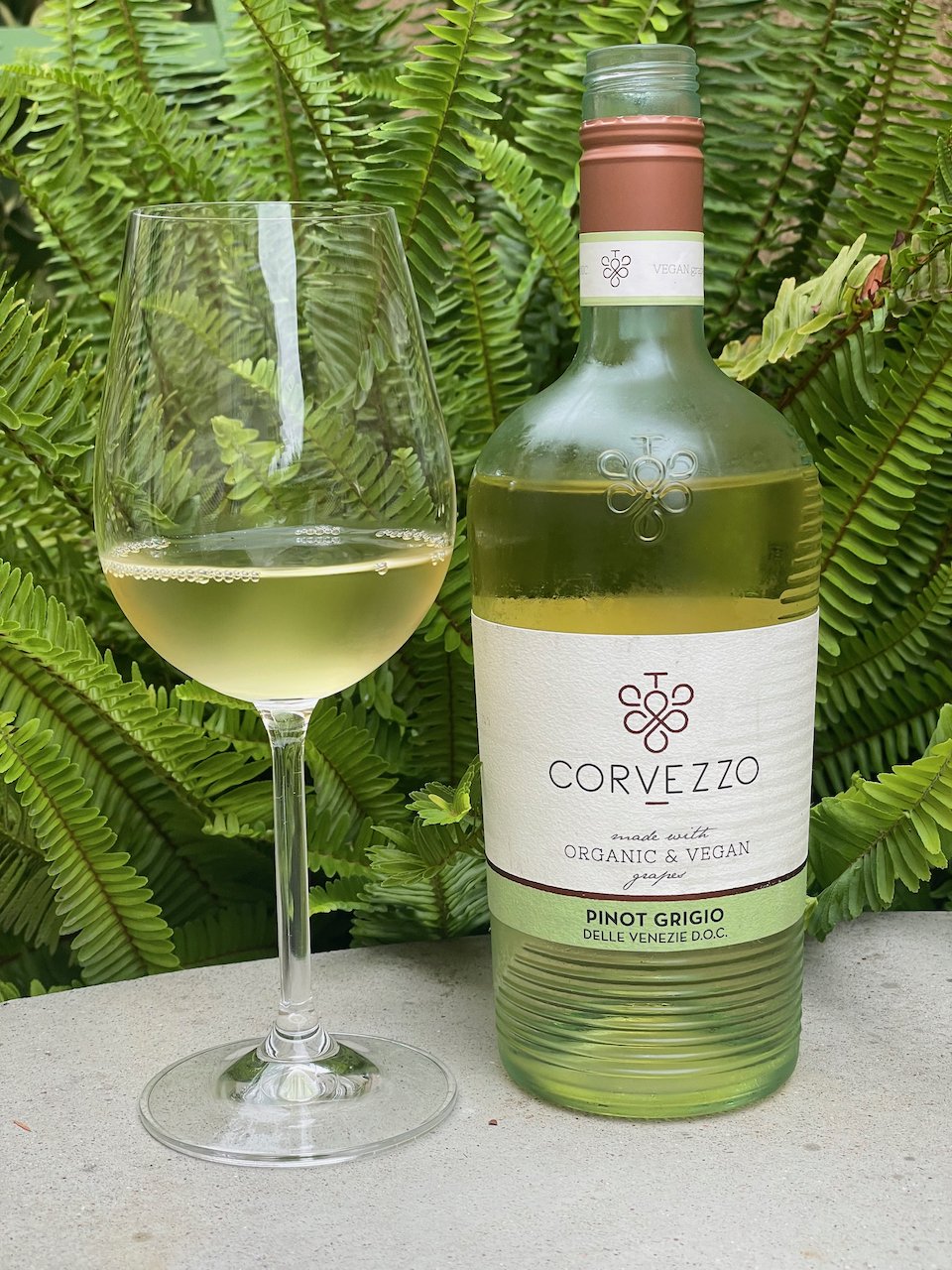
Behind the Cork™ - Corvezzo Pinot Grigio

2020 Corvezzo Pinot Grigio ($13)

Corvezzo is the leading name in organically grown, vegan wines from northeast Italy’s Veneto region.

Founded in 1960, the winery is in the village of Cessalto near Treviso, a sweet spot in the Veneto between the cool Dolomite Mountains and the sunny Adriatic Sea.

Family-owned and run, Corvezzo has the largest acreage in Italy of certified organic Glera and Pinot Grigio grapes. According to owner/winemaker Giovanni Corvezzo, his wines have not only adapted to organic farming - they have thrived, becoming stronger, with better balance and producing higher quality fruit. The signature wine style for him is fresh and bright.

This Corvezzo Pinot Grigio is produced from 100% Pinot Grigio grapes that underwent a soft cold crushing and pressing and were aged in concrete tanks (95%) and oak barrels (5%). It is straw yellow in color with gold glimmers. One the nose it has subtle hints of citrus, lemon and some minerality. On the palate it is light in body with peach, cantaloupe and nectarine, moderate acidity, smooth mouth-feel and just an ever-so-subtle hint of sweetness on the finish.

This Corvezzo Pinot Grigio is great tasting and very affordable, making it a great fit as the Behind the Cork™ Wine of the Week. Cheers!


The Best Type of Wine Opener: A Double-Hinged Waiter's Corkscrew

In the past, I had always used a traditional corkscrew to open a bottle of wine. Now, I use nothing but a wine key or waiter’s corkscrew.

A traditional corkscrew has two arms that lift and a top pull that twists. A wine key, sometimes called a waiter’s corkscrew, has a small knife for cutting the foil capsule that covers the cork and uses a metal fulcrum positioned on the lip of the bottle to create leverage to lift the cork up and out.

A double-hinged waiter’s corkscrew allows you to pull the cork in two steps because it has a double lever system.

Using one may at first seem complex but it’s actually quite simple.

  • Place the tip of the screw or “worm” at the center of the cork

  • Press down lightly as you twist the corkscrew down into the cork

  • Keep turning until just one loop of the corkscrew is left above the cork

  • Bend the hinge so that the curved notch sits on the lip of the bottle

  • Hold the notch against the bottle lip for leverage with one hand and pull the corkscrew up with the other hand

  • Then, switch to the second notch and continue pulling the cork out of the bottle (bottom photos)

  • Once the cork is out of the bottle, twist the cork off the worm by hand

It may take some practice to use the waiter’s style corkscrew but once you get the knack, you’ll never go back to what you were previously using. Cheers!

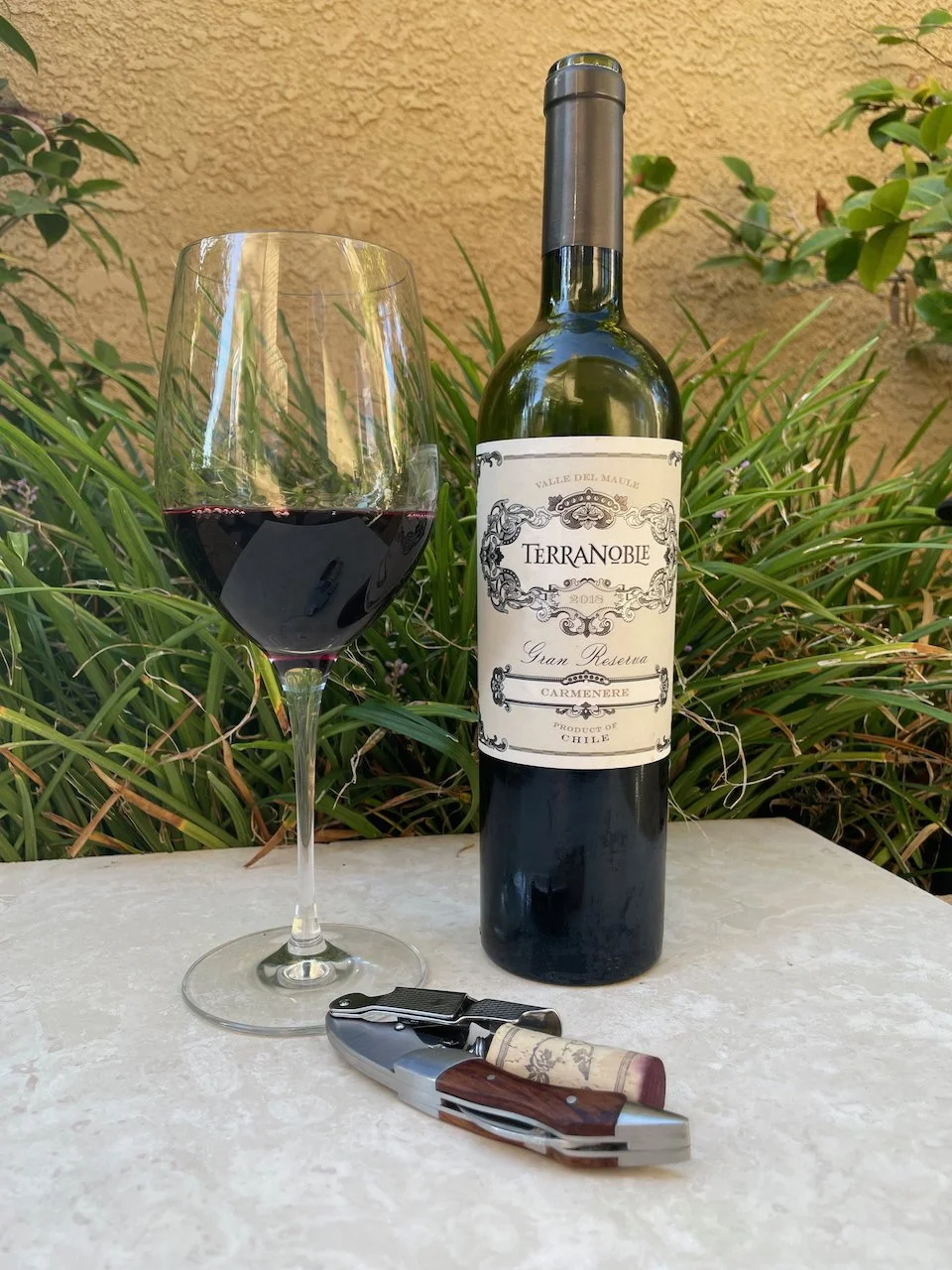
Behind the Cork™ - TerraNoble Gran Reserve Carmenere

2018 TerraNoble Gran Reserva Carménère, ($18)

The TerraNoble winery was founded in 1993, and has produced high quality wines that have been recognized and awarded. The winery is located in the Maule Valley of Chile and the vineyards are in the Maule, Colchagua and Casablanca valleys. Their philosophy is to produce elegant, noble and pleasant drinking wines, with fruit-bearing flavors and aromas that maintain the characteristics of each variety.

This Gran Reserva Carménère, (kar-men-nair) is produced from 100% Carménère grapes that were placed in stainless steel tanks for a cold maceration of 4 to 5 days. Fermentation took place for between 8 and 12 days. After that, the wine had a post-fermentation maceration of one to two weeks, depending on each lot
and on daily tastings. Once the vatting process was finished, it was racked directly into French oak barrels and foudre where it underwent malolactic fermentation. It was then aged for up to 12 months with 70% of the wine being aged in previously used (2 or 3 times) French oak barrels and 30% in un-toasted foudre for 12 months. It was then bottle aged for at least six months before being released.

This wine is deep ruby in color with medium aromas of plum and black berry with peppery notes. On the palate this full-bodied wine has good flavors of black cherry and black plum with peppercorn. It is medium in tannin and medium in acidity and exhibits just a hint of oak.


This TerraNoble Gran Reserva Carménère is a really nice wine at a terrific price. Keep an eye out for this one as well as their Cabernet Sauvignon that was featured earlier this year. Cheers!


Disclosure of Wine Sample Submission: I received this sample at no cost for review. The opinions expressed are entirely my own.

Sample Provided by TerraNoble Winery (via Creative Palate)