
Ever Wonder? - What is 'Priming' or 'Seasoning' a Wine Glass?

There is a process used by some restaurant wine servers and Sommeliers that, at first might seem a bit odd or even a bit pretentious. When you order a bottle of wine, they first pour a small amount of the wine in your glass. They’ll swirl it around inside the glass. Then, they’ll dump it! And, your first reaction may be “Hey! That’s my wine you’re dumping out!” But, there’s an explanation.

As you’ve probably guessed, this process is called ‘Priming’ or ‘Seasoning’ the wine glass. And, it’s done for a couple of reasons.

First, this may be done to ensure there are no other residual undesirable “aromas” in your wine glass. These could include odors of dish washing detergent, musty cabinets, cardboard boxes or wooden cabinets. Not the kind of aromas that your server wants you to experience with your first sip.

A second reason this may be done is simply to enhance the wine’s aroma, even in a perfectly clean and odor-free glass. This process of swirling the wine and dumping it coats the entire inside of the wine glass with the wine and fills the bowl with the wine’s aroma.

Both of these reasons for priming or seasoning your wine glass ensure that you get the optimal wine experience right from the start.

So, if you experience this process being used on the bottle of wine that you’ve ordered, don’t fret. You’re going to have a great wine experience. Cheers!
Ever Wonder About the 'Legs' You See in a Wine Glass?

It’s something that you see wine drinkers do - swirl their wine glass and then look at the ‘legs’ that run down the inside of the glass. And, often they’ll equate the quality of the wine with the legs by saying things like “Oh!…this wine has really great legs.”

It’s a real phenomenon, that involves some chemistry and physics, but I won’t bore you with the details.

The simple explanation of the ‘legs’ in a wine glass is that it’s all about the alcohol.

The droplets that form and move down the sides of the glass after the wine is swirled are a product of the fact that alcohol (ethanol) in wine, evaporates more quickly than water. The alcohol crawls up the glass as it evaporates, but since there is a film of water on top, it is pushed up in an arch. Eventually gravity causes the water's surface tension to be broken, allowing the water to run down, in ‘tears’ that form ‘legs.’

If you really want the technical details on this effect, look up the Marangoni effect.

So, yes, a great wine can exhibit great legs inside a wine glass. But the truth is that any wine can do that. Cheers!

How to Deal with Highly Tannic Wines

Last time we learned that some red wines can make your mouth feel dry due to the natural tannin in the wine that comes from the grape’s skin, seeds and stems. But, if you don’t care for highly tannic wines, there are some things you can do.

The tannins in a red wine will ‘soften’ with age. A young wine may be highly tannic but after several years of aging, the tannins will naturally become less harsh. So, aging is one option.

But, a lot of people don’t buy wines to stick away. They want to drink them now. So, there are other options if you pull the cork and realize the wine is a bit too tannic.

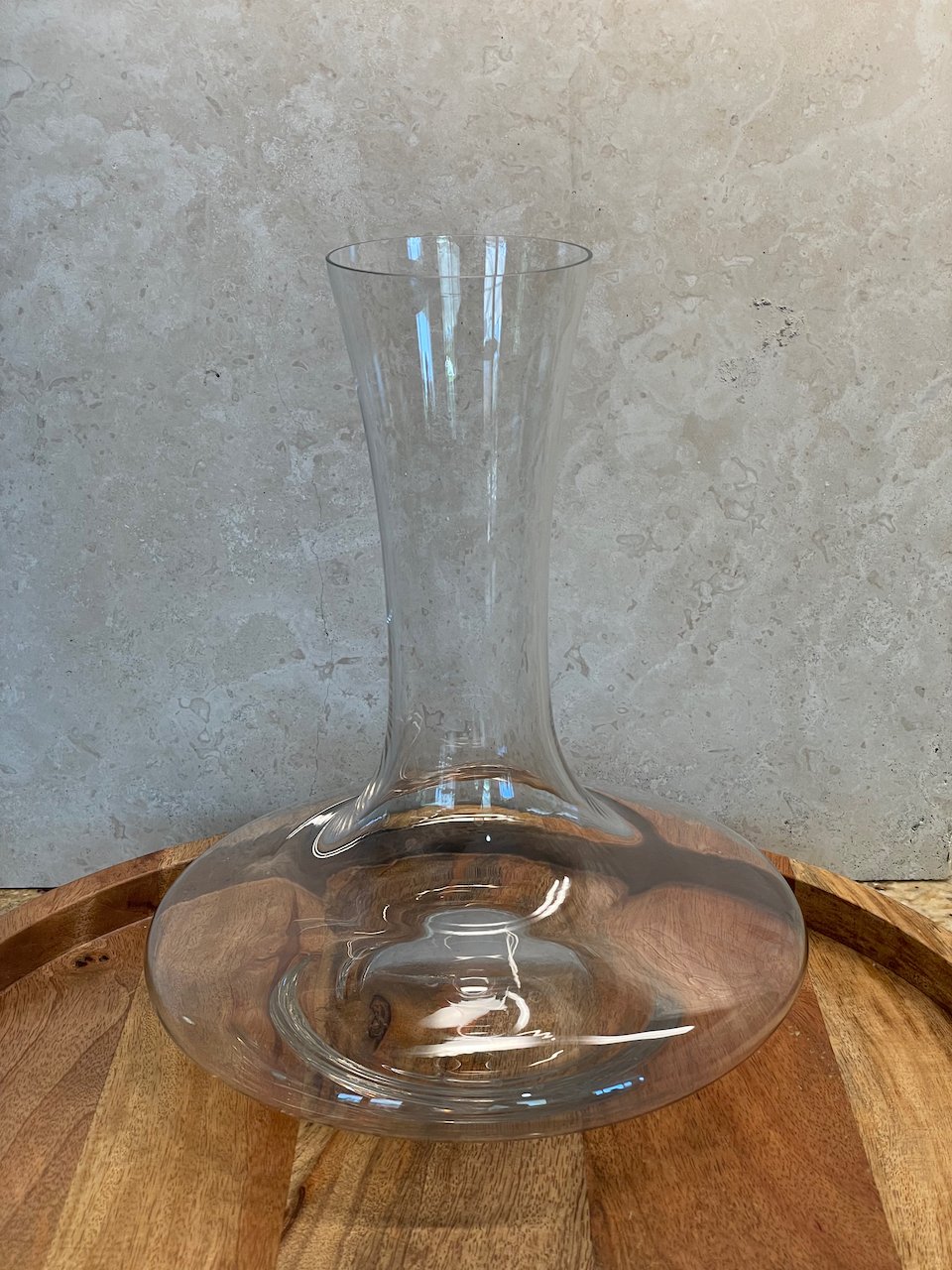
One option is to expose the wine to air. And, just pulling the cork and letting the opened bottle sit for a while isn’t sufficient. You’ll need to decant the wine. And you don’t need to have a fancy crystal decanter to do this. Really, any vessel will work. But, the key is to allow the wine to get as much exposure to air as possible. That’s why decanters, such as the one shown in the image, are large and have wide bottoms. Once an entire bottle of wine is poured into this type of decanter, it only fills the base. This gives the wine a large surface area that is exposed to air. For really tannic wines, they may need one to two hours in the decanter before they begin to soften. But remember, a decanter won’t turn a bad wine into a good one. It will just take a good wine and soften it up a bit.

Another method of helping soften harsh tannins is by aerating the wine. And this starts by just pouring the wine from the bottle to a decanter. Or, there are plenty of aerators that can be purchased that immediately mix air with the wine as it is poured whether directly into the wine glass or into a decanter.

Finally, if you are dealing with a highly tannic wine, pairing it with fatty or creamy foods will really help. That’s why wine and cheese work so well together. Just as pairing a nice steak is a natural with red wine.

So, don’t let that dry-mouth, astringent sensation scare you away from red wines. They can be some of the best there are. Cheers!

Ever Wonder? - Does White Wine have to be Chilled?

A few months back a friend of mine told me that, in the past, he really didn’t like white wine. He said white wines just didn’t have as much flavor as red wines. He preferred the flavors of a red wine.

But, on a wine tasting trip he went ahead and tried a Chardonnay. And he really liked it!

What was immediately obvious to him was that the Chardonnay was very lightly chilled as opposed to refrigerator temperature.

His experience with white wines had all been with very cold white wines. And the chill had taken all the flavor out of the wine.

This is indeed true. And, often the reason that people like their wines (including red wines) heavily chilled — to make them have less flavor.

So, the answer to the question is no, white doesn’t have to be chilled at all. But a light chill will allow you to experience the white wine as it was intended by the winemaker.

A rule-of-thumb that I’ve always used is that for white wine is that you should take the bottle out of a standard refrigerator (which is typically 35-40 degrees F) approximately 30 minutes before you want to serve it. That should leave a chill on it. Or, if you own a wine refrigerator, you probably already know that it should be set to approximately 50 degrees F for white wines.

But, as my friend found out, the serving temperature of wine generally is a matter of personal preference. Whatever your preference, enjoy!

Tips on Letting a Wine Breathe

Years ago, I was visiting a friend who knew I enjoyed wines and wanted to share a bottle with me.  They opened the bottle and took a sip.  With a look of disappointment on their face, they proclaimed that the wine need some time “to breathe.” So, with the cork extracted, the bottle sat for an hour. At the end of the hour, the wine was proclaimed to be ready.

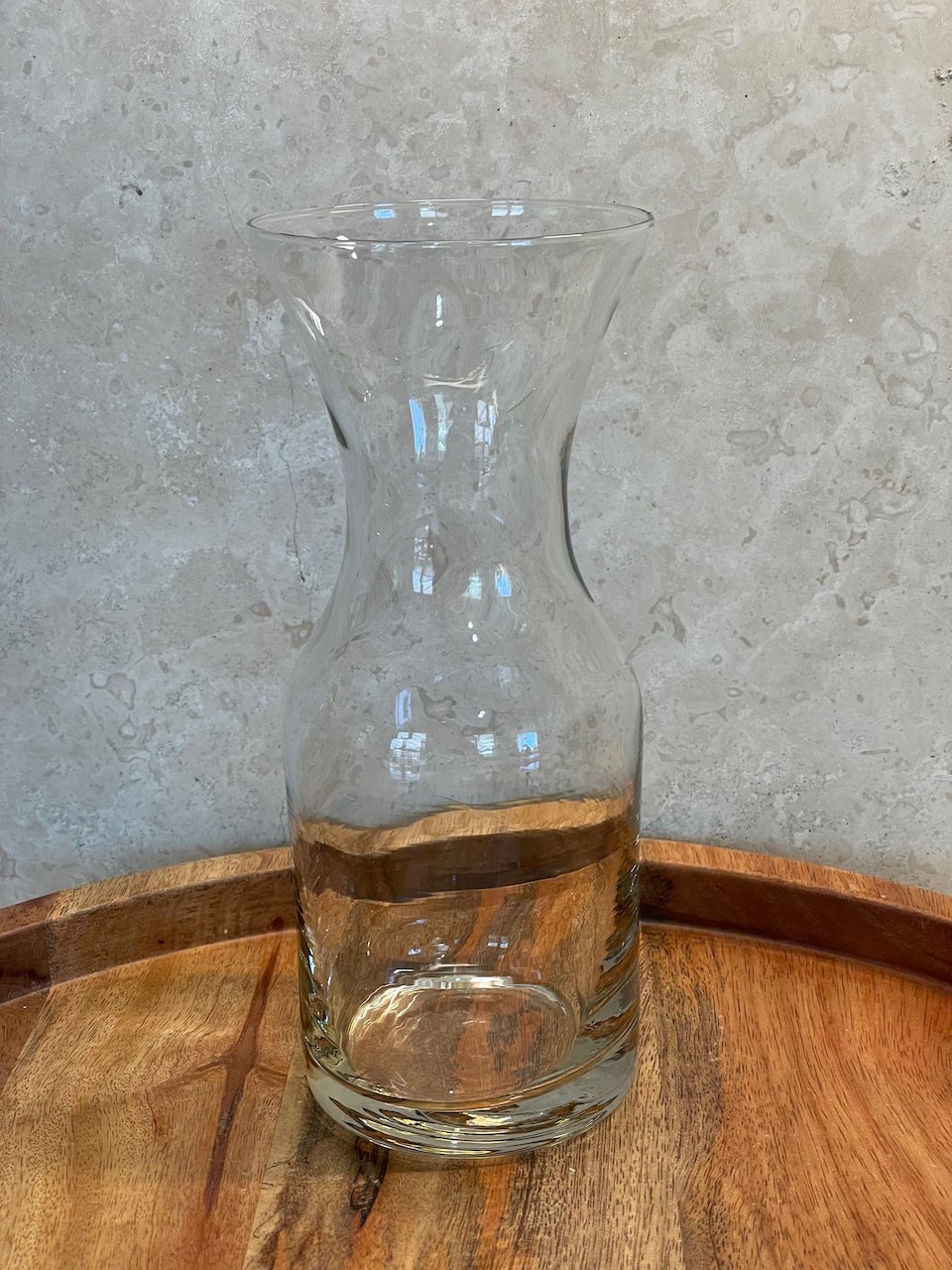
I've also encountered those who use a decanter to allow their wine to breathe.  But, all too often, the decanter ends up looking like the one pictured here. It's a beautiful carafe and it's a great addition to a bar or table for serving wine. Unfortunately, it's a bit too narrow. It doesn't give the wine enough room to truly breathe. But, compared to leaving the wine cooped-up in its bottle, this type of decanter is a definite improvement. Not only does it give the wine a bit more space, it also allows the wine to catch a bit of a breath as it's being poured from the bottle to the decanter. And, after an hour or two, the wine should begin to show signs of opening up and settling down a bit.

But to really give a bottle of wine a chance to breathe, you'll need some type of decanter that allows the wine to spread out and have a lot of surface area in contact with air.  The wide-base decanter pictured here is a great example. And, it's designed such that a single bottle of wine just fills the bottom and allows for the maximum amount of the wine's surface area to be exposed to air.

This whole discussion may leave you asking "Why do you want to intentionally expose wine to air? Doesn't that make the wine go bad?"  And, those are great questions. For answers, see my past blogs on "Why Decant Wine?" and "When to Not Decant a Wine."

Here's to enjoying whatever you drink! Cheers!