A Tour of Wine Grapes: Gewurztraminer

Gewürztraminer

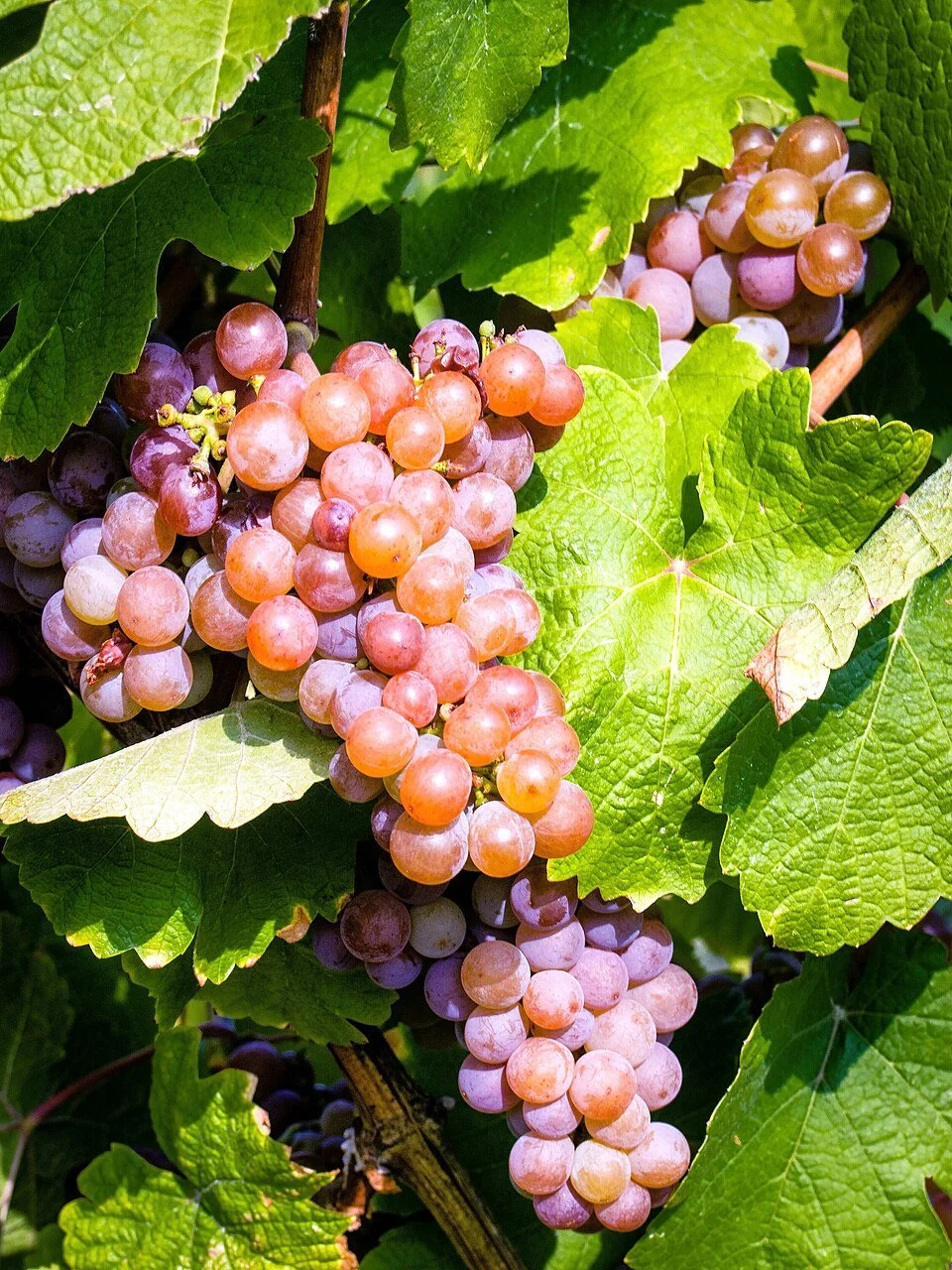
Gewürztraminer (guh-VURZT-tra-mee-ner) has been around for centuries in Europe and prized for its wines with intense floral aromas.

Its name is derived from the German word "Gewürz," meaning "spice" or "perfumed," reflecting its bold fragrance. And, the grape is a mutation of the ancient Traminer (Savagnin Blanc) variety.

Today, Gewürztraminer is grown throughout the world with Argentina and Moldova being the largest producers followed by Italy, U.S., Ukraine and Australia.

While Gewürztraminer grapes produce white wine, the grapes have distinctive pink to reddish skins. This often gives the wine a golden-copper color compared to other whites.

Gewürztraminer wines tend to be medium to low in body, low in acidity, but have a higher level of perceived sweetness even when all the sugar has been converted to alcohol through fermentation.

Aromas sometimes attributed to Gewürztraminer include soap, potpourri, or cheap perfume because of its bold floral aromas. But, most agree the aromas are most like lychee and rose petals.

Gewürztraminer is associated with flavors of grapefruit, apricot and tangerine and often has a oily or viscous mouthfeel.

Because of Gewürztraminer’s low acidity, it should be consumed young and typically only keeps for 2-5 years.

Serve Gewürztraminer ice cold (38-45 F) in a white wine glass. No decanting required.
A Tour of Wine Grapes: Gamay

Gamay 🍷

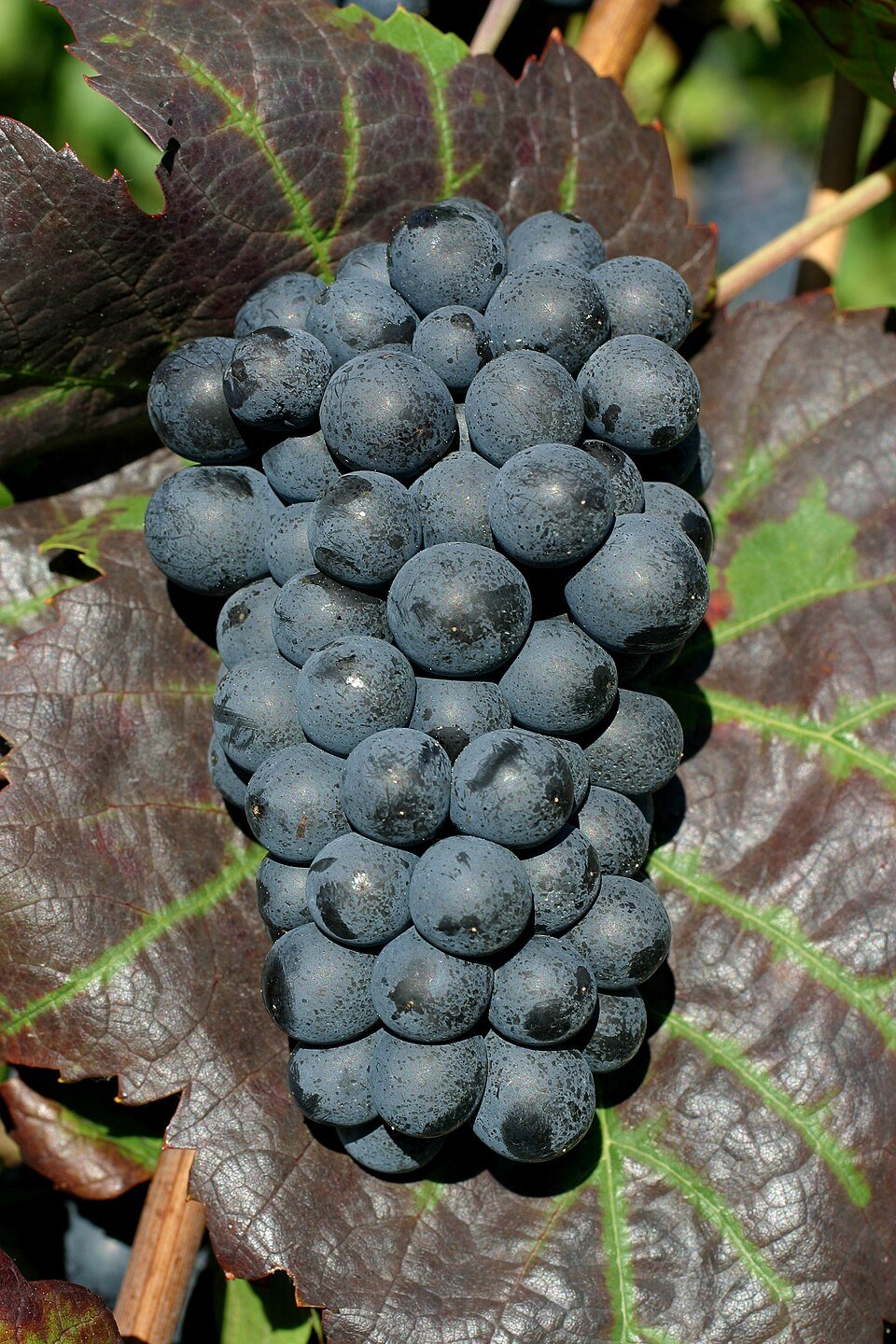
Gamay (gam-may), commonly referred to as Gamay Beaujolais, is almost entirely grown in France and Beaujolais (in the Loire Valley) is its home.

Gamay is a natural cross between Pinot Noir and Gouais Blanc (a very obscure grape). But, a direct relationship with Pinot Noir!

Gamay has a unique past. In 1395, Duke Philippe the Bold of Burgundy actually banished the grape, calling it "vile and disloyal". He preferred the more "elegant" Pinot Noir and feared Gamay’s high productivity would dilute the region's reputation. This ban forced the grape from Burgundy to move south to Beaujolais, where it has flourished.

Gamay wines are light in body and low in tannin, alcohol and sweetness. They’re medium in acidity.

Aromas associated with Gamay include strawberry, raspberry and red cherry with floral notes.

Wines made from the Gamay grape are made using Carbonic Maceration which is a process where the grapes are fermented as whole grapes in a carbon dioxide filled tank that can result in distinct aromas and flavors of banana, bubblegum and even cotton candy!

Nouveau Beaujolais is its own unique story that is made from Gamay grapes that are harvested, fermented and bottled for immediate consumption.

Other than Nouveau Beaujolais, Gamay wines may be cellared briefly (1-5 years).

Gamay is one of the few red wines that is best served with a slight chill (around 54–55°F) to highlight its fresh fruit characters. Serve in an bowl-shaped red wine glass to capture aromas. No decanting required.

A Tour of Wine Grapes: Dolcetto

Dolcetto 🍷

Dolcetto (dol-chet-to) is a black wine grape variety almost exclusively grown in the Piedmont region of northwest Italy. While its name translates to "little sweet one" the wines produced from this grape are anything but sweet and actually can have some tartness.

Historically, winemakers called Dolcetto their "cash flow" grape. Because it ripens so early and is meant to be drunk young, farmers could sell it to pay their bills while their Nebbiolo and Barbera wines were still aging in the cellar for years.

Surprisingly, the oldest surviving Dolcetto vines in the world aren't in Italy—they are in Australia, with some plantations dating back to the 1860s.

Dolcetto wines are usually medium to medium-full bodied, with low acidity and higher in tannin.

Aromas include red and black fruits such as black cheery, plum and blackberry. Floral notes include violets and lavender.

Flavors include black cherry, blackberry, plum and licorice.

Because Dolcetto is low in acidity, it doesn’t age well and should be consumed young (2-3 years).

Dolcetto should be served in a red wine glass at 60-68 °F after decanting for 30 minutes.

A Tour of Wine Grapes: Colombard

Colombard (or Colombar)

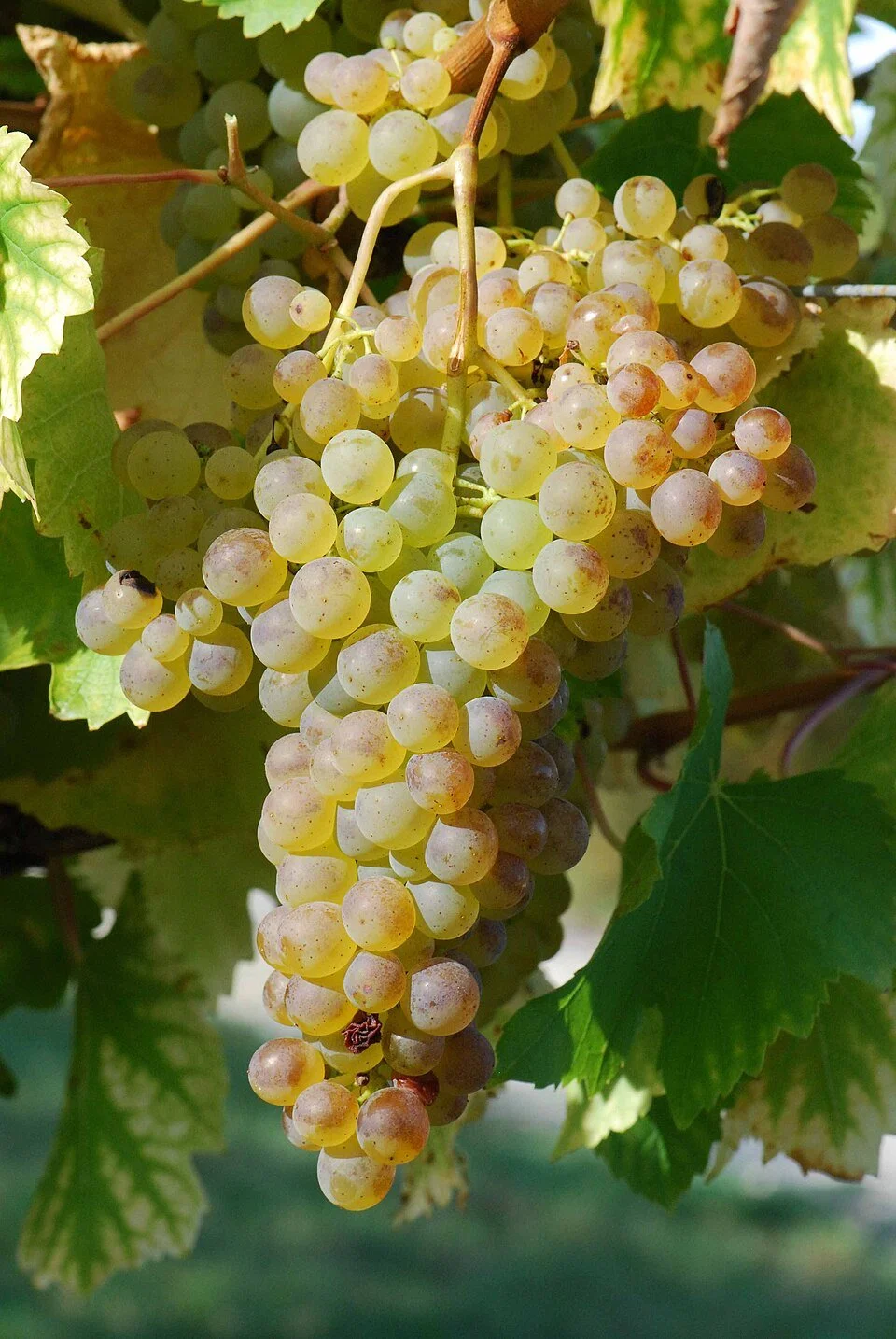
Photo from Pancrat on Wikimedia Commons

The name Colombard likely comes from the French word for dove, "colombe". Legend has it that the grape was so named because its white, dusty berries match the color of a dove's plumage.

It is a natural cross between Chenin Blanc and Gouais Blanc. This makes it a sibling to Chardonnay and Riesling.

Colombard was among the most-planted white grape varieties in France but is also found in California’s Central Valley, Texas as well as South Africa, Australia, Thailand and Israel.

Before Chardonnay took over in the 1990s, Colombard (often called "French Colombard" in the U.S.) was the most planted white grape in California.

Historically a "workhorse" grape in blending, it has played a major role in both distilled spirits (Brandy) and mass-market "jug wines.” For decades, it was the grape used in nearly every generic "Chablis" or "Hearty White" jug wine sold in the U.S.

But, in the recent past, French wine producers have began using Colombard to make white wine.

Typically light-bodied and crisp (acidic), it often features notes of green apple, lime, grapefruit, and white peach

Because of its neutral flavor and high acidity, it is frequently blended with more aromatic grapes like Sauvignon Blanc, Chardonnay, or Chenin Blanc.

Colombard should be enjoyed young and fresh but because of its high acidity, it can be aged 3 to 5 years with some premium versions being easily aged for 10 or more years.

Serve Colombard wines well chilled (45°F and 50°F) in a white wine glass with a U-shaped bowl.

No decanting necessary.

A Tour of Wine Grapes: Cinsault

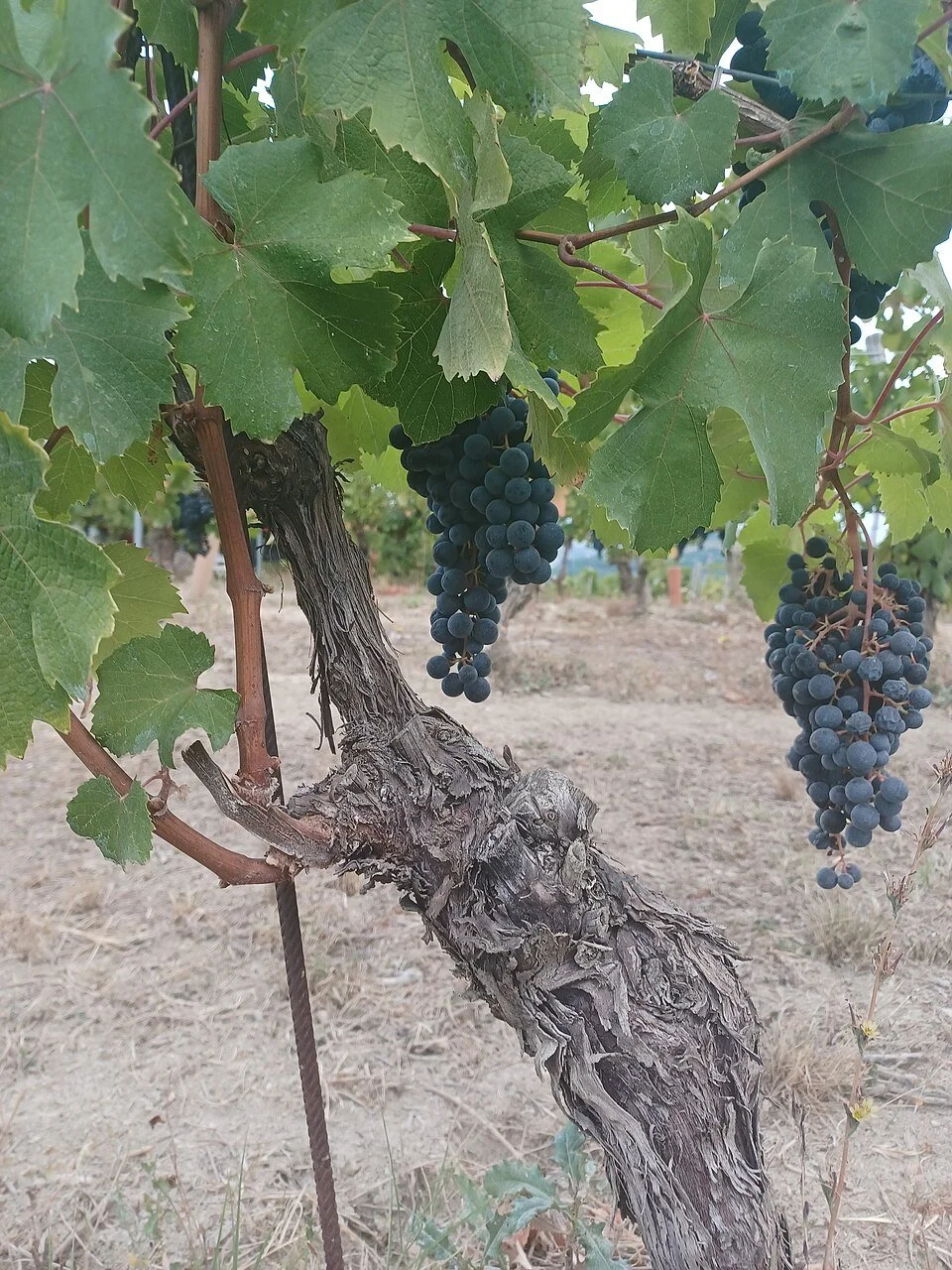
Cinsault 🍷

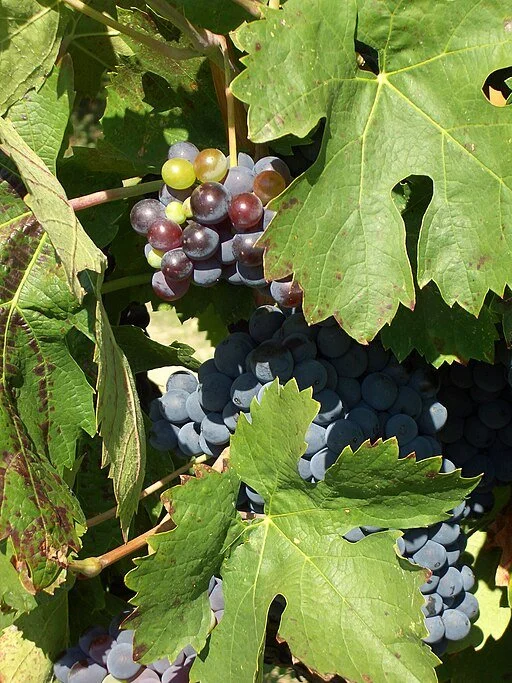
Image by Allie Caulfield on Wikimedia Commons

Cinsault (sin-so) is also known as “Cinsaut.”

Cinsault vines have been grown for centuries in southern France, making it one of the oldest grape varieties found in the region. It has traditionally been used in Southern Rhône blends along with Grenache, Syrah and Mourvèdre.

It is one of the permitted minor grape varieties in the Châteauneuf-du-Pape blend and widely used for the production of rosé wine in Provence.

As a varietal, it is brick-red in color with floral aromas and strawberry. On the palate, it is a light-bodied wine that is low in tannins and low in acidity.

When wines are produced from older vines ( >20 years) they can have more sweet spice flavors.

In blended wine, it imparts floral and strawberry-like aromas.

As a rosé, it provides aromas of raspberry, white peach, tea leaf and rose petals with flavors of tropical fruits of lychee, guava and papaya.

Cinsault can be aged a bit (5-7 years).

It should be served at 60 to 68 °F in a large bowl red wine glass.

Decanting is not usually necessary but can be done for up to 30 minutes.