

Gewürztraminer
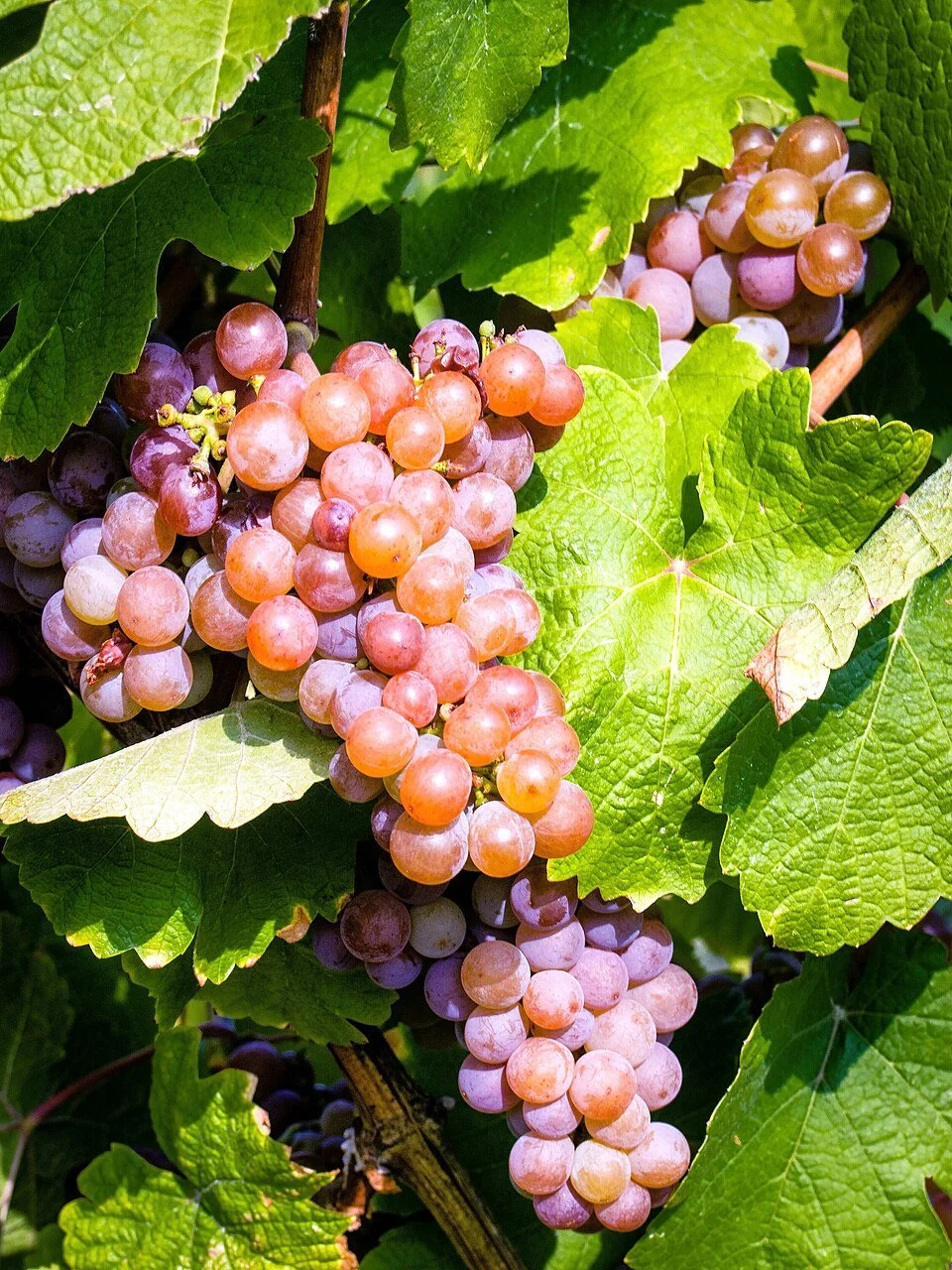
Photo by Rolf Kranz on Wikimedia Commons
Gewürztraminer (guh-VURZT-tra-mee-ner) has been around for centuries in Europe and prized for its wines with intense floral aromas.
Its name is derived from the German word "Gewürz," meaning "spice" or "perfumed," reflecting its bold fragrance. And, the grape is a mutation of the ancient Traminer (Savagnin Blanc) variety.
Today, Gewürztraminer is grown throughout the world with Argentina and Moldova being the largest producers followed by Italy, U.S., Ukraine and Australia.
While Gewürztraminer grapes produce white wine, the grapes have distinctive pink to reddish skins. This often gives the wine a golden-copper color compared to other whites.
Gewürztraminer wines tend to be medium to low in body, low in acidity, but have a higher level of perceived sweetness even when all the sugar has been converted to alcohol through fermentation.
Aromas sometimes attributed to Gewürztraminer include soap, potpourri, or cheap perfume because of its bold floral aromas. But, most agree the aromas are most like lychee and rose petals.
Gewürztraminer is associated with flavors of grapefruit, apricot and tangerine and often has a oily or viscous mouthfeel.
Because of Gewürztraminer’s low acidity, it should be consumed young and typically only keeps for 2-5 years.
Serve Gewürztraminer ice cold (38-45 F) in a white wine glass. No decanting required.