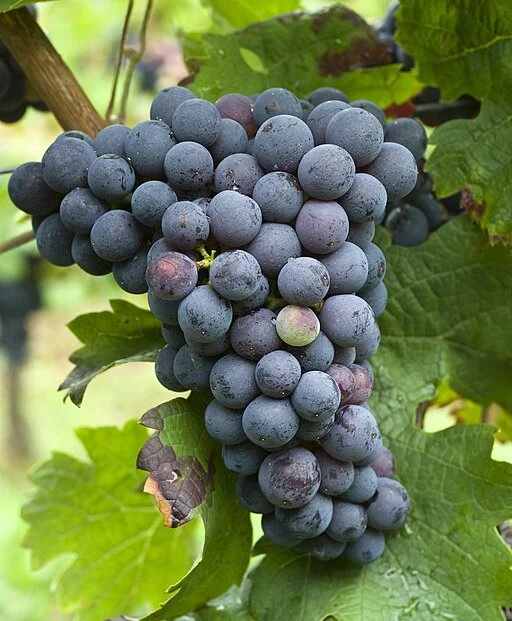
A Tour of Wine Grapes: Cabernet Franc

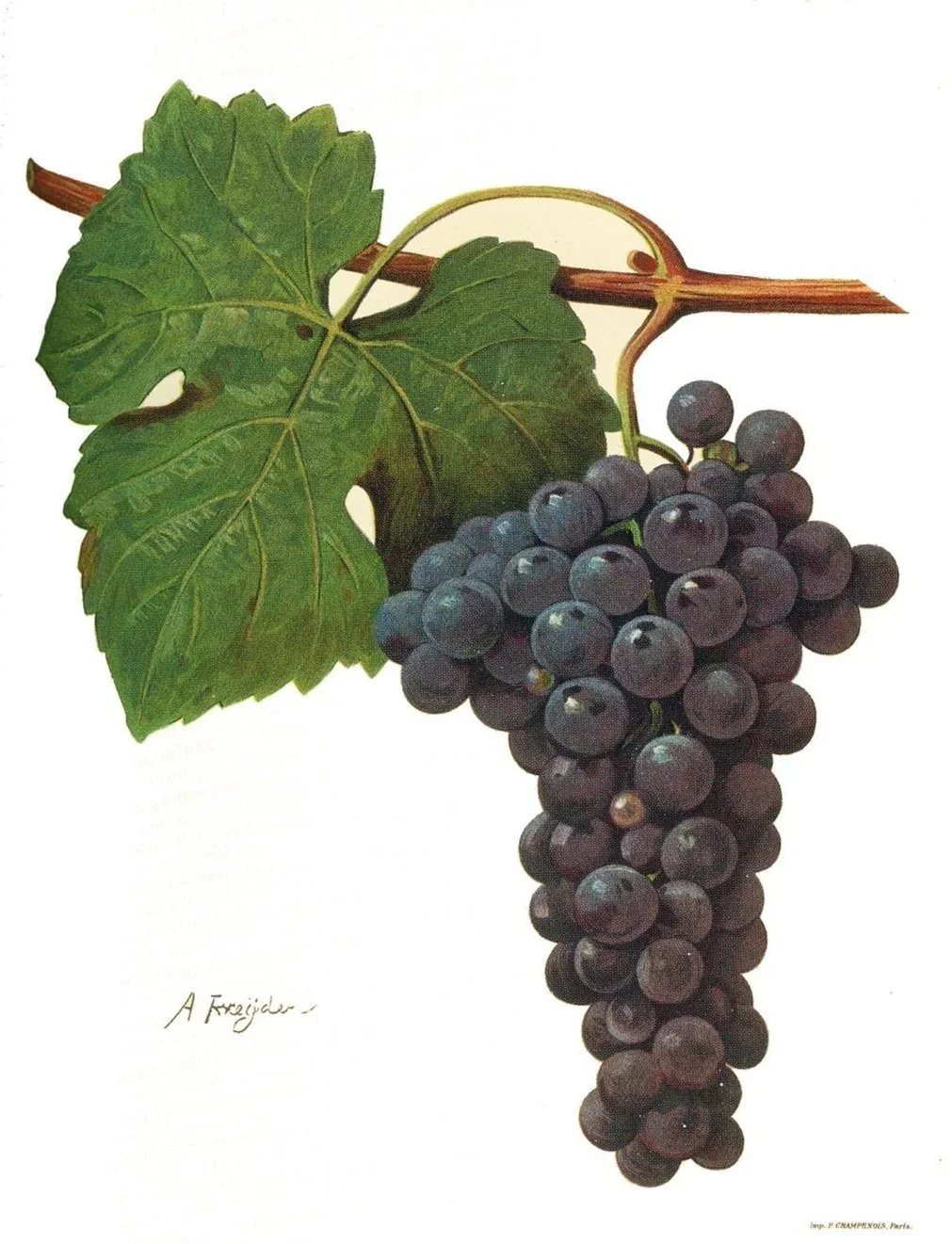
Cabernet Franc 🍷

Image from Wikimedia Commons (Ursula Brühl, Julius Kühn-Institut (JKI),

Cabernet Franc (often referred to as Cab Franc) is a lesser know grape, but it’s actually the parent grape for both Merlot and Cabernet Sauvignon!

Nearly two-thirds of Cabernet Franc is grown in France, but Italy and the U.S. now have significant plantings.

Most famously, Cabernet Franc is used as the “third grape” in many Bordeaux blends.

While the Cabernet Franc grown in France tends to produce wines with lighter color, lighter body and higher acidity, Italy produces richer fruit flavors. The Sierra Foothills of northern California are producing fruit-forward, almost jammy wines with lower acidity.

Cabernet Franc’s adaptability and aromatic complexity make it both a standalone variety and a great blending component.

Generally, Cabernet Franc is medium-bodied, higher in acidity, and has softer tannins. Flavors attributed to Cabernet Franc include Raspberry, strawberry, red cherry and bell pepper.

The bell pepper notes come from methoxypyrazines in the grapes themselves, which are chemical compounds also found in green peppers. These chemical compounds are extracted from the grape skins during fermentation and maceration.

Serve a Cabernet Franc wine in a red wine glass at 60-68 °F after decanting for 30 minutes.
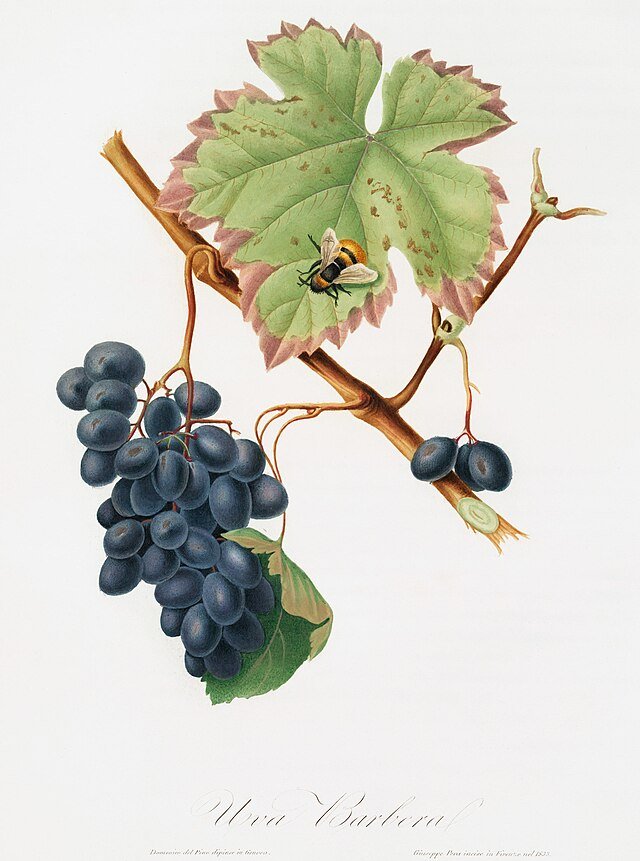
A Tour of Wine Grapes: Barbera

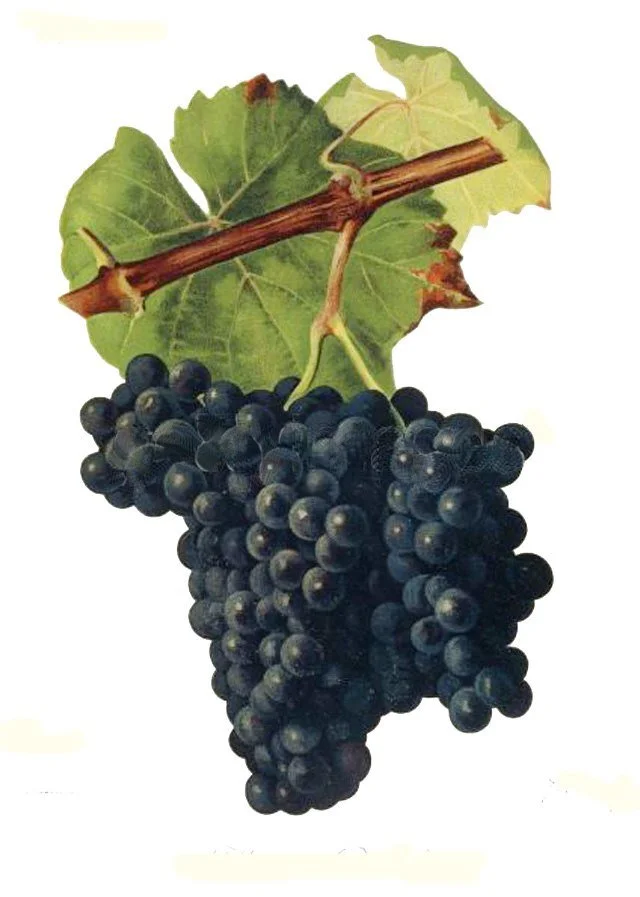
Barbera 🍷

Image by Giorgio Gallesiol on Wikimedia Commons (Public Domain)

Barbera (Bar-BEAR-ah) is thought to have originated in the hills of central Piemonte (“peh-ah-MON-tey”) Italy, where it has been known from the 13th century. That’s significantly earlier than Cabernet Sauvignon that has only been around since the 17th century.

It is Italy’s third most grown grape behind Sangiovese (most notably known as the grape in Chianti) and Nebbiolo. In Italy, it’s known to produce inexpensive table wine that is enjoyed regularly with meals.

In California, the Barbera grape has also been used predominately in the past for production of mass-produced jug wines. So, it's no surprise that Barbera has gotten a bad reputation.

But, that's changed. Regions throughout California are now producing some very nice Barbera wines, especially the Sierra Foothills, Amador County, Shenandoah Valley and El Dorado Counties in northern California.

And, starting in the 1980s the quality of Barbera began to significantly improve in Italy. It started being planted in better sites, yields were limited for quality as opposed to quantity and more attention was given to aging in better barrels. This took Barbera from a common light-bodied wine to something more special with greater flavor and character.

Barbera is typically a medium-bodied wine with lighter tannins and higher acidity. Barbera wines are best known for flavors of sour cherry, blackberry, herbs and black pepper.

It is usually enjoyed young (two to four years after harvest) and should be served in a red wine glass at 60-68 °F.

The lightest versions of Barbera are generally not recommended for cellaring.

A Tour of Wine Grapes: Aglianico

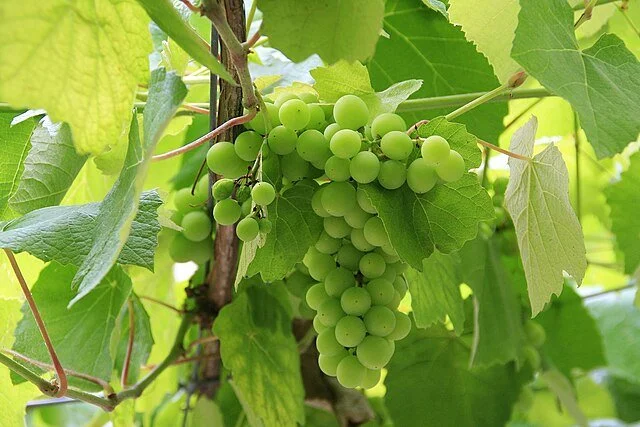
Image from Alexis Kreyder, Public domain, via Wikimedia Commons

Aglianico 🍷

Aglianico (ahl-YAH-nee-koh) is a red wine grape that is thought to be native to southern Italy. Originally, it was thought that Aglianico was from Greece. Its name is actually a derivation of the word "Hellenic" meaning Greek. But, recent DNA studies, as well as etymological and historical research, suggest this grape is native to southern Italy.

Campania's Taurasi and Basilicata's Aglianico del Vulture in Italy are two of the best known appellations that grow this variety.

Aglianico is unusual in that it ripens extremely late—sometimes not until late October or even November.

Wines made from the Aglianico grape are a deep ruby-purple color when young. They have flavors that include black cherry, blackberry and plum with aromas of leather, smoke and tobacco.

Aglianico are full-bodied, high in tannin, high in acidity, and have very low sweetness.

These wines can be aged 10 to 20-plus years.

Young Aglianico wines (0-5 years) should be decanted for as much as 2-4 hours, a mid-aged wine (5-10 years) for 1-2 hours and a 10-15 year old wine for 30 to 60 minutes.

A Tour of Wine Grapes: Alicante Bouschet

Image from Wikimedia Commons

Alicante Bouschet 🍷

Alicante Bouschet (ally-can-tay boo-shey) was created in 1866 by botanist Henri Bouschet when he crossed Granacha with Petit Bouschet in Southern France.

This grape is unique in that both the skins and the flesh are red, yielding red juice (most red grapes produce clear juice).

Nearly half of all Alicante Bouschet is grown in Spain while France, Chile, Portugal and several other European countries and the U.S. grow small percentages.

Wines made from Alicante Bouschet can have smokey, sweet aromas including sweet tobacco. On the palate, the flavors include black cherry, blackberry, black plum, and black pepper.

The wines are typically full-bodied, are medium-high in tannin, with medium to high acidity, and very low sweetness levels.

Alicante Bouschet can be aged in the bottle for 5 to 7 years.

Decant young Alicante Bouschet wines for 1-2 hours while an older wine (5+ years) should be decanted at least 30 minutes before serving in a large red wine glass at 60-65 °F.