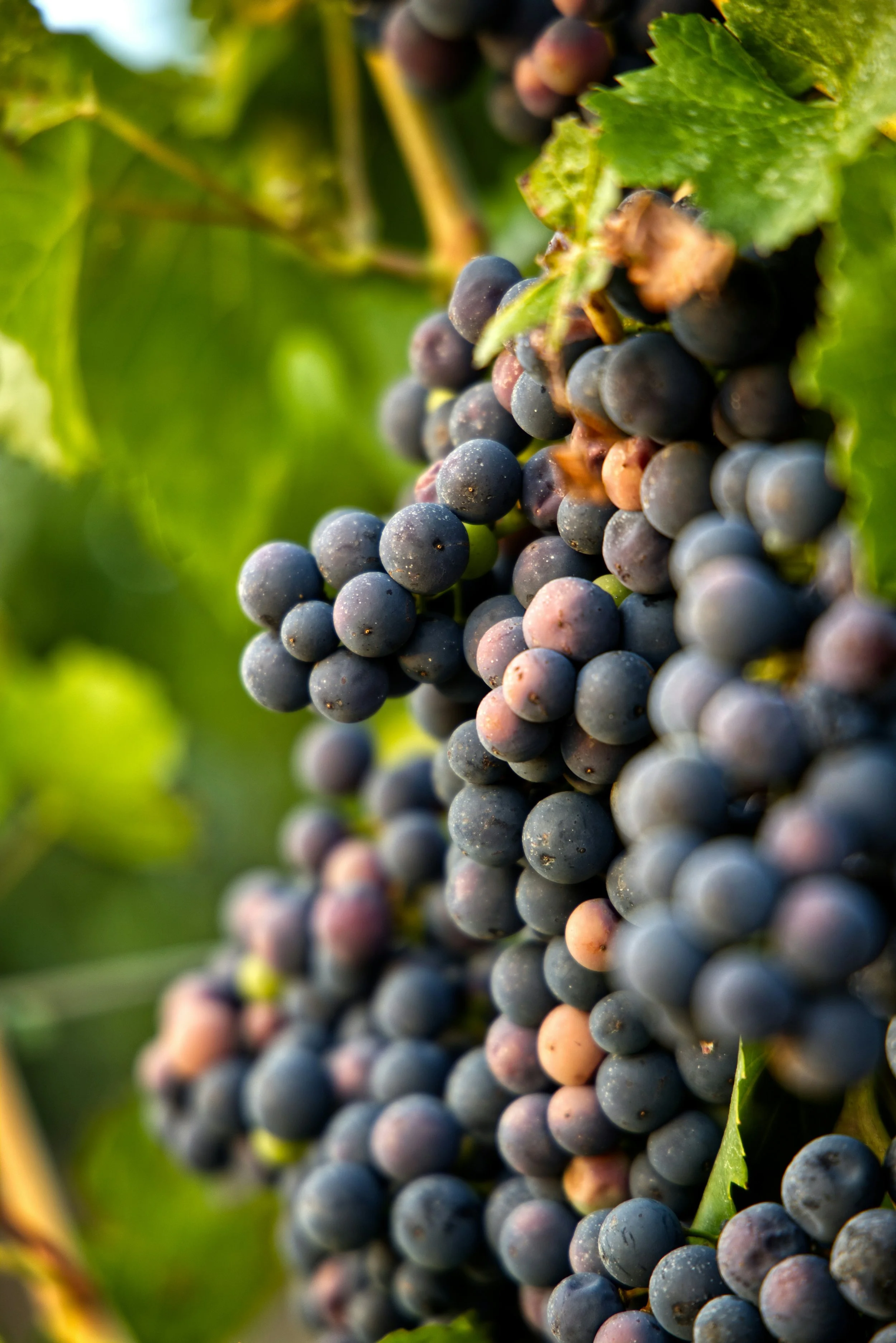
A Tour of Wine Grapes: A to Z

As we begin a new year, EverWonderWine will take you on a tour of the more common grapes, A to Z, used around the world to produce wine.

We’ll look at where the grapes originated, where they’re grown, the various aroma and flavor profiles as well as things like the best serving temperature for the wines made from the grape, along with decanting recommendations and the aging potential of the wine.

While turning the grapes into wine can be done in many ways by wine makers, we’ll also look at common wine characteristics such as acidity and tannin associated with the wines made from each grape.

So, follow along the tour.

Next time we’ll being with Albariño. Cheers!

Some Thoughts About Gewurztraminer

Gewürztraminer is the name of the grape used to make Gewürztraminer wine. It originated in Germany and has spread to other wine-growing areas, especially Alsace in France, as well as parts of Italy, Austria, and even the U.S.

The grape itself is a mutation of the older Traminer variety, which dates back centuries. It’s known for its distinctive pinkish skin and aromatic qualities.

The name comes from the German words Gewürz, meaning "spice," and Traminer, referring to a variety of grape. So, it's essentially a "spicy Traminer" grape.

Gewürztraminer is best known for its aromatic, spicy, and floral notes.

Aromatics: Gewürztraminer is very aromatic. It often has intense scents of rose petals, lychee fruit, and spicy notes of ginger, cinnamon, and even hints of honey or sweet baking spices.

Flavor: The taste is slightly sweet with flavors that can range from tropical fruits (like lychee, pineapple, and passionfruit) to more floral and spiced elements (such as ginger, clove, and orange zest). It is typically a medium-body wine with a smooth, almost oily mouthfeel.

Acidity: Gewürztraminer typically has lower acidity than other white wines, making it a bit softer on the palate. The lower acidity balances the wine’s richness and fruitiness.

Regions:

  • Alsace, France: Alsace is perhaps the most famous region for Gewürztraminer, where it’s known for being a rich, aromatic, and slightly off-dry style. The cool climate in this area helps preserve the wine’s fresh flavors while allowing the grapes to ripen fully.

  • Germany: The wine produced here can be similar in style to that of France but it may a bit dryer (less residual sugar) and exhibit more minerality.

  • U.S.: In the United States, parts of California, Oregon, and Washington produce Gewürztraminer with a more fruit-forward profile, often with more tropical notes and a less pronounced spice character than those from Europe.

Gewürztraminer's bold aromatics and slight sweetness make it a fantastic match for a wide range of foods, especially dishes with some spice. So, if you're a fan of aromatic wines and enjoy something with a bit of personality and boldness, Gewürztraminer is a great choice. Cheers!

Tannat -- Uruguay's Flagship Grape for Wine Production

Photo by Jassy Onyae on Unsplash

Tannat is a red-wine grape that originally came from the Basque country, on the border between France and Spain. It is known for producing full-bodied wines with strong tannin and acidity. Today, it is Uruguay’s flagship grape amounting for 27% of its total wine grape production.

The Tannat vines growing in Uruguay, and throughout the Americas, are slightly different from those found in today’s French vineyards. This is because they are some of the oldest Tannat vines that are direct descendants of the pre-phylloxera cuttings shipped across the Atlantic in the 19th Century. The result is that Uruguayan Tannat is actually slightly lower in tannin than those still being grown in France.

Here are a few facts about Tannat in Uruguay:

  • Tannat was first planted in Uruguay in the 1870

  • Tannat is well-adapted to the soil type in Uruguay and its climate

  • Tannat is a relatively thick-skinned grape. This is beneficial in Uruguay due to the high humidity conditions during growing season

  • Tannat is thought to have been introduced to Uruguay by Don Pascual Harriague (1819-1984) who was a winegrower from the French Basque country. Tannat was originally referred to as Harriague (ar-rē-a-gāy) in Uruguay. He has since been honored on a postage stamp in Uruguay celebrating 200 years since his birth

  • Tannat and Cabernet Sauvignon were cross-breed to create Arinarnoa which is being grown in Uruguay

  • Tannat can be blended with other grapes such as Viognier (stay tuned for this in an up-coming Behind the Cork Wine of the Week feature!)

  • Tannat grapes are also being used to produce a wonderful rosé Vermouth (stay tuned for this in an up-coming Behind the Cork Wine of the Week feature!)

As noted, some really super Tannat-based wines are being produced in Uruguay and will be featured as Behind the Cork Wines of the Week in upcoming blogs. Until then, Cheers!

Some Wine Grapes You May Have Never Heard of Before

While Cabernet Sauvignon and Chardonnay are well known grapes used for making wines, here are just a few grape varieties that you may not have heard of previously. But, several Behind the Cork Wines of the Week have and will feature these lesser known grapes from the Shenandoah AVA being used to produce award winning wines (see hyperlinks off to past blogs and stay-tuned for upcoming blogs).

Cayuga is a French-American hybrid grape variety. It’s a crossing of Schuyler (see below) and Seyval Blanc (see below). It has been specially bred for its cold hardiness and resistance to disease. Cayuga has enough acidity to make a wonderful sparkling wine, as well as still wines that are crisp and dry.

Schuyler is a blue-skinned hybrid wine and table grape created in 1947 by crossing Zinfandel with Ontario. It is used in the USA as table grapes, for grape juice and the production of simple red wines not meant for aging.

Ontario is a white variety that has a frost-hardy vine that is well suited to cooler regions. It can produce white wines with a pronounced foxy attribute. They are also used as table grapes.

Seyval Blanc has become a successful French hybrid grape that produces dry white wine. It is often described as having flavors somewhere between Chardonnay and Sauvignon Blanc. It has high acidity and responds well to malolactic conversion and barrel maturation.

Refosco (rēh-fōse-kō) is a dark-skinned wine grape originally from Northern Italy and neighboring Slovenia that is related to the grapes of Valpolicella. Refosco wines typically have high acidity. Flavors include dark peppery spices and plums. Often slightly astringent and can produce harsh tannins.

Lagrein is an ancient grape variety originally from Trentino-Alto Adige in northeastern Italy. It produces full-bodied wines with flavors of plum and wild cherry. It is known for the deep, dense color it imparts on wines. It is acidic and slightly astringent on the finish. Smokey notes are found in wines made from the Lagrein varietal.

Sagrantino is a red wine grape variety from the Umbria region of Central Italy. black cherries to ripe blackberry. Wines made from Sagrantino tend to have notes of black cherries and ripe blackberry along with spicy and earthy characteristics. Smokiness and sappy pine flavors have also been attributed to wines produced with Sagrantino. Its high tannins and affinity for oak aging mean that it can age well.

Vidal is a hardy hybrid grape that is grown mainly in Canada and the northeastern United States. It is best known as one of the ice wine grapes that produces sweet dessert wines.

Traminette is a hybrid white wine grape variety originally bred at the University of Illinois in 1965. It is the result of a crossing between Gewurztraminer and Joannes Seyve 23.416, a hybrid grape named for its creator. Traminette wines tend to be floral and spicy, and are made in both dry and off-dry styles.

Vignoles is a light-skinned hybrid grape variety first bred in France, but now grown in the Finger Lakes AVA, Shenandoah AVA, as well as in a few mid-western U.S. states. The variety was first bred in Saone-et-Loire in the 1930s by grape breeder J. Ravat, and is believed to have either Pinot Noir or Chardonnay as one of its parents, along with one of the hybrid Siebel varieties. It is well suited to cold weather. It’s high acidity and sugar levels make Vignoles a good choice for vintners looking to make dessert wines, and if the region is cold enough, ice wine can be produced from these frozen grapes.

Ever Wonder? Is Montepulciano a Wine Grape or a Wine-Producing Region?

A Montepulciano (mon-ta-pull-channo) wine can be a bit confusing. Typically, the name of the wine either represents the type of grape used to produce the wine or, most commonly in Europe, the place where the grapes are grown.

Montepulciano as you might guess by its name, is an Italian wine. So, you’d probably also guess that it’s from a region or town of Montepulciano, Italy. But, there you’d be wrong.

It is true that Montepulciano is a beautiful medieval town in Tuscany, in central Italy. But, oddly enough, Montepulciano wines are not produced in Montepulciano.

Instead, Montepulciano wines are from Marche, Molise, northern Puglia and most notably, Abruzzo regions of Italy. All of these regions are along the eastern coast of Italy and benefit from the cooling winds off the Adriatic Sea.

So, yes, Montepulciano wines are made of Montepulciano grapes but they have nothing to do with the town Montepulciano.

To make things even more confusing, the wines that are produced in Montepulciano are, like most Tuscan wines, made from the Sangiovese grape.

Montepulciano is the second most planted red grape in Italy. Sangiovese, the grape used to make Chianti, is the most widely planted grape of Italy.

Montepulciano has long held a reputation for being low-priced fruity red wines that go well with pizza and bold tomato-based sauces. This reputation is true. But, there are many producers, especially in Abruzzo, that are making some very well-structured wines displaying notes of cherry, crushed herbs and tobacco.

Although a bit confusing, Montepulciano wines can be quite good and, as the most exported Italian wine to the U.S., it can be very reasonably priced. Cheers!