
• Home
  • Blog
    • Wine 101 — Overview
    • Choosing a Wine
    • Flavors, Aromas and Texture in Wine
    • Grapes Used In Winemaking
    • Serving Wine
    • Types of Wine
    • Listing of Wines
    • Visiting Wineries & Wine Tasting
    • Wine Making
    • Wine Regions of the World
    • Wine Fun Facts
    • Behind the Cork™ Reviews
    • 2026 Behind the Cork™ Wine #1
    • 2025 Behind the Cork™ Wines #2
    • 2025 Behind the Cork™ Wines #1
    • 2024 Behind the Cork™ Wines #1
    • 2024 Behind the Cork™ Wines #2
    • 2023 Behind the Cork™ Wines #1
    • 2023 Behind the Cork™ Wines #2
    • 2022 Behind the Cork™ Wines #1
    • 2022 Behind the Cork™ Wines #2
    • 2021 Behind the Cork™ Wines #1
    • 2021 Behind the Cork™ Wines #2
    • 2020 Behind the Cork™ Wines #1
    • 2020 Behind the Cork™ Wines #2
    • 2020 Behind the Cork™ Exceptional Wines
    • 2019 Behind the Cork™ Wines
  • Glossary
  • About
Menu

EverWonderWine?

  • Home
  • Blog
  • Wine 101
    • Wine 101 — Overview
    • Choosing a Wine
    • Flavors, Aromas and Texture in Wine
    • Grapes Used In Winemaking
    • Serving Wine
    • Types of Wine
    • Listing of Wines
    • Visiting Wineries & Wine Tasting
    • Wine Making
    • Wine Regions of the World
    • Wine Fun Facts
  • Reviews
    • Behind the Cork™ Reviews
    • 2026 Behind the Cork™ Wine #1
    • 2025 Behind the Cork™ Wines #2
    • 2025 Behind the Cork™ Wines #1
    • 2024 Behind the Cork™ Wines #1
    • 2024 Behind the Cork™ Wines #2
    • 2023 Behind the Cork™ Wines #1
    • 2023 Behind the Cork™ Wines #2
    • 2022 Behind the Cork™ Wines #1
    • 2022 Behind the Cork™ Wines #2
    • 2021 Behind the Cork™ Wines #1
    • 2021 Behind the Cork™ Wines #2
    • 2020 Behind the Cork™ Wines #1
    • 2020 Behind the Cork™ Wines #2
    • 2020 Behind the Cork™ Exceptional Wines
    • 2019 Behind the Cork™ Wines
  • Glossary
  • About

Home > Blog

Wine Blog

New articles every week. Whether you're looking to understand a specific wine term, discover a grape variety you've never heard of, or find an affordable bottle worth trying, the EverWonderWine blog has been tackling those questions one article at a time for over a decade.

You'll find two types of posts here. The educational articles cover everything from the basics — acidity, tannin, sweetness, body — to deeper dives into specific grapes, regions, and winemaking techniques, including the ongoing Tour of Wine Grapes series. The Behind the Cork™ posts are honest, no-nonsense reviews of affordable, everyday wines: what they taste like, where they come from, and whether they're worth your money. There's always something new to explore.

Blog Archive

  • Listing by Year

No results found

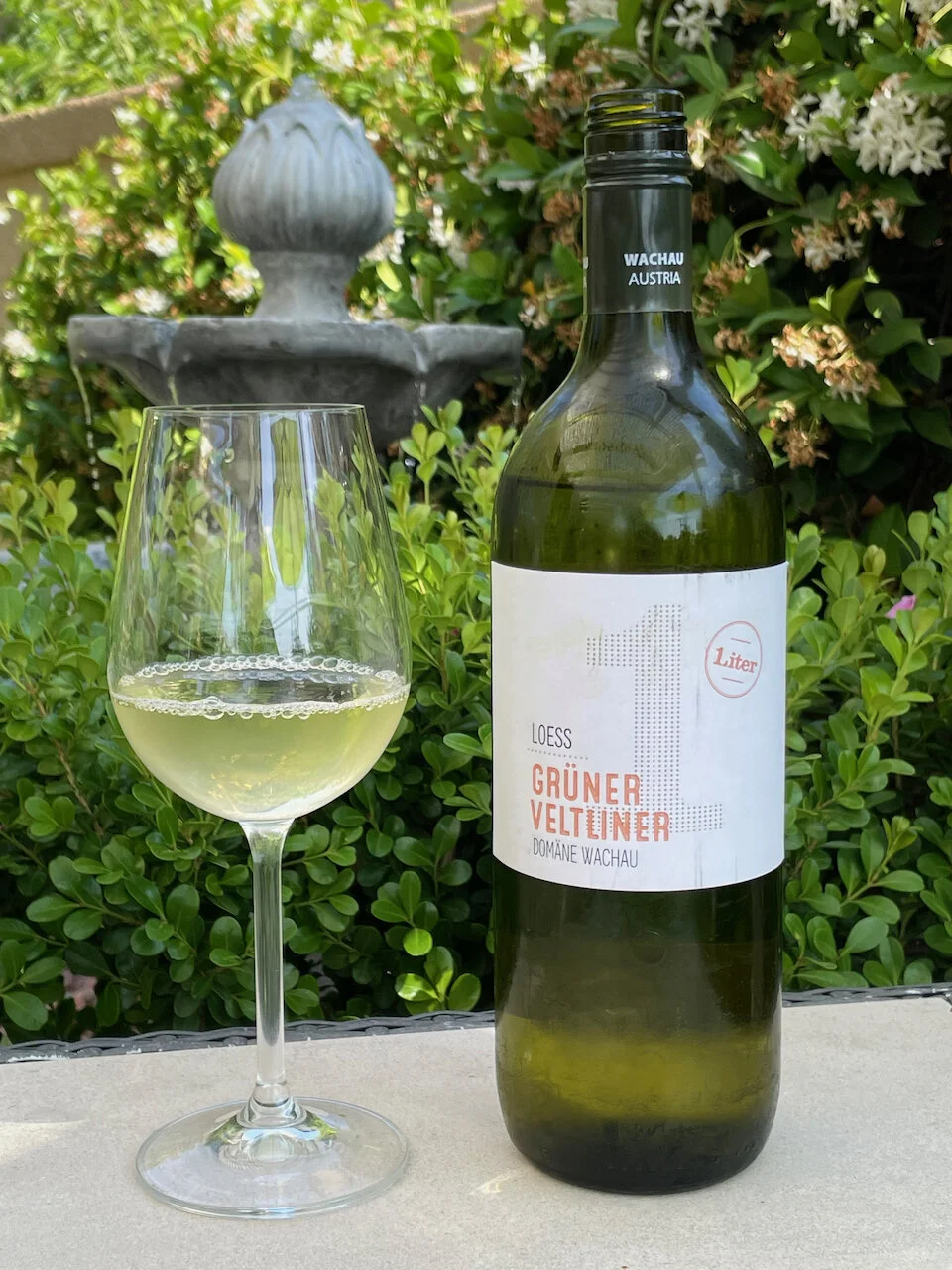
Behind the Cork™ - Loess Grüner Veltliner by Domäne Wachau

July 14, 2021

2020 Loess Grüner Veltliner by Domäne Wachau - 1L ($14)

This Loess Grüner Veltliner (‘grew-ner felt-lee-ner’) from Domäne Wachau comes from small vineyard plots along the Danube riverbed in Austria. Loess (‘low-ss’) refers to the soil found in these vineyards that reflect wines that are slightly fresher and fruiter when compared to the wines produced from the gneiss (‘nice’) soils found in the steeper Wachau Valley vineyard slopes.

This wine is produced from hand-picked grapes that are certified Sustainable and Vegan.

This Grüner Veltliner is pale yellow in color with a delicate aroma of yellow apple and pear. On the palate this wine is medium-bodied with the typical tart acidity and white pepper notes (‘Pfefferl’) that end with a refreshing finish.

This Loess Grüner Veltliner is best enjoyed young, preferably in the first year. Well chilled at around 45 degrees F, it is an excellent wine, pure or as “G'spritzter” (mixed with sparkling water). This wine pairs well with the traditional Austrian cuisine such as deep-fried dishes like their famous “Wiener Schnitzel.”

And, with this 1 liter bottle, you’ll get to enjoy up to seven glass of this wonderfully refreshing wine! Cheers!

Domäne Wachau wines are imported by Gonzalez Byass USA.


Disclosure of Wine Sample Submission: I received this sample at no cost for review. The opinions expressed are entirely my own.

Samples Provided by Donna White Communications

In Behind the Cork Reviews Tags Austria, Wachau Valley, Grüner Veltliner
Comment
Alentejo Wines.jpeg

Behind the Cork™ - Wines of Portugal’s Alentejo Region

July 7, 2021

Wines of Portugal’s Alentejo Region

Dollar for dollar it’s hard to beat Portugal’s Alentejo region for exceptional values. With 2,000 years of winemaking experience, Alentejo delivers expertly made wines at unbeatable prices.

Alentejo is internationally recognized for its award-winning sustainability program - the Wines of Alentejo Sustainability Program (WASP). Their intent is to support the improvement of the environmental, as well as the social and economic performance of the region's winemaking activities while promoting the recognition of the sustainability performance of the region's wines. WASP members account for nearly 50% of Alentejo’s vineyard area and all Alentejo’s main players participate, including the wineries featured here.

2018 CARMIM Monsaraz Reserva Red ($16)

The vineyards surrounding the historic village of Monsaraz have been farmed since the Middle Ages. Today, the Cooperativa Agricola de Reguengos de Monsaraz (founded in 1971) is not only the largest winery in Alentejo but one of its most awarded. This blend of Alicante Bouschet (60%), Trincadeira (20%) and Touriga Nacional (20%) was aged for 12 months in French and American oak. This wine is garnet-colored with an aroma of ripe blackberries and plums. On the palate it is full-bodied with minerality with a long pleasant finish.

2018 Cartuxa EA Red ($9)

Évora Alentejo (EA) is the capital that includes this winery founded by Carthusian monks. Today, the winery is run by a local philanthropic foundation. Proceeds go toward the preservation of historic Évora, along with the promotion of local arts and culture. Produced from a blend of Aragonez, Trincadeira, Alcante Bouschet and Syrah, this wine is ruby red in color with hints of red fruit aroma. On the palate it has soft flavors that are so typical of the varieties of the Alentejo Region.

2020 Casa Relvas Herdade São Miguel Rosé ($15)

This rosé gets its distinctive tropical fruit and red berries flavors from the blend of Touriga Nacional, Syrah, and Aragonez, among others. The producer is recognized for making wines that combine native and international varieties, and adding their own uniqueness, such as the “Sur Lie” aging for this delicate refreshing rosé.

2019 Herdade do Rocim Amphora Tinto ($18)

Production of this wine was done in the traditional way, in Amphora clay pots, with no temperature control. The ancestral way to make such wine was fully respected. Fermentation took place using indigenous yeasts and with no addition or correction to the must. It was then aged for three months in the bottle. The wine is clear and shiny color. On the nose, you’ll get black cherry, raspberry, plum and hints of vegetable notes. It’s creamy smooth, yet fresh, and has hints of a salt and minerality and ends with a fresh finish.


Disclosure of Wine Sample Submission: I received these samples at no cost for review. The opinions expressed are entirely my own.

Samples Provided by Creative Palate Communications

In Behind the Cork Reviews Tags Portugal’s Alentejo Region, Portugal, Alentejo, Red Blend, Rosé
Comment
IMG_4054.jpeg

Behind the Cork™ - Ron Rubin Wines

June 30, 2021

Ron Rubin Wines

Late in 2011, in fulfillment of a 40-year dream that began in his student days at UC Davis studying viticulture and enology in the early 1970’s, he purchased River Road Family Vineyards and Winery. Rubin was sold on the area, in the Green Valley AVA, a sub-zone of Russian River Valley, because it is cool and foggy, thanks to the Petaluma Gap, and has distinctive low-fertility and well-drained sandy loam Goldridge soils.

A vintner and self-styled “beverage guy,” Ron Rubin’s intent is to make affordable and accessible wines (a perfect fit for Behind the Cork™!), all-round “beautiful experiences” (a favorite expression of his), i.e. Sonoma wines to be consumed and enjoyed. The prospect of making high-priced, super-limited-production, hard-to-find wines is not what makes Rubin tick. For you and me, that translates into beautiful wines you can feel good about buying.

Ron Rubin Russian River Pinot Noir ($25)

Before I get started on this one, I must confess that Russian River Pinot Noir is a favorite of mine. This one is a beautiful pale ruby in color, with the classic aroma of red fruits (cherry, cranberry, raspberry). It was cold-soaked for 5-days. It was then fermented, pressed and aged in 100% French Oak barrels, 20% new, for a total of 10 months. The result is true to Russian River Pinot’s with that wonderful cherry, raspberry and cranberry flavor, easy tannins and a wonderful finish with hints of vanilla.

Pam’s Un-Oaked Chardonnay ($14)

Made for Ron Rubin’s wife, Pam, who admits she doesn’t like most Chardonnays. Per her preference, this Chardonnay is crisp, light, with a touch of sweetness and easy to enjoy. It’s golden in color with aromas of ripe apple and hints of tropical fruit. It is very smooth and light, with flavor of ripe pear.

The Ron Rubin Winery is SIP-certified (Sustainability in Practice -- the gold standard for sustainable vineyard, winery and wine certification), and Certified Sustainable by the California Sustainable Wine growing Alliance.

These are both very enjoyable and affordable wines. Enjoy. Cheers!


Disclosure of Wine Sample Submission: I received these samples at no cost for review. The opinions expressed are entirely my own.

Samples Provided by Creative Palate Communications

In Behind the Cork Reviews Tags Russian River, Pinot Noir, Chardonnay, Un-Oaked
Comment
IMG_4049.jpeg

Behind the Cork™ - Domaine Bousquet Virgen Organic Wines

June 23, 2021

2020 Virgen Organic Wines ($13 ea)

Virgen Wines, by Domaine Bousquet, only produces wines made from organic grapes and is Argentina’s largest exporter of organic-fruit wines with upward of 100,000 cases sold in the U.S. alone. With their Virgen collection of wines, Domaine Bousquet has taken organics to the next level, from the vineyard and into the winery. Virgin wines are vegan, with no sulfites added, qualifying them for organic certification by the USDA.

In 1997, when Jean Bousquet planted his first vines on virgin land in the wilds of Alto Gualtallary, a sub-region of Tupungato in Mendoza, his decision was made to farm organically and with no added sulfites. While sulfites are naturally present in all wines, most winemakers add some extra during production to prevent spoilage. Without the addition of Sulfur Di-Oxide (SO2), wines can spoil. Therefore, natural additive-free wines, like these from Virgen, require extra care.  

2020 Virgen Organic Red Blend: Three grape varieties (approximately a third each of Malbec, Cabernet Sauvignon and Cabernet Franc) were fermented together using selected yeasts for this co-fermentation. Argentina’s flagship grape, Malbec, provides approachable blackberry and red berry fruit while the Cabernet Sauvignon adds structure, and the Cabernet Franc brings pleasant aromas and acidity. 

2020 Virgen Organic Malbec 2020: This wine is deep purple in color with subtle aromas. It is fruity with red fruit and black berry fruit flavors, mildly tannic and finishes with mouth-watering acidity.

These wines from Virgen are just what you are looking for if you desire vegan wine, with no added sulfites and USDA organic certification. Or, if you are simply looking for a tasty wine that’s affordable and obtainable. Cheers!


Disclosure of Wine Sample Submission: I received these samples at no cost for review. The opinions expressed are entirely my own.

Samples Provided by Creative Palate Communications

In Behind the Cork Reviews Tags Sulfites, Organic, Argentina, Red Blend, Malbec
Comment
IMG_3999.jpeg

Behind the Cork™ - Lapostolle Cuvée Alexandre Cabernet Sauvignon

June 16, 2021

2019 Lapostolle Cuvée Alexandre Cabernet Sauvignon ($25)

This wine is from the Apalta Valley in Colchagua Chile. In 1994 Alexandra Marnier Lapostolle and her husband, Cyril de Bournet, discovered within the Apalta region a plot of un-grafted Carménère and Cabernet Sauvignon vines first planted in 1920. Apalta is different than the rest of the of the Colchagua Valley in that it has a special meso-climate. Additionally, the vineyard “El Condor de Apalta” is today Demeter-certified Biodynamic.

This Lapostolle Cuvée Alexandre Cabernet Sauvignon is produced from 85% Cabernet Sauvignon, 10% Cabernet Franc and 5% Carmenere. It is 100% hand harvested. All fermentations were made with wild yeast in stainless steel tanks. It was then aged for 14 months in French oak barrels.

The wine is deep purple in color with aromas of cassis and black currant. On the palate it’s full-bodied with juicy black-fruit flavors, firm tannin, balanced acidity and a nice light finish.

This Lapostolle Cuvée Alexander Cabernet Sauvignon is widely available and very affordable. It may be kept for many years of bottle aging or decanted now for immediate enjoyment. Cheers!


Disclosure of Wine Sample Submission: I received this sample at no cost for review. The opinions expressed are entirely my own.

Imported by Winebow Imports

Sample Provided by Jarvis Communications

In Behind the Cork Reviews Tags Chile, Cabernet Sauvignon
Comment
← Newer Posts Older Posts →


Sign Up!


Don't Miss A Blog! Subscribe!

Subscribe to receive each new blog entry via email. The mail list is used exclusively for my blog. Your email address will not be used for any other purpose or shared in any way. 

Once you click on the "Submit" button, you will receive an email asking to confirm your subscription.


Recent Blog Entries:

Blog
Behind the Cork™ - Riviera Sauvignon Blanc
about 15 hours ago
A Tour of Wine Grapes: Tannat
about 4 days ago
Behind the Cork™ - Montes Alpha Syrah
about a week ago
A Tour of Wine Grapes: Syrah
about a week ago
Behind the Cork™ - Karas Red Blend
about 2 weeks ago

Questions or Comments?

Please send me a message!


Submit Samples for Review


Copyright © EverWonderWine? 2026