Behind the Cork™ - St. Francis Pinot Noir

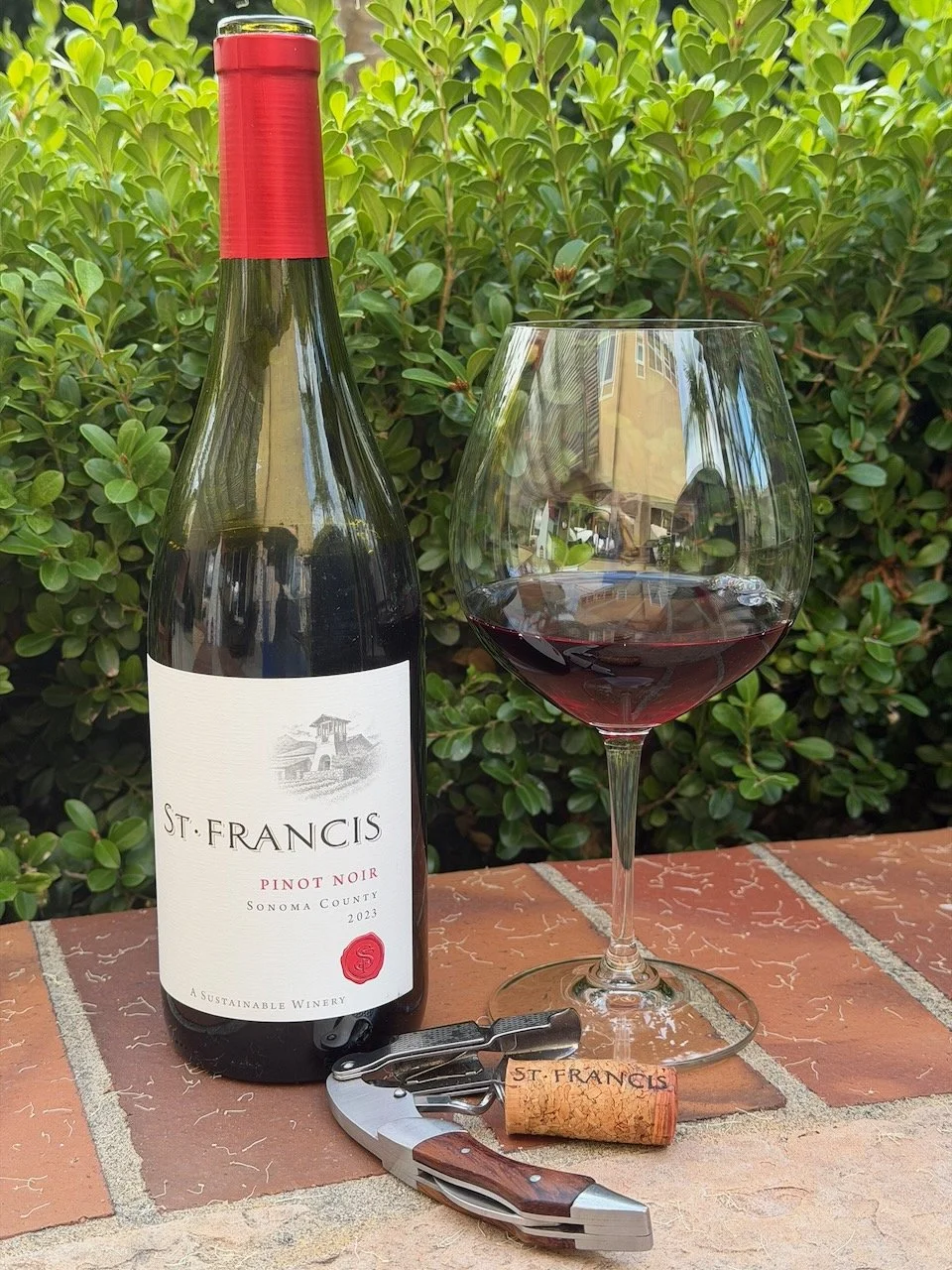
2023 St. Francis Sonoma County Pinot Noir ($25.99)

The fruit for this wine was sourced from multiple vineyards in the Sonoma Coast region.

This Pinot was fermented using a combination of techniques, fusing both old and new world styles of Pinot Noir winemaking. Each vineyard lot of 100% Pinot Noir underwent a 14-day fermentation, with an extended maceration for up to 30 more days to allow flavor and texture to harmonize. The wine was then racked off into French oak barrels, where it underwent malolactic conversion, before it was blended and bottled.

St. Francis Sonoma County Pinot Noir is medium ruby in color with aromas of red berries including raspberry. On the palate, this medium-bodied wine has the classic Pinot Noir flavors of tart cherry and cranberry, medium tannin and medium acidity. It finishes light with just a touch of tartness.

This 2023 St. Francis Sonoma County Pinot Noir is an excellent example of the Pinots produced in Sonoma County yet at a fraction of the cost. This is great tasting and a super value. A perfect fit as this week’s Behind the Cork™ Wine of the Week. Cheers!


Disclosure of Wine Sample Submission: I received this sample at no cost for review. The opinions expressed are entirely my own.

Media Sample Provided by St. Francis Winery via Kobrand Wine and Spirits

Behind the Cork™ - Gary Farrell Russian River Selection Pinot Noir

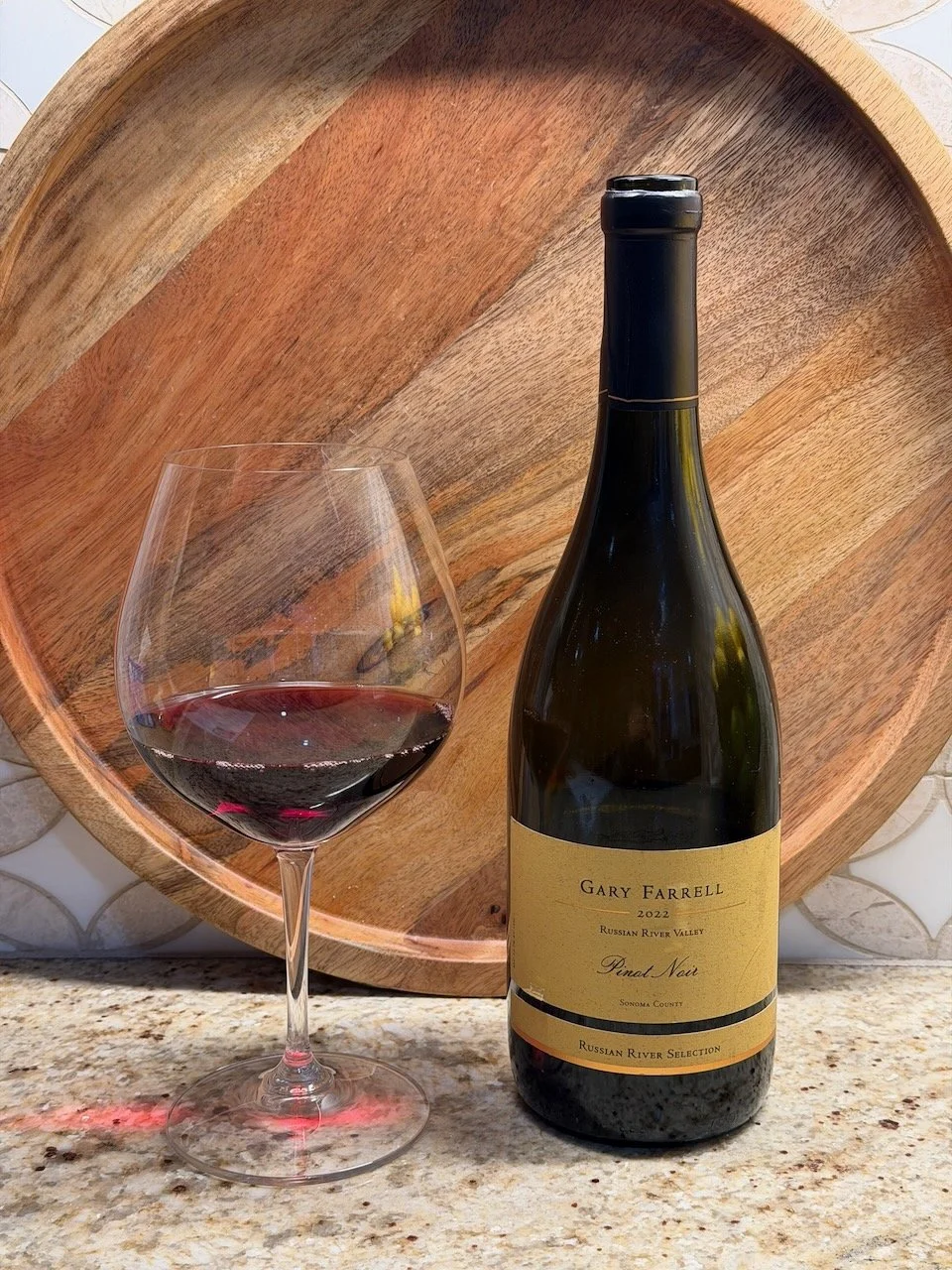
2022 Gary Farrell Russian River Selection Pinot Noir ($22)

Gary Farrell Russian River Selection Pinot Noir is blended from some of the region’s top vineyards. The Rochioli and Bacigalupi vineyards are in the Middle Reach subdivision, where close proximity to the river awards foggy mornings, warm and sunny days, and cool nights. The Toboni vineyard is in the Santa Rosa Plain, a distinctly cooler and foggier sub-region, while the Hallberg and McDonald Mountain Vineyards, located within the Green Valley and Sebastopol Hills neighborhoods, exhibits even more extreme cool climate conditions.

This wine is made from 100% Pinot Noir grapes that are hand sorted. Some of the grapes were de-stemmed and then transferred to small, open-top tanks where a small percentage of whole cluster fruit was added. It underwent malolactic conversion and was aged in 35% new French oak barrels for nine months on primary lees.

Gary Farrell Russian River Selection Pinot Noir is a medium ruby red in color with nice, bright red fruit aromas. On the palate, this medium-bodied Pinot Noir has flavors of sour cherry and cranberry.

Gary Farrell is a top Russian River producer of Pinot Noir. And, at this price, an amazing value. A perfect fit as this week’s Behind the Cork™ Wine of the Week. Cheers!

Behind the Cork™ - Domaine Bousquet Gaia Pinot Noir Rose

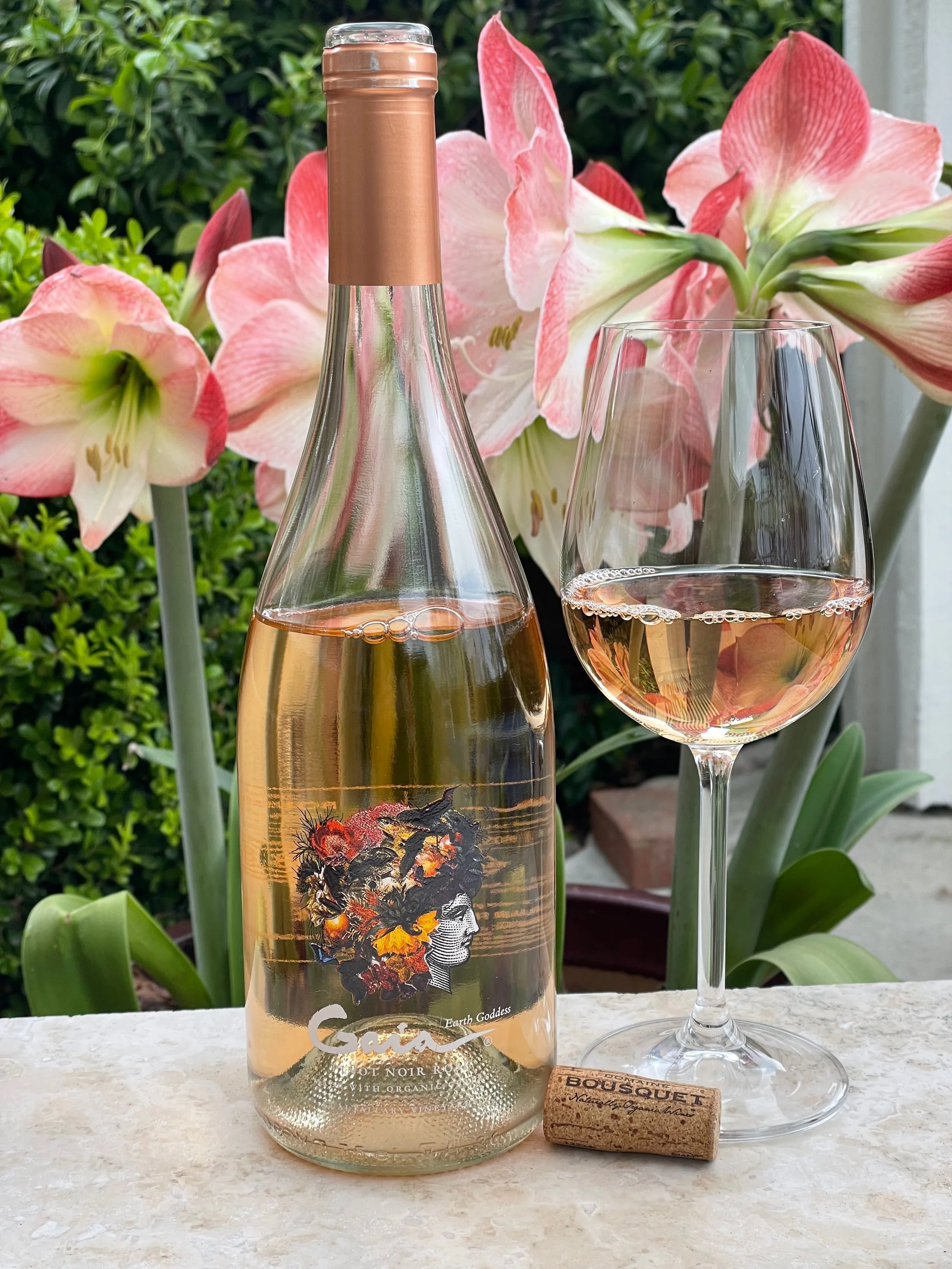
2024 Domaine Bousquet Gaia Pinot Noir Rosé ($20)

Gaia, the Greek goddess of the Earth, has been the Bousquet family’s inspiration since founding the winery in 1997. According to Ancient Greek mythology, Gaia (Guy-uh) was one of the primordial deities, emerging fully formed from Chaos to become the divine personification of Earth and the mother of all life. Gaia labels depict the goddess in a festive headdress of colorful fruits and flowers.

Gaia wines are crafted with French winemaking sensibility and made from 100% organic fruit grown at a cool 4000 foot altitude.

This Gaia Pinot Noir Rosé was produced from 100% organic Pinot Noir grapes that were hand harvested. The full clusters were pressed followed by a five-day cold maceration. It was then fermented for 30 days.

Gaia Rosé is a pale copper in color with delicate aromas of red fruit (cherry & strawberry) and floral notes. On the palate, this light-bodied rosé has subtle notes of Maraschino cherry and strawberry with good acidity. It finishes soft and balanced with just a hint of sweet fruit. [ABV: 12%, TA: 5.47 g/L, pH: 3.31, Residual Sugar: 1.08 g/L]

Gaia Rosé from Domaine Bousquet is light, easy to drink and very affordable making it a great fit as this week’s Behind the Cork™ Wine of the Week. Cheers!


Disclosure of Wine Sample Submission: I received this sample at no cost for review.

Media Sample Provided by Domaine Bousquet

Behind the Cork™ - Chile's Coastal Pinot Noir

As we’ve learned, Chile’s coastal wine country is heavily influenced by the Humboldt Current. Here are three excellent examples of the Pinot Noir being produced along Chile’s coast.

2022 Concha Y Toro “Amelia” Pinot Noir ($55)

The grapes for this wine are grown on the northern bank of the Limarí River at an altitude of more than 600 feet above sea level, just about 14 miles from the Pacific Ocean. The temperatures are cool and the mornings are cloudy, so the fruit ripens slowly, producing fresher tasting wines. This Pinot Noir is produced from 50% whole clusters that are fermented in stainless steel tanks. After Malolactic Conversion, the wine remains in French oak barrels (10% new) for 12 months. This Amelia Pinot Noir is medium purple in color with delicate fruit aromas. On the palate, this Amelia Pinot Noir is light in flavor with medium acidity and finishes easy. (ABV: 14%, TA: 4.5 g/L, pH: 3.63, RS: 2.74 g/L).

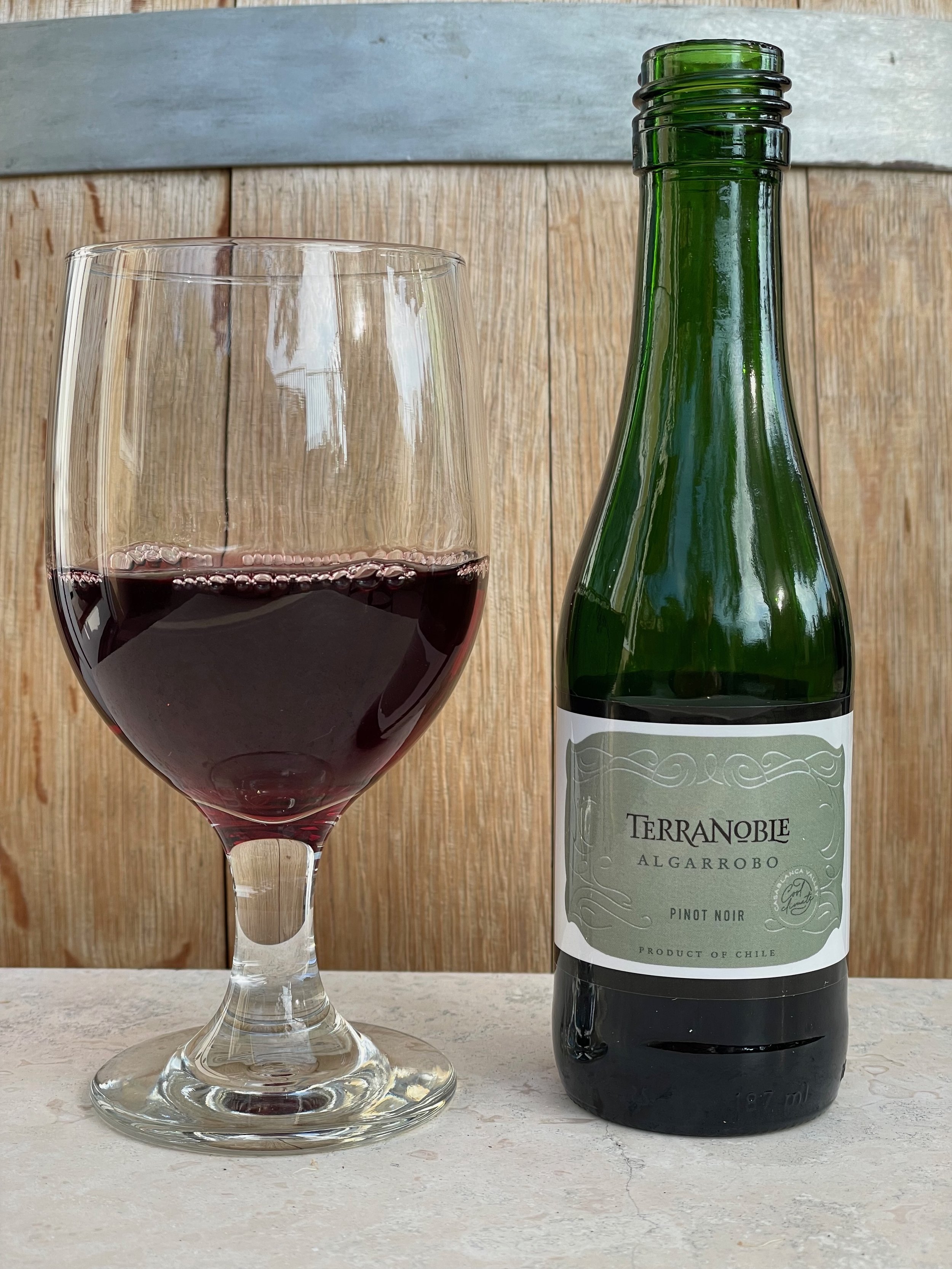
2023 Terranoble “Algarrobo” Pinot Noir ($15)

This wine is named for the iconic Algarrobo tree in their vineyard in the Las Dichas sector of the Casablanca Valley. The grapes for this 10% Pinot Noir are fermented in small batches with ~45% being whole clusters. It is then aged for six months in used barrels and in foudres (22%) before being aged three months in the bottle before release. This Algarrobo Pinot Noir is pale purple in color with aromas of sweet candied cherries and honey. On the palate it is medium-bodied with flavors of cranberry and sour cherry. It finishes a bit tart. (ABV: 13%, TA: 5.6 g/L, pH: 3.53, RS: 2.7 g/L).


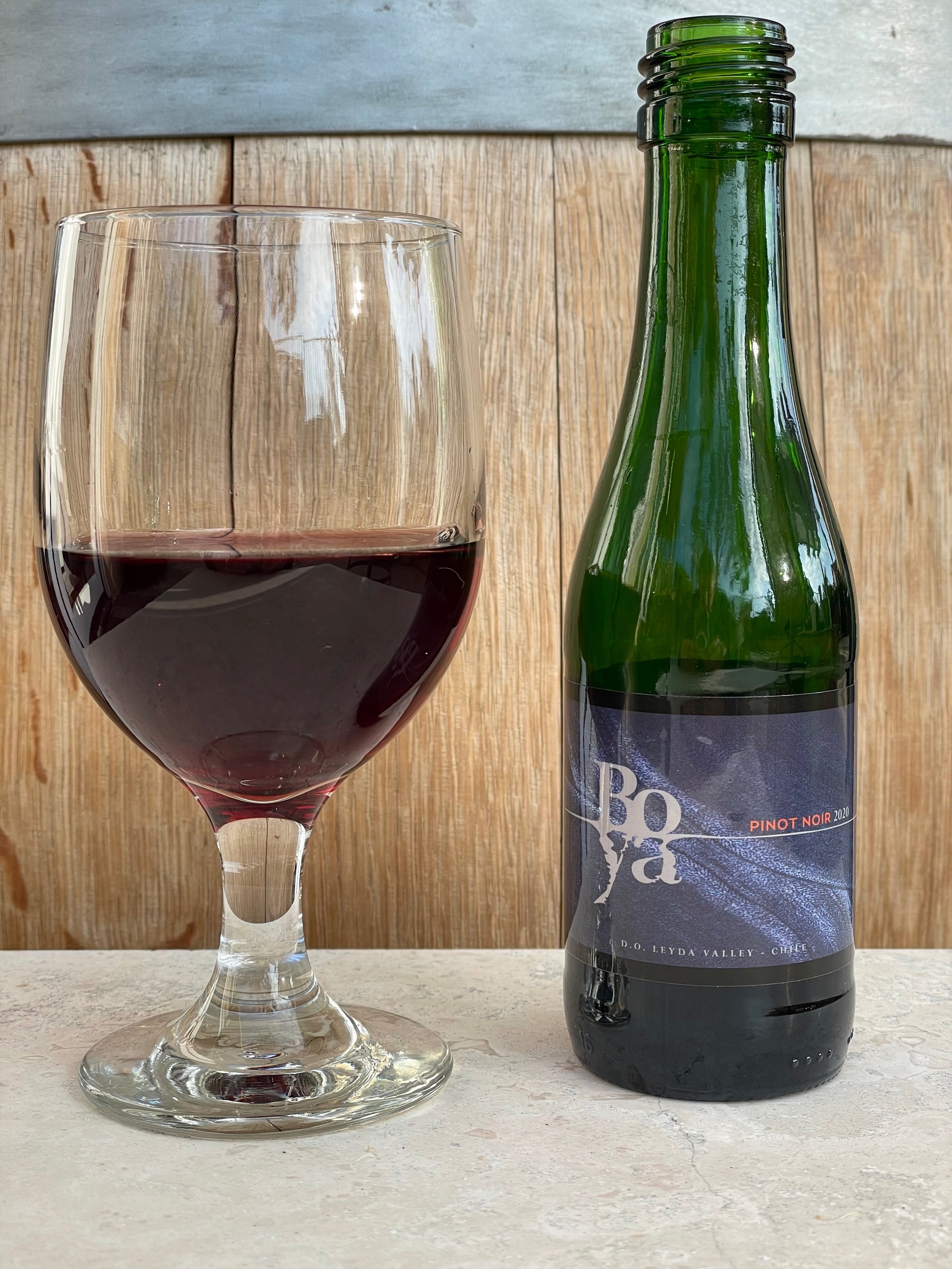
2020 Garces Silva “Boya” Pinot Noir ($20)

This Boya (Bouy) Pinot Noir is from the Leyda - San Antonio appellations and produced from three French clone (888, 777, 115). Thee grapes were fermented in stainless steel tanks for 12 to 15 days (10%-20% whole cluster). It was aged in stainless steel, used barrels and concrete tanks. This Boya Pinot Noir is medium ruby with a touch of garnet in color. On the nose it had strong aromas immediately after opening that settled down after decanting. On the palate it was medium-bodied with cherry-cranberry flavors (ABV: 13%, TA: 5.0 g/L, pH: 3.58, RS: 1.8 g/L)


This week, we’re shining a spotlight on three Pinot Noirs from Chile’s coastal regions. These wines are not only delicious but also affordable, making them a great fit as this week’s Behind the Cork™ Wines of the Week. So, grab a glass and let’s toast to these amazing Chilian wines! Cheers!


Disclosure of Wine Sample Submission: I received these samples at no cost for review. The opinions expressed are entirely my own.

Media Samples Provided by Concha Y Toro, Terranoble, Garces Silva and Master the World

Sunday August 18th is International Pinot Noir Day!

Photo by Chris Man on Unsplash

August 18th is International Pinot Noir Day, so let’s take a quick look at some interesting facts about this wonderful grape.

In previous blogs we got an overview of the Pinot grape and the tremendous number of Pinot synonyms (258!) and looked at the lesser known of the Pinots, Pinot Meunier and Pinot Gris. But, Pinot Noir is the star of the Pinot grapes.

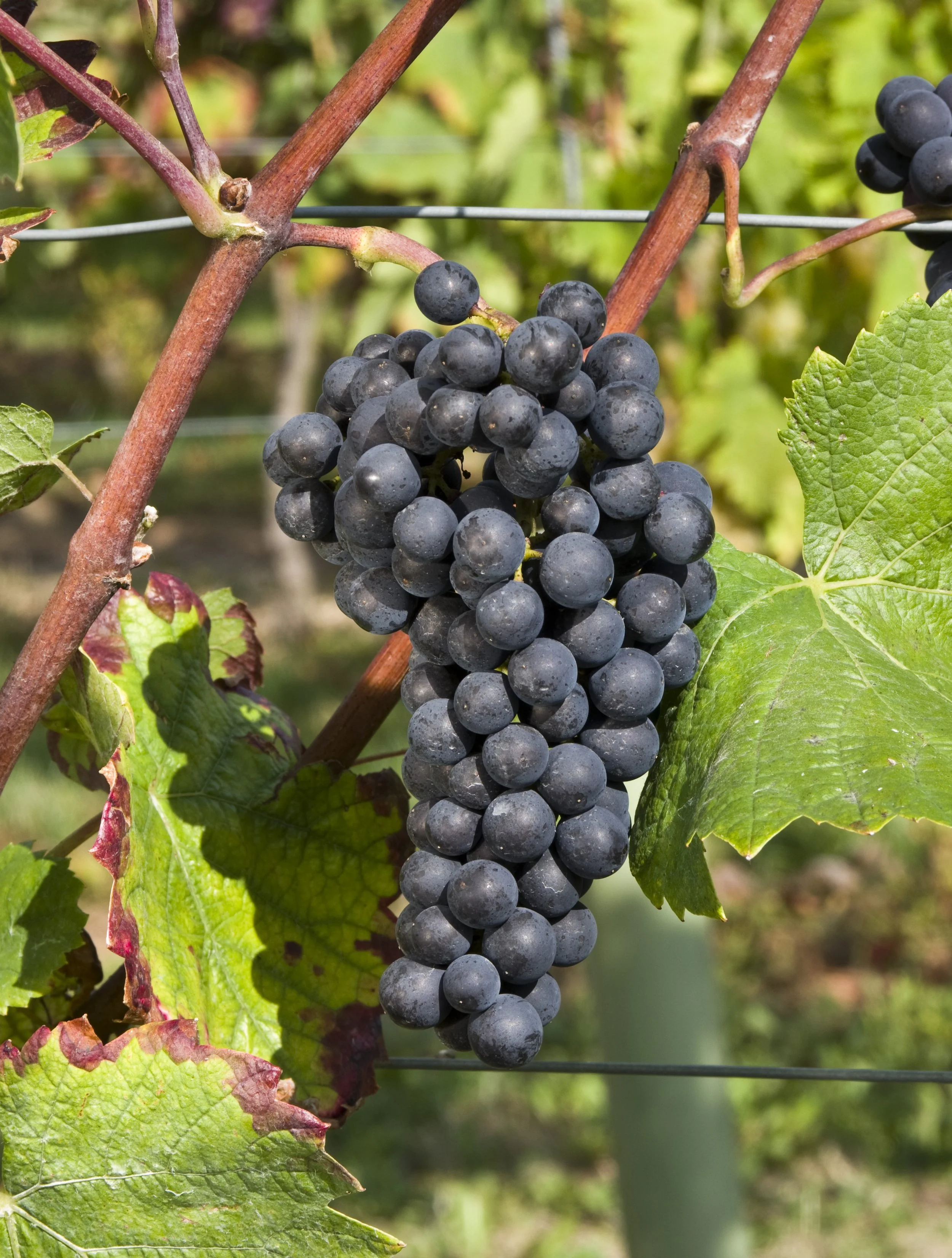
Pinot Noir’s name is derived from the French words for pine and black. The word pine refers to the shape of the tightly clustered, pinecone–shaped bunches of fruit, while noir (black) comes from the dark colored grapes.

Pinot Noir is probably best known as the “red” wine in Burgundy and least known as one of the three primary varietals in the making of Champagne.

Pinot Noir is the world’s most popular light-bodied red wine that is low in tannin. It’s also a favorite for the production of rosé wines and can also be found as a white wine!

The most common flavors of wines made from Pinot Noir include cherry, cranberry and raspberry. But, its flavors tend to be highly dependent on terroir (i.e., where it is grown). Pinot is grown around the world and most notably in France, USA (California and Oregon), Australia, New Zealand and Chile.

Because Pinot Noir has such delicate aromas, it is generally recommended that it be served in a large round bell-shaped glass.

So grab a glass of Pinot Noir on Sunday August 18th and raise a toast to International Pinot Noir Day!

Cheers!