A Tour of Wine Grapes: Pinot Noir Part 2

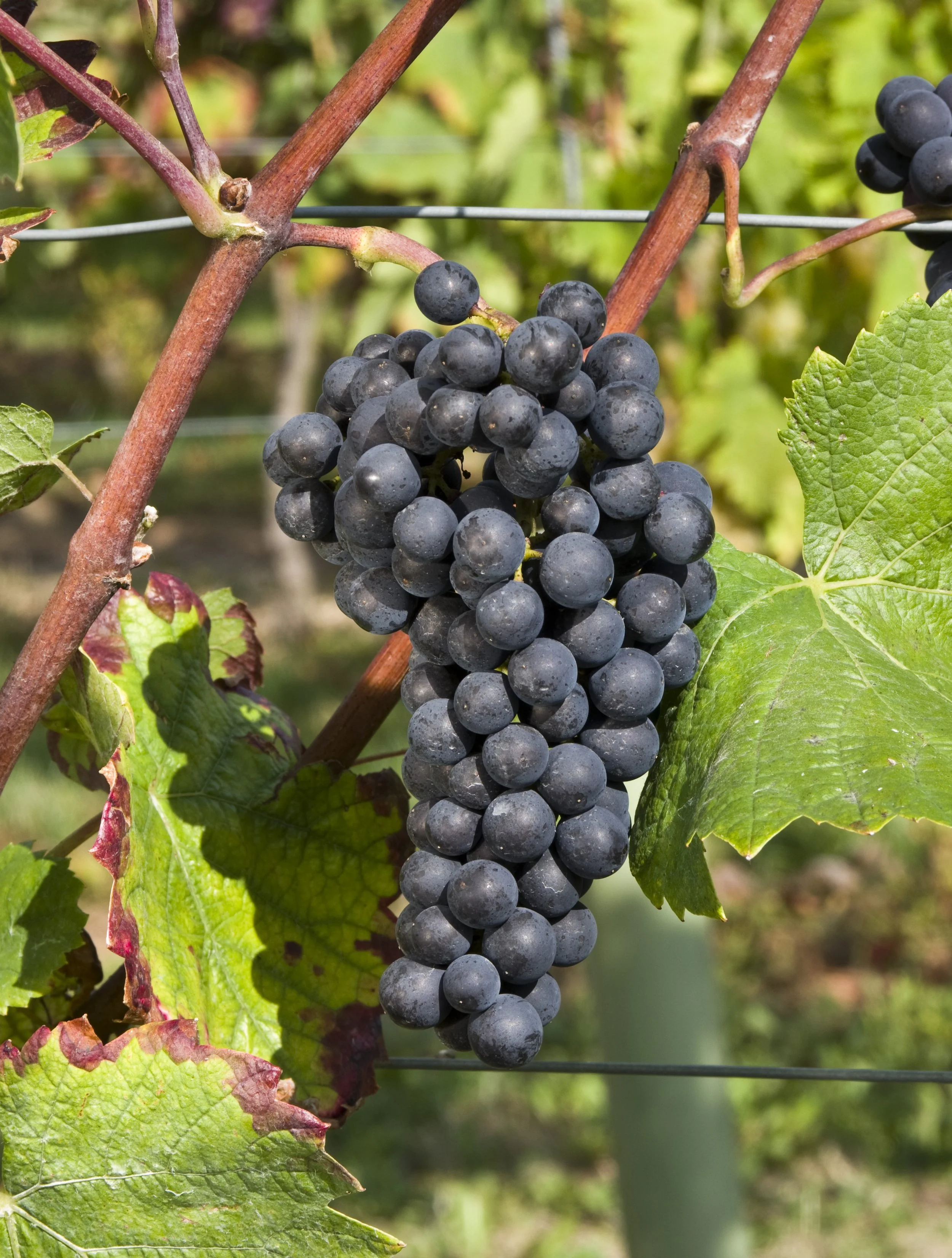
Pinot Noir 🍷

Photo by Ursula Brühl, Julius Kühn-Institut (JKI) on Wikimedia Commons

Last time we looked at the Pinot Noir grape and the various countries where it is grown. Now, let’s look at two specific countries — the U.S. and New Zealand.

🇺🇸 The United States: Coastal Coolers

In the U.S., Pinot Noir thrives primarily in California and Oregon, relying on marine fog and ocean breezes to cool the delicate vines.

  • Russian River Valley (Sonoma County): A natural funnel for Pacific fog, this legendary region produces luxurious, universally loved wines. They are famously lush, silky, and fruit-forward—bursting with ripe red cherry, plum, and signature undertones of warm baking spices like cola and nutmeg.

  • The San Luis Obispo & Paso Robles Corridor: This area highlights a dramatic contrast on California’s Central Coast. The Edna Valley AVA is a cool-climate paradise where an east-west valley funnels freezing ocean air to create an extended growing season. It yields remarkably balanced, mineral-driven Pinot Noirs with vibrant acidity. Just a short drive inland sits the significantly warmer Paso Robles AVA—famous for bold Cabs—where Pinot Noir is rare, robust, and riper. Central Coast wine projects, like Cakebread’s Bezel, masterfully bridge this gap by basing operations in Paso Robles while sourcing their vibrant Pinot Noir grapes from the frigid vineyards of Edna Valley.

  • Willamette Valley (Oregon): Accounting for over 70% of Oregon's production, this cool, maritime region draws frequent comparisons to Burgundy. Its Pinot Noirs are celebrated for elegance and complexity, striking a beautiful balance between tart red fruits (cranberry, currant) and savory, earthy notes of forest floor and truffle.

🇳🇿 New Zealand: Southern Hemisphere Spark

New Zealand masterfully bridges the gap between old-world elegance and new-world fruit intensity. Intense southern sunshine paired with dramatic day-to-night temperature swings produces vibrant, medium-bodied wines known for exceptional purity and crisp acidity.

  • Marlborough: The nation’s largest producer delivers bright, linear expressions bursting with tart raspberry, fresh cherry, and a clean herbal lift.

  • Martinborough: A boutique wine region at the southern tip of New Zealand's North Island, famous for producing world-class, savory, and structurally complex Pinot Noir.

  • Hawke's Bay: Located on the North Island, this historic region is typically warmer and famous for bold blends, but its cooler coastal and elevated river valley sites yield fantastic Pinot Noir. These wines are exceptionally approachable, delivering ripe red berry profiles, floral aromas, and significantly softer, subtler tannins.

  • Central Otago: The world’s southernmost wine region features a rugged, continental climate that yields robust, powerfully structured wines rich with dark berry fruits, silky tannins, and distinct notes of wild thyme.
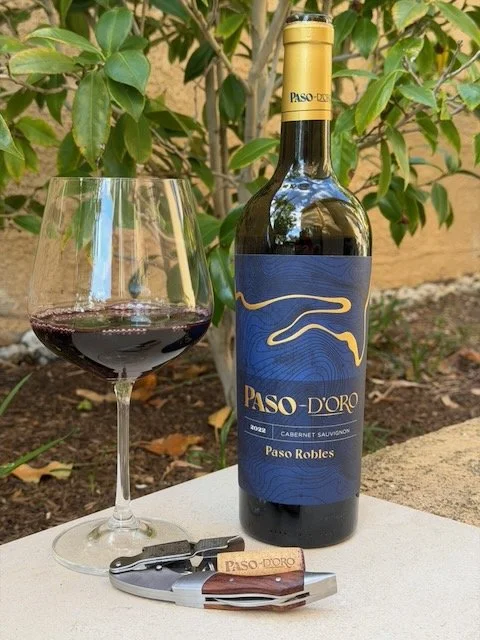
Behind the Cork™ - Paso D'Oro Cabernet Sauvignon

Paso D’Oro Cabernet Sauvignon ($22)

Paso D'Oro is a winery venture by the Terlato Wine Group that focuses on producing high-quality Cabernet Sauvignon from the Paso Robles region in California. The name translates to "Way of Gold," paying tribute to the golden California sunshine and the "golden path" taken by the winemaker's family.

The wines are crafted by Laura Orozco, who was appointed as the winemaker for this venture in 2022 after her successful tenure at Napa's Chimney Rock.

The grapes for this wine are from four different American Viticultural Areas (AVAs) in Paso Robles including the Estrella District, San Juan Creek District, Geneseo District and the Highlands District. Each block has a different elevation, soil type, row direction, clone and rootstock.

Paso D’Oro Cabernet Sauvignon is produced from 92% Cabernet Sauvignon, 4% Petite Sirah and 4% Alicante Bouschet. Each individual vineyard block was fermented individually using several different yeast strains. It was aged 8 months in 25% new barrels.

This wine is deep ruby in color with wonderful aromas of black fruit. On the palate, this Paso D’Oro Cabernet Sauvignon has rich dark fruit flavors as well as vanilla and caramel from the oak aging. The tannins are medium-high (decant for 30-60 minutes) and the acidity is medium. It finishes with rich dark-fruit flavors.

Paso D’Oro Cabernet Sauvignon is a terrific wine that’s attainable at a really great price. That makes it a perfect fit as this week’s Behind the Cork™ Wine of the Week. Cheers!

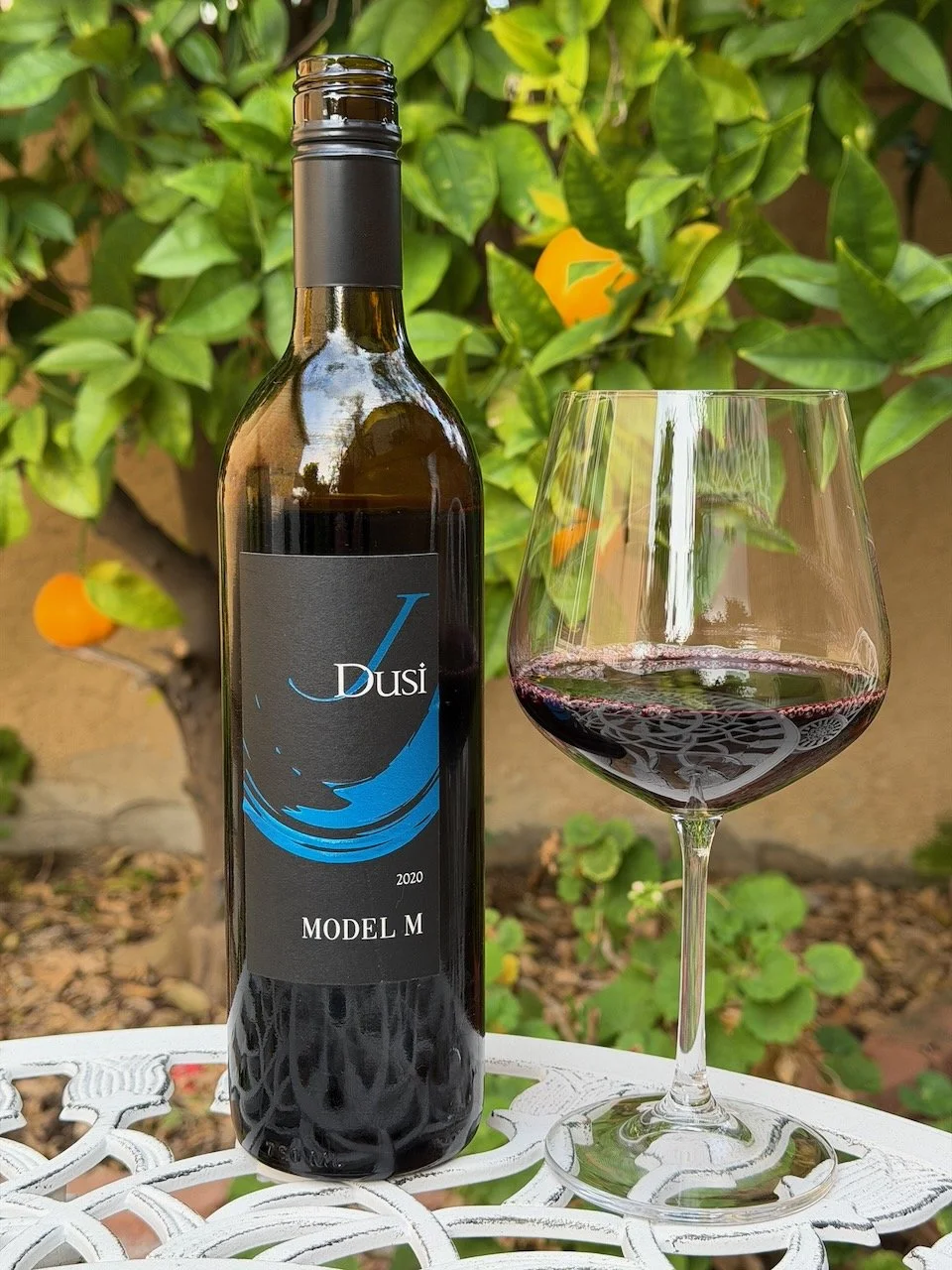
Behind the Cork™ - J Dusi Model M Red Blend

2020 J Dusi Model M Red Blend ($17.99)

On a recent visit to Paso Robles, I had the pleasure of spending some time in the tasting room at J Dusi with Janell Dusi, the “J” in J Dusi and a fourth-generation winemaker in the Dusi family.

Janell was born and raised on the Dusi Vineyard where her grandfather Dante taught her the old world Italian style of winemaking. The Dusi family’s heritage and history in Paso Robles Wine Country dates back to the early 1920’s, where grape growing has been a craft that has deep roots in the Dusi family. The sustainable farming practices that were implemented by Janell’s great-grandparents ninety years ago are still the standard followed today.

This red wine blend is named for their 1939 Model M tractor that has been a workhorse for the Dusi family in Paso Robles for three generations.

This 2020 J Dusi Model M wine is a red blend with equal parts of Cabernet Sauvignon, Zinfandel, Syrah and Petite Syrah. It is a medium ruby red in color with wonderful aromas of red and black fruit. On the plate, this medium-full bodied wine has great fruit flavors of red and black plum, black cherry and cassis. It has balanced tannin and acidity and finishes with jammy fruit and some spiciness.

Model M red blend from J Dusi is a wonderful wine at a great price. It’s also widely available. This makes Model M the perfect fit as this week’s Behind the Cork™ Wine of the Week. Cheers!

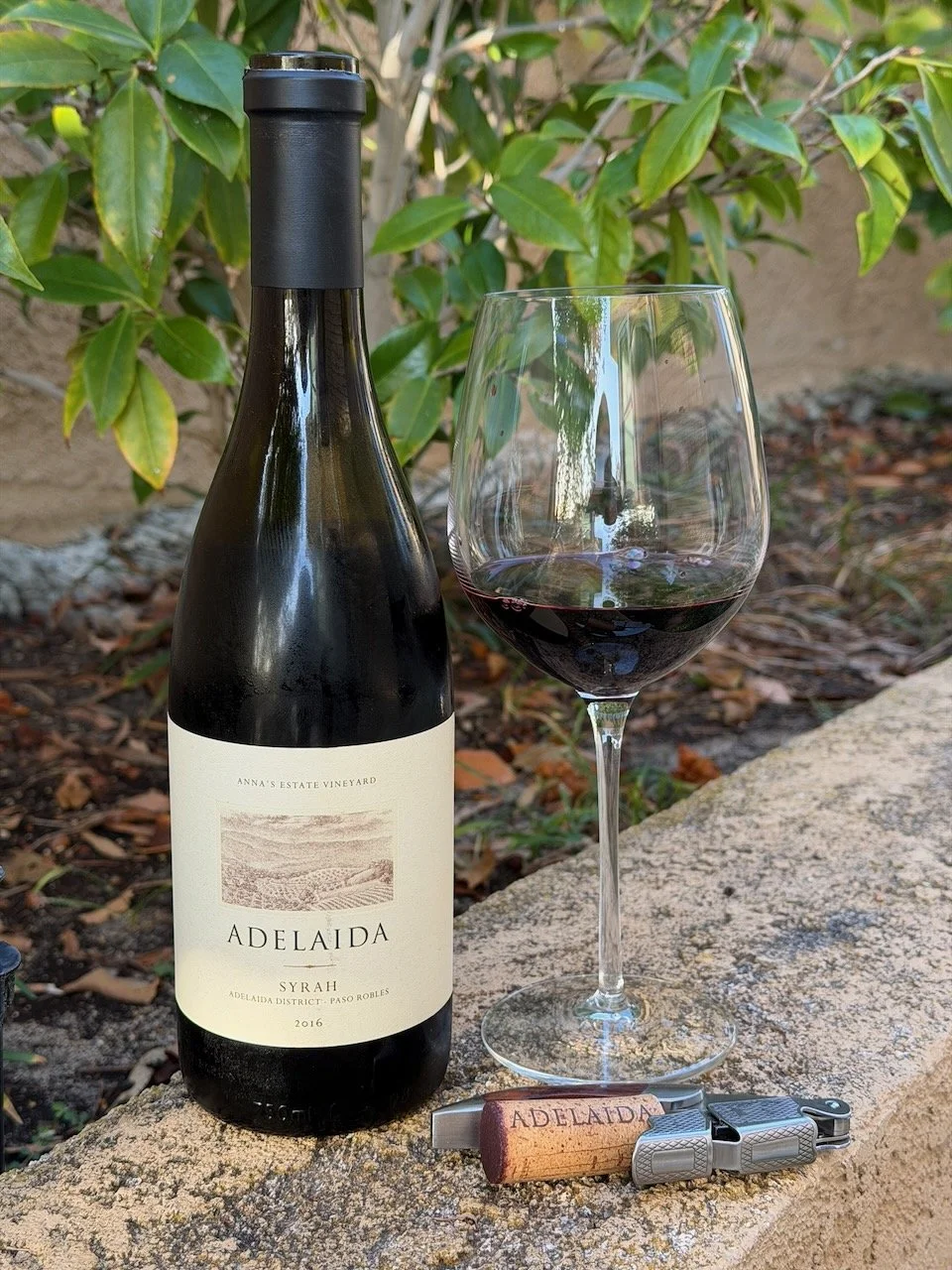
Behind the Cork™ - Adelaida Anna's Estate Vineyard Syrah

2016 Adelaida ‘Anna’s Estate Vineyard’ Syrah ($36)

Nestled into the rolling foothills of the Santa Lucia Mountains near Paso Robles, California, there is an idyllic contemporary winery owned by the Hoffman family and operated by Dr. Stanley Hoffman and his two sons, David and Michael. The vineyards which are 1400-1800 feet above sea level, all produce estate-bottled premium wines. 

 The story of this uniquely successful operation goes back to 1964 when Dr. Hoffman planted his first French varietals Chardonnay, Pinot Noir, and Cabernet Sauvignon because he had found the climate, terrain, and chalky lime-rich soil of his Central Coast ranch to be comparable to the viticulture regions of France. 

This Adelaida Syrah is 100% Syrah that was fermented in concrete and stainless steel tanks and aged in French oak (32% new) for 18 months.

It is a deep purple in color with delicate aromas of blackberries and tobacco. On the palate, this full-bodied wine has rich dark fruit flavors of blackberry, plum with some spice and pepper. The oak aging leads to nice vanilla flavors. It has a long finish that is smooth and balanced.

This Adelaida ‘Anna’s Estate Vineyard’ Syrah is a terrific wine that is affordable and obtainable. That makes it a perfect fit as this week’s Behind the Cork™ Wine of the Week. Cheers!

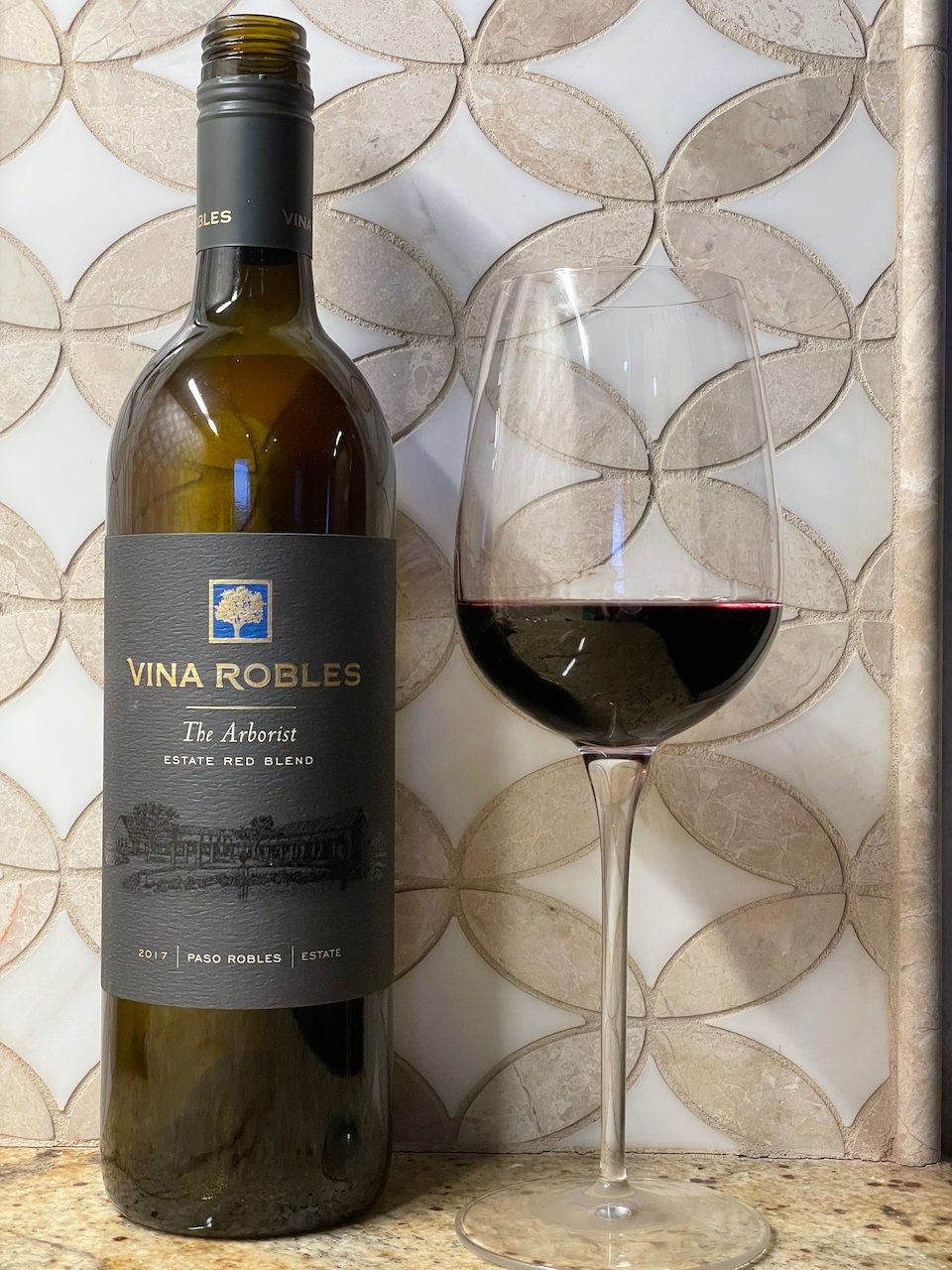
Behind the Cork™ - Vina Robles The Arborist Red Blend

2017 Vina Robles The Arborist Red Blend ($18)

The Arborist is dedicated to the founder of Vina Robles, Hans Nef, and named for the arborist who saved the life of the iconic 300+ year-old oak tree featured on the label. Mr. Nef was known for his love of trees; he named the winery for them (Robles is Spanish for oaks), and put an oak tree on the first Vina Robles wine label. That same tree still exists on their label, and in their Jardine Vineyard as well.

Through Vina Roble’s partnership with One Tree Planted, they plant trees with a portion of the proceeds from every bottle of The Arborist that they sell.​

The Arborist Red Blend is made mainly of varieties grown in their Huerhuero Vineyard, located directly behind the winery in the rolling hills of Paso Robles. It is produced with a blend of 44% Syrah, 32% Petite Sirah, 18% Grenache and 6% Mourvèdre.

The clusters are cold soaked for two days prior to fermentation. Various pump-over techniques were implemented during progressive stages of fermentation to enhance fruit extraction and balance out the tannin structure. The wine was then aged in both small and large format French, Hungarian and American oak barrels for 18 months

This is a fruit-forward wine with complex flavors, moderate tannin and a nice finish that goes well with most any meal and is wonderful just by the glass.

Vina Robles The Arborist Red Blend is affordable and attainable making it a great fit as the Behind the Cork™ Wine of the Week. Cheers!