The Art of Wine Making: Choosing to Allow a Wine to Age On-Lees

Aging wine on lees (also known as sur lie aging) is a winemaking technique that can play a role in shaping the flavor, texture, and complexity of a wine—especially whites like Chardonnay, Champagne, and Muscadet, but also increasingly in reds and even natural wines.

Lees are the dead yeast cells and other solids (like grape skin particles) that remain in the wine after fermentation. There are two types (1) Gross lees which are heavy, coarse sediment that settles quickly and is usually removed and (2) the fine lees which are the smaller, finer particles that remain suspended longer and are typically the focus of lees aging.

After fermentation, the wine is left in contact with the fine lees for an extended period (ranging from a few months to several years). The winemaker may choose to stir the lees periodically (known as bâtonnage) to encourage more contact or leave the lees undisturbed to preserve freshness and minerality. Over time, the yeast cells break down and release compounds into the wine. 

Aging a wine on-lees can affect several aspects of the final product. It can add texture, giving the wine a richer, creamier mouthfeel. It also adds complexity to the wine with flavors of yeast, brioche, toast and even a bit of nuttiness. Finally, aging on-lees can naturally protect the wine against oxidation.

So, aging a wine on-lees is yet another part of the art of wine making. Cheers!

What are Lees in Winemaking?

A wine barrel with a clear end-cap shows the settled Fine Lees

I was recently hosting a wine tasting that involved a white wine. On the back label, it stated that the wine had been “Aged on lees.”  I was asked the obvious question “What are lees?”

In the broadest sense, “lees” refers to all the stuff that settles on the bottom of a wine fermentation or aging vessel (e.g., the tank or barrel). This “stuff” can include grape skin fragments, grape seeds, grape stems, pieces if grape leaves and, after fermentation, dead yeast. 

This collection of “stuff” is generally referred to as the “Gross Lees.” Not exactly because it might be considered ‘gross’ in its consistency, but because it is not the collection of stuff that you want your wine to be aged on. These items can to lead to some rather offense odors and flavors in a wine.

Wine makers generally “rack off” their wine (transfer it) to a fresh vessel or barrel that leaves behind the really chunky stuff and only moves the fermented wine, along with a bunch of dead yeast cells that don’t readily settle and remain mixed in with the newly fermented wine.  With aging, the dead yeast cells do settle to the bottom of the tank or barrel (see image).

When a wine is “Aged on Lees,” this contact with the dead yeast cell is allowed to continue throughout the aging process or until the wine maker determines they’ve achieved the desired wine characteristic. Wine makers even encourage the wine’s contact with the dead yeast cells, or “Fine Lees” by stirring the wine to move the lees off the bottom so that it can have more contact with the wine. The French term for this stirring technique is “Bâttonage.”

As the dead yeast cells break down during aging, they can bring out flavors of nuts, honey, bread, etc. They can also bind with tannins in the wine and to help smooth out the wine. So then, when the wine maker is happy with their wine’s characteristics, they let the Fine Lees settle and again carefully transfer (rack off) the wine and leave behind the layer of dead yeast cells that lay on the bottom of the aging vessel. 

What to Do About Sediment in Wine

Sediment_2.jpg

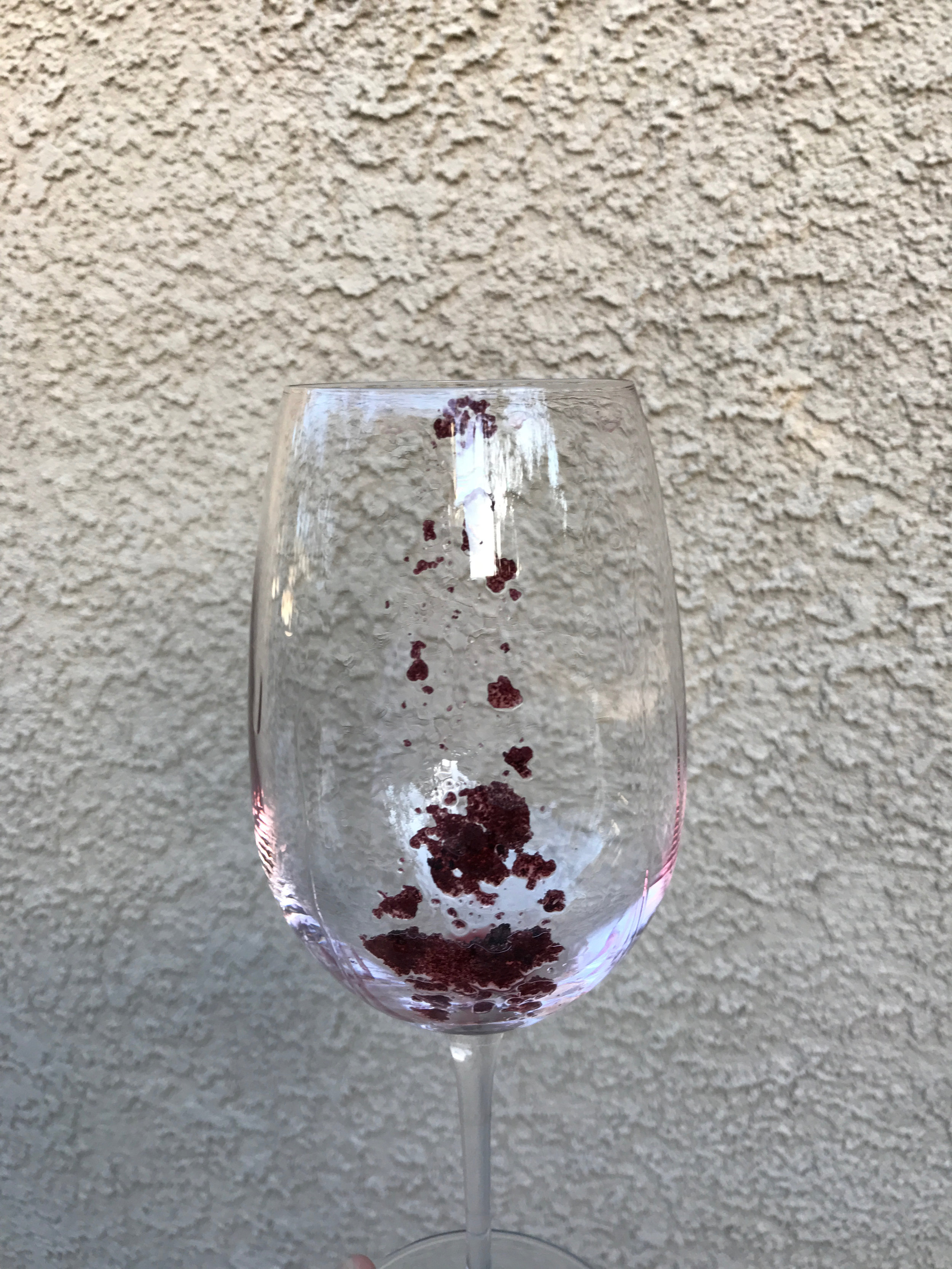
Have you ever gotten to that last sip of a glass of wine only to get a mouth-full of sediment? Instead of savoring that last sip, you end up spitting it out. An unpleasant way to finish.  And that's what recently happened to me as shown in the photo. But it doesn't have to go that way.

As discussed last time, lees (dead yeast cells and bits of grape seeds and solids) are natural in the wine making process and often desirable to be left in the wine during fermenting or aging.  This process is most common in red wines. Some wine makers will then filter out these solids (fining or racking), but others prefer to leave them in the wine as it's bottled to continue to add flavor.

There are several ways to avoid getting a mouth full of these particles in your glass of wine.

The first way is try to keep the solids in the bottle and not in your glass. If the bottle has been standing still and upright for a couple of days, the solids will have naturally fallen to the bottom of the bottle. As long as you are careful to not stir them up while opening the bottle and are gently tipping the bottle while pouring, the sediment should stay in the bottom of the bottle. But why take the risk.

The most dependable way is to do your own filtering before serving. There are several inexpensive devices on the market for doing this. The best one is a combination filter/aerator funnel. You simply hold this funnel above your decanter (or any other suitable container) and pour the wine through.  It has a micro-fine filter built-in that traps all those undesirable particles while allowing all the wine to pass through. As the wine exits the funnel, it gets aerated (exposed to air) which will usually help a young red wine. You'll then find all those undesirable particles trapped in the bottom of the funnel.  Not lurking in your wine glass.

While sediment is not harmful if consumed, it does significantly detract from a nice glass of wine.  So, filter and forget! Cheers!


How Lees & Battonage Are Used in Wine Making

A couple of weeks ago, I reviewed a Sauvignon Blanc from Chile. The tech sheet that came with it described how the wine was made including the terms 'maceration,' 'lees,' and 'battonage.'  We took a brief look at 'maceration' last time where, simply put, it is a term for allowing the grape skins, seeds and stems to soak in the juice (the must) either prior to fermentation or during fermentation.

After the yeast does its job during fermentation by 'eating' the natural sugar in the must and transforming it to alcohol, fermentation is complete and the yeast dies. These dead yeast cells that remain in the wine, along with bits of grape seeds and solids, are called 'lees.'

At this point, the lees can either be removed from the wine (by racking or fining methods) or they may remain in the wine. If they are left in the wine, they will break down and release compounds that interact with the fermented wine. This interaction can create additional complexity, aroma and flavor.

But, with time, the lees tend to settle at the bottom of the aging vessel. If the lees are just left in the bottom of the aging vessel, they can clump up and actually become detrimental. So, if a wine maker wants to age their wine 'on lees,' they need to periodically stir the wine to keep the lees mixed in with the aging wine. Battonage (or Bâtonnage) is this periodic stirring of the wine. Battonage essentially helps redistribute all these positive lees compounds into the wine, making sure all the wine comes in contact with them.

The term battonage derives from the stirring stick, a baton.  The baton is placed in the top opening of a barrel (bung hole) and gentle rotated within the barrel to stir the wine and re-distribute the lees during aging.

So, there you have it. Many wine makers use maceration, lees and battonage in their wine making process. A bit technical, yet important parts of making all the great wines we enjoy. Cheers!