
Sparkling Wines to Consider for the Holidays

Sparkling wines really do shine during the holidays—both literally and figuratively. Here’s a few tips on the various types of sparkling wines to enjoying them to the fullest.

Champagne

Champagne is a sparkling wine that is produced in the relatively small region of Champagne in France. An entry level bottle of Champagne is going to start in the $50 range.

Some Champagne facts:

  • Champagne is typically produced from three grapes — Pinot Noir, Chardonnay and Pinot Meunier

  • To be called Champagne, it must be produced in the Champagne region of France. Otherwise, it must be called Sparkling Wine

  • Champagne is produced using a process called the méthode champenoise where the bubbles are formed in the bottle during a second fermentation.

U.S. Sparkling Wine

In the U.S., there are a tremendous number of makers of sparkling wine. Most will produce a wine that can taste very much like the French Champagne. And, you can also find rosé sparkling wines.  An entry level bottle of sparkling wine in the U.S. can be as little as $10. Read more

Prosecco and Asti

In Italy, Prosecco is their signature sparkling wine. Produced in the Veneto region just north of Venice, this sparkling wine usually produces bigger bubbles. Bottles of Prosecco can be purchased in the $10- $15 range. Read more

Cava

The sparkling wine of Spain is Cava that is produced in the Catalonia region of Spain where Barcelona is located.  Nice bottles of Cava can be purchased for around $15. Read more

Styles of Champagne and Sparkling Wine

Brut Nature - This style is bone dry meaning it has little or no sugar content (0–3 g/L sugar).

Extra Brut - This style is also very dry but, it can have up to twice the sugar level of Brut Nature (0–6 g/L sugar). This little bit of sweetness creates a wonderful balance with Champagne’s naturally high acidity.

Brut - This is the most common style. While considered “Dry” this style can have twice the sugar of Extra Brut (0–12 g/L sugar).

Extra Dry - This is the one that always confuses people. This style is sweeter which actually makes it also taste a bit fruity (12–17 g/L sugar).

Dry - The confusing continues. This style is getting up there in sweetness (17–32 g/L sugar).

Demi-Sec - Now you’re talking Sweet (32–50 g/L sugar). This style works well with desserts or cheeses.

Doux - This one, while very rare to find, is really sweet (50+ g/L sugar).

A few serving tips

  • Chill properly: About 40–45°F (4–7°C) is ideal

  • Use proper glassware: Tulip or white wine glasses preserve aroma better than narrow flutes

  • Open gently: Twist the bottle, not the cork, for a quiet, elegant release

No matter which type or style you choose, give sparkling wines a try this holiday season. Cheers!
Behind the Cork™ - Sonoma Grove Zinfandel

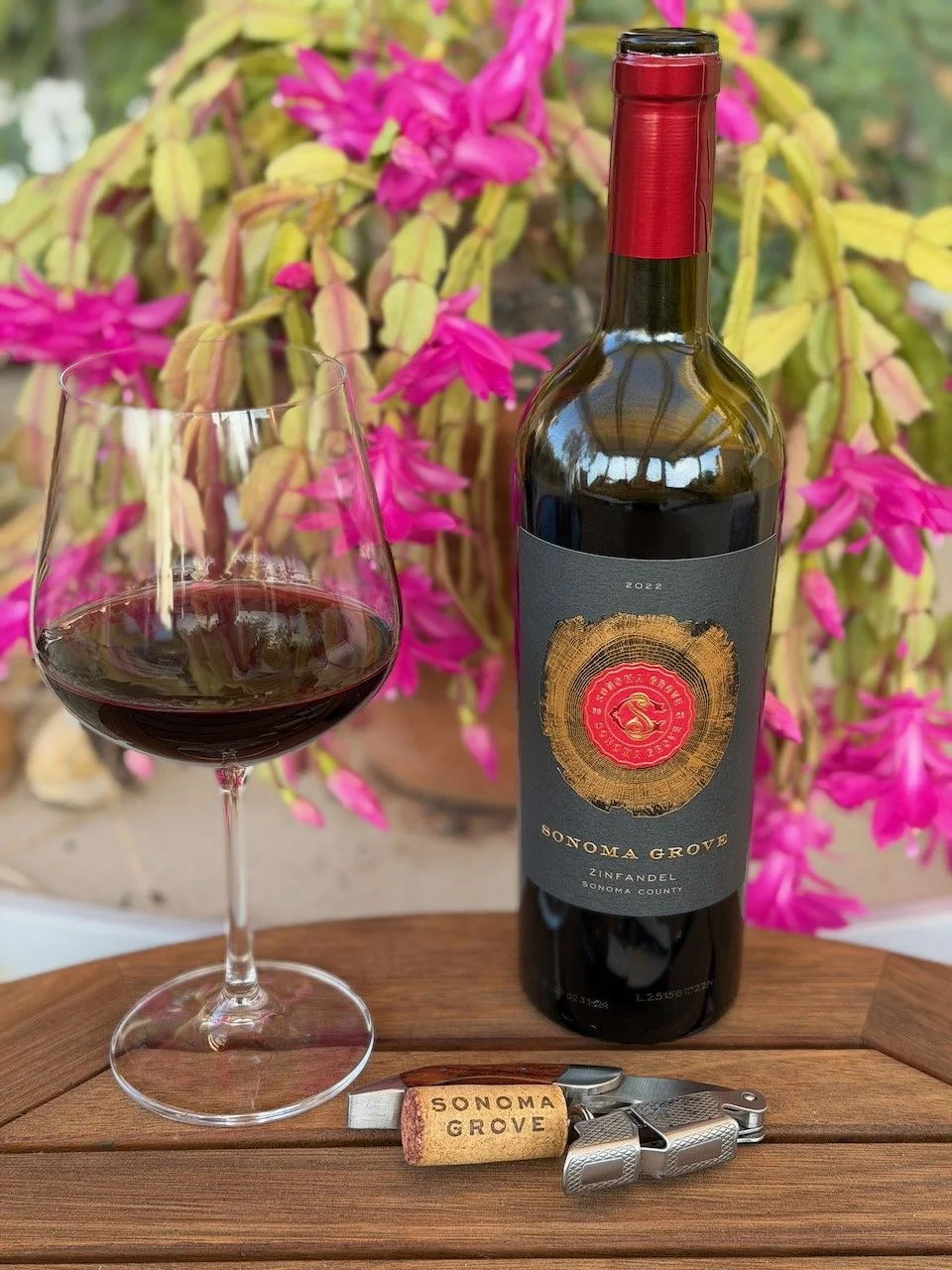
2022 Sonoma Grove Zinfandel ($8)

This Sonoma Grove 2022 Zinfandel is produced for the Navigator Wine Collection (formerly Precision Wine Company). They cellar and bottle the wine. The actual wine producer is not available.

Sonoma Grove wine is from Sonoma County, a great region for Zinfandel, especially the Dry Creek region.

Sonoma Grove Zinfandel is medium purple in color with jammy fruit aromas and a hint of sweet tobacco leaf. On the palate, this Zinfandel is indeed jammy, with sweet flavors of boysenberry and blackberry jam. It finishes lean.

Sonoma Grove Zinfandel is a great value and a good fit as this week’s Behind the Cork™ Wine of the Week. Cheers!

A Beginner's Guide to Wine Flavors -- Red Wines

Last time we looked at the common flavors of white wines.

So, now, here are descriptions of what common red wines tend to taste like. These are the broad, recognizable flavor profiles you can expect:

Red Wines

Cabernet Sauvignon

Bold, full-bodied, and structured. Flavors include blackcurrant, blackberry, cedar, and baking spices, often with bold tannins.

Merlot

Softer and smoother than Cabernet Sauvignon. Flavors include plum, cherry, chocolate, and sometimes vanilla from the oak aging.

Pinot Noir

This wine is light-bodied and elegant. It includes notes of cherry, cranberry, strawberry, raspberry, and sometimes subtle earthy notes like mushrooms or forest floor.

Syrah / Shiraz

Rich and spicy. Syrah tends to show blackberry, black pepper, violet, and sometimes smoky notes. Shiraz (Australia) leans riper and jammy.

Tempranillo

Spain’s flagship grape is a mix of cherry, plum, herbs, and sometimes tobacco or leather, especially in aged versions.

Malbec

Juicy and smooth. Typically dark berry flavors, with hints of cocoa, plum, and black cherry.

Sangiovese

This is the grape in used to make Chianti. It’s bright with flavors of red cherry, tomato, herbs, and a lively acidity.

Grenache (Garnacha)

Light, juicy, and fruity. Flavors include strawberry, raspberry, white pepper, sometimes with a hint of cinnamon.

Zinfandel (Primitivo)

Bold and spicy. Lots of blackberry, plum, jammy fruit, and signature black pepper notes.

Cabernet Franc

A bit lighter than Cabernet Sauvignon, with red fruit, herbs, bell pepper, and soft, gentle tannins.

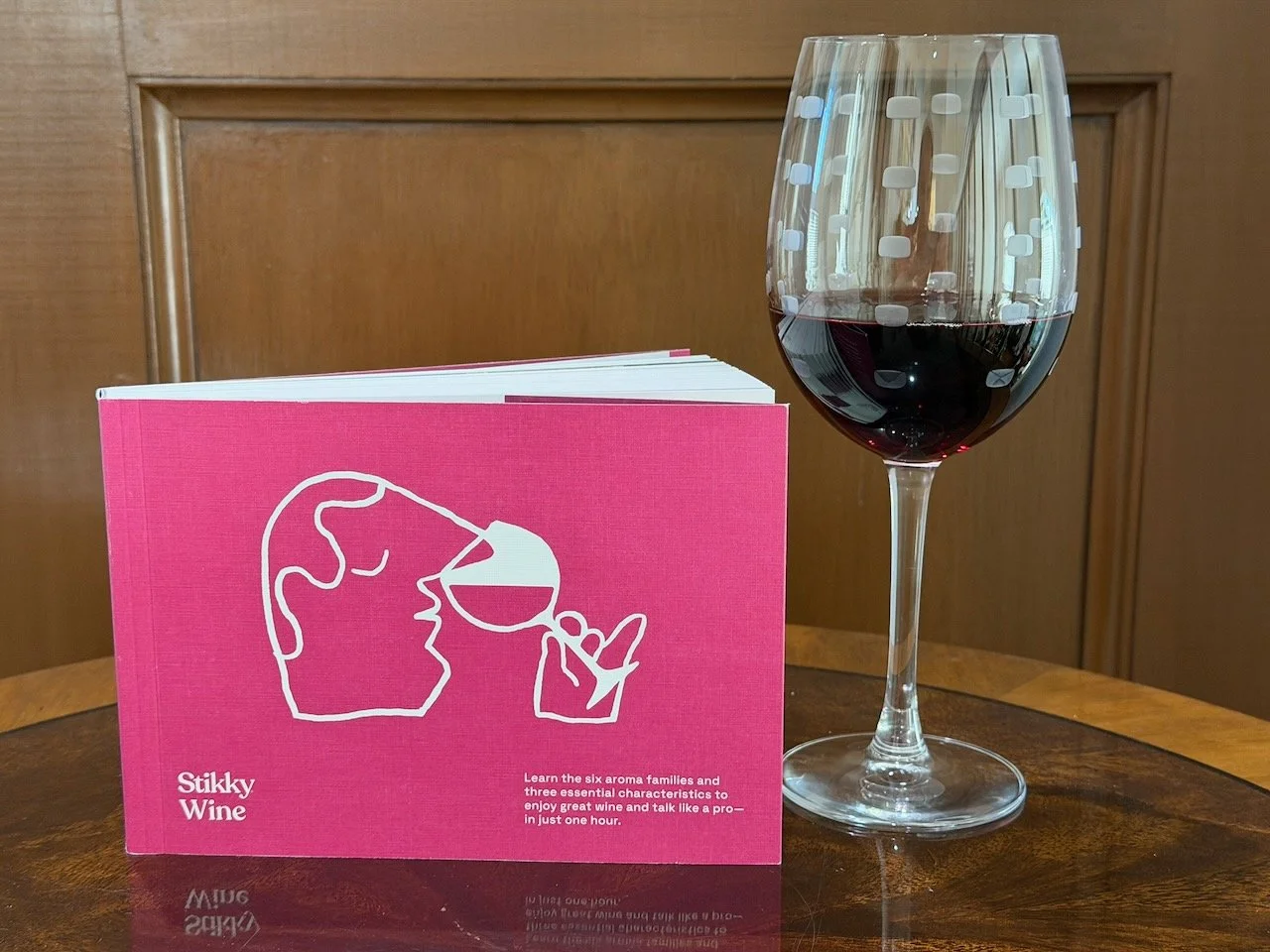
Behind the Cork™ - Book Review: Stikky Wine

Stikky Wine ($12)

Looking for a good, beginner’s-level, easy to read book to learn about wine? Stikky Wine is a great place to start.

The book does not rely on taking notes or memorization. It clearly states “Read the three sections…stop after each section and practice in the real world…promise yourself that you will try to answer each question in the text. Keep these promises, and what you learn will stick.” Hence the name, Stikky Wine.

The sections are a quick-read with information on how wine is made, grape types, easily identifiable aromas and flavor and common red and white wines. No technical jargon, just simple, easy to understand facts about wines. And, some quick checks along the way to check your understanding.

Stikky Wine is a breeze to read and brings together the essential wine knowledge in straightforward, easy-to-grasp language, all enhanced by beautiful illustrations. It’s a fantastic guide for anyone new to the world of wine. Cheers!


Stikky Wine is available on-line, visit https://stikky.com/collections/books. Provided by Book Publicity Services Inc.

A Beginner's Guide to Wine Flavors -- White Wines

One of the most common questions I get it is “Tell me what some good wines are?” While that’s a simple question, it’s also quite difficult to answer because not only is everyone’s palate different, but your palate for wines will evolve as you explore them.

So, here are descriptions of what common white wines tend to taste like. These are the broad, recognizable flavor profiles you may expect as you taste them:

White Wines

Chardonnay

The Chardonnay grape has been described as being a bit “Chameleon-like.” Unoaked Chardonnay tastes like apple, pear, citrus while oaked styles have vanilla, butter, toast, and a richer, smoother mouth-feel.

Sauvignon Blanc

These wines are typically crisp, zesty, and refreshing due to their higher acidity. Flavors include lime, green apple, passionfruit, and often herbaceous or grassy notes.

Pinot Grigio / Pinot Gris (Same grape; different names)

These wines are light and clean with flavors of pear, apple, lemon, and a refreshing, straightforward finish.

Riesling

Riesling wines are very aromatic and expressive. Flavors include peach, apricot, lime, and sometimes floral or mineral notes. Riesling can be dry (no residual sugar) or sweet.

Moscato / Muscat (Same grape; different names)

These wines tend to be sweet, aromatic, and low in alcohol. Flavors include peach, orange blossom, honeysuckle, and a grapey-flavor that’s hard to miss.

Chenin Blanc

This wine can taste like apple, pear, quince, or honey and apricot in sweeter styles. It’s usually bright and lively due to its higher acidity.

Gewürztraminer (Guh-VERTS-tra-mee-ner)

This wine is highly aromatic. Think lychee, rose petal, ginger, along with a touch of sweetness. Very floral and exotic.

So, there’s a quick look at white wines. Remember, these are the broad, recognizable flavor profiles you are likely to find. But, as you continue through your wine journey, you’ll also be able to pick out many more.

Next time we’ll take a look at red wines. Until then, cheers!