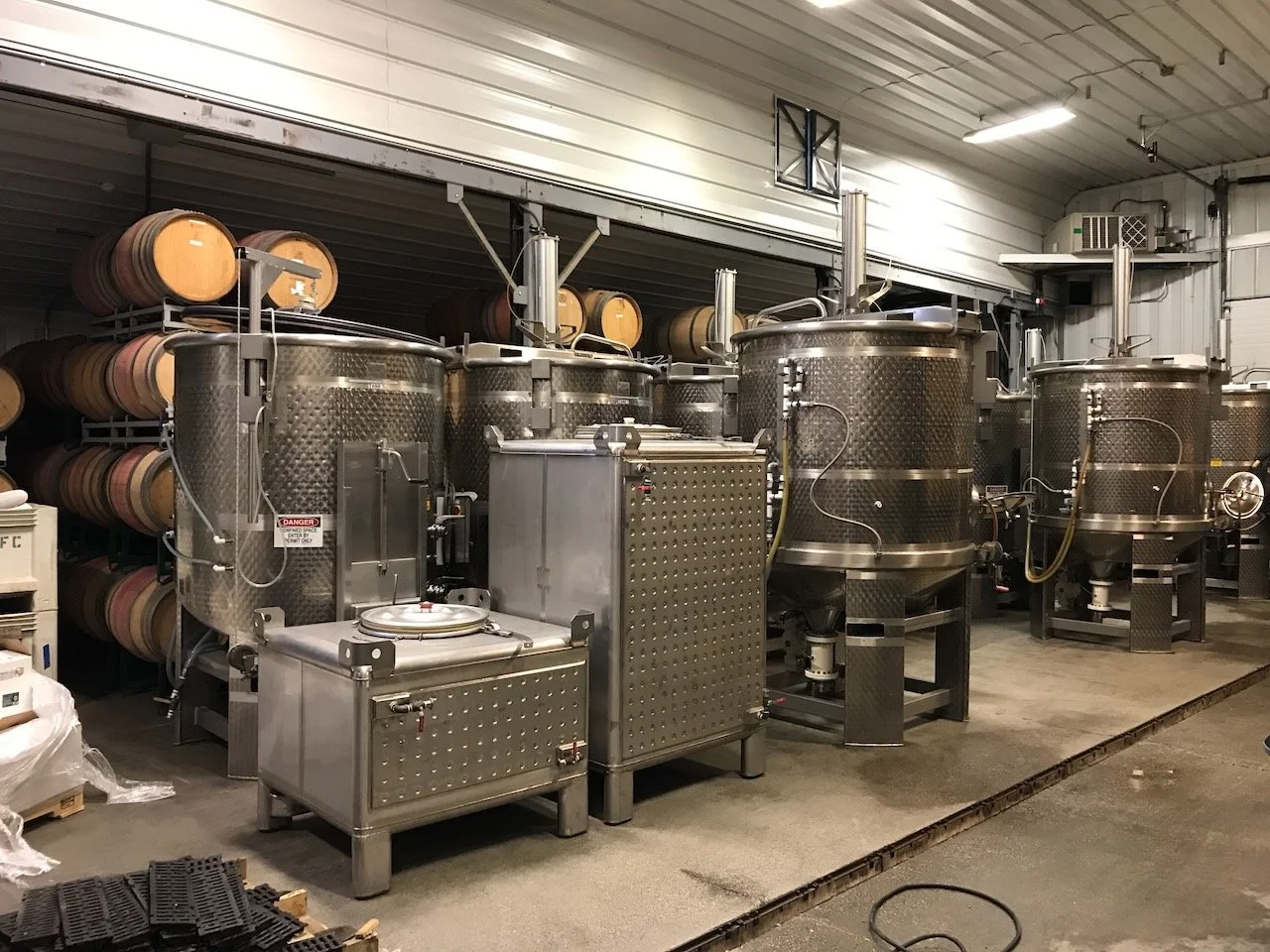
It's Not the Grape that Makes the Wine - It's How the Grape is Transformed

There are lots of wines being produced. Just look at the wine aisle at your local grocery story or wine shop. And then, look at how many different Chardonnay wines are offered. And how many Cabernet Sauvignons there are. And so on.

But, these wines are all different. Some Chardonnay’s are subtly different and others are hugely different. Same goes for the Cabernet Sauvignons. So, why are the Chardonnay’s different and why are the Cabernet Sauvignon’s different. It’s not always the grape, but instead how the wine maker uses the grape.

Here are just some of the factors that wine makers use that affect the final taste of the wine:

  • Whether the grapes were removed from the stems for fermentation or fermented as whole clusters

  • The fermentation vessel used - stainless steel tanks or oak barrels

  • The length of time the grapes soak (aka macerate) in their own juice

  • The length of the fermentation process and the temperature of fermentation

  • Whether the fermented wine undergoes Malolactic Conversion or not

  • How long the wine stays in contact with the dead yeast cells (aka resting on lees)

  • How long the wine is aged

  • The vessel used for aging (stainless steel versus oak)

  • The type of oak used in aging (French oak, American oak, Hungarian oak)

  • The filtering or ‘fining’ process used

  • The amount of time the wine spends in the bottle before being shipped for sale

Again, this is just an abbreviated list of variables in the wine making process. But it certainly illustrates the reasons that no two makers of a varietal wine end up with the same result. Cheers!
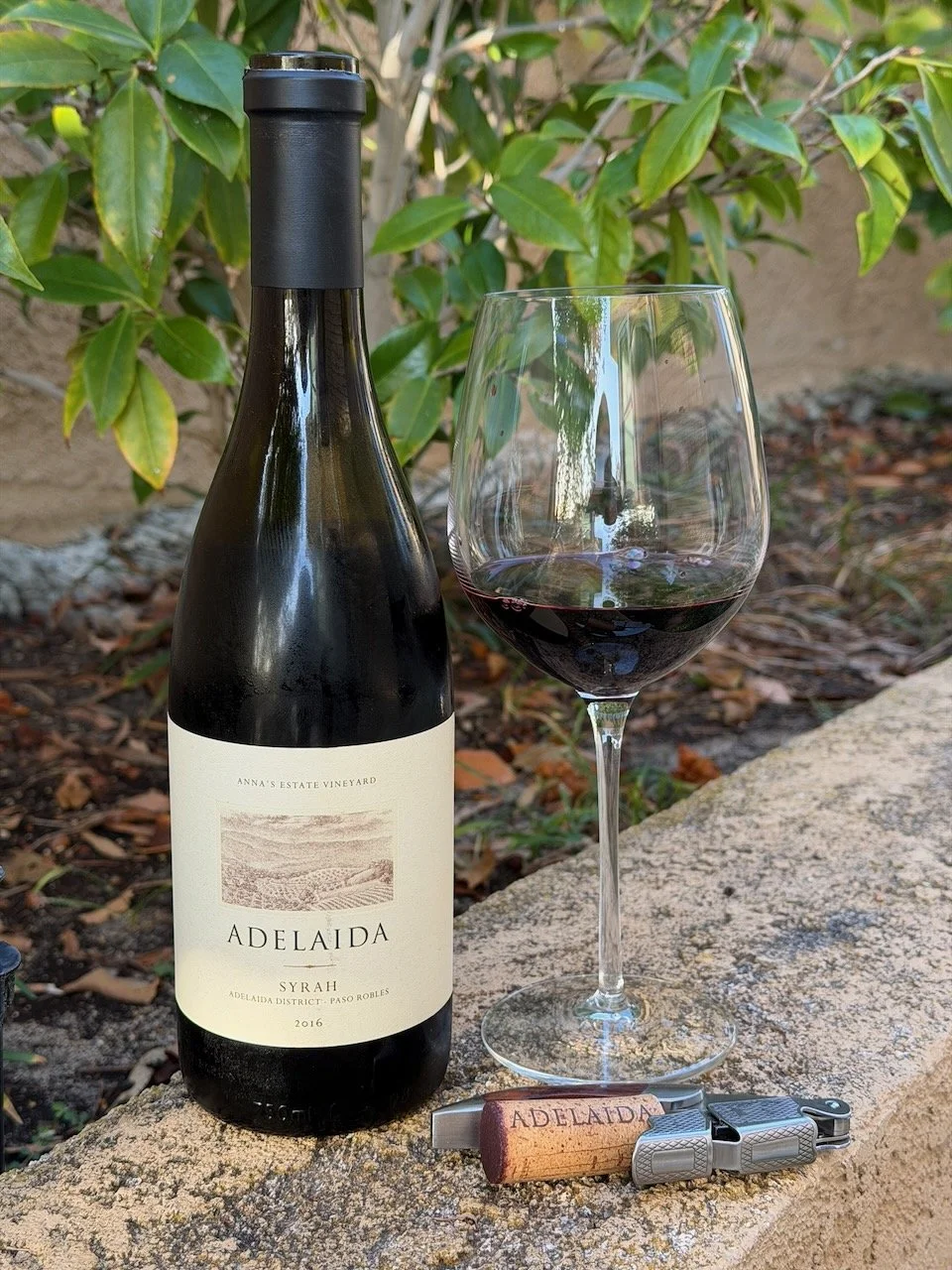

Behind the Cork™ - Adelaida Anna's Estate Vineyard Syrah

2016 Adelaida ‘Anna’s Estate Vineyard’ Syrah ($36)

Nestled into the rolling foothills of the Santa Lucia Mountains near Paso Robles, California, there is an idyllic contemporary winery owned by the Hoffman family and operated by Dr. Stanley Hoffman and his two sons, David and Michael. The vineyards which are 1400-1800 feet above sea level, all produce estate-bottled premium wines. 

 The story of this uniquely successful operation goes back to 1964 when Dr. Hoffman planted his first French varietals Chardonnay, Pinot Noir, and Cabernet Sauvignon because he had found the climate, terrain, and chalky lime-rich soil of his Central Coast ranch to be comparable to the viticulture regions of France. 

This Adelaida Syrah is 100% Syrah that was fermented in concrete and stainless steel tanks and aged in French oak (32% new) for 18 months.

It is a deep purple in color with delicate aromas of blackberries and tobacco. On the palate, this full-bodied wine has rich dark fruit flavors of blackberry, plum with some spice and pepper. The oak aging leads to nice vanilla flavors. It has a long finish that is smooth and balanced.

This Adelaida ‘Anna’s Estate Vineyard’ Syrah is a terrific wine that is affordable and obtainable. That makes it a perfect fit as this week’s Behind the Cork™ Wine of the Week. Cheers!

Here is a Little Help with Some Obscure Wine Descriptions

The “wine world” can be a bit confusing. And, some of the terminology can seemingly make no sense. So, let’s take a look at a few obscure terms and what they mean…

Angular - A wine can be described as being “Angular” when it has sharp or pronounced flavors in your mouth. The most common is a wine with high acidity being described as “angular.” Also, a young red wine can have a higher amount of tannin which can result in a extreme mouthfeel of dryness or astringency.

Chewy - Wines that are described as “chewy” are in reference to their bold tannin. These tannin compounds can make your mouth feel dry making you want to chew or otherwise clean out your mouth.

Clean - These wines are typically higher in acidity and refreshing. They have no off-flavors.

Fat - A ‘fat’ wine refers to the fact that it big and bold in flavor, but not in a good way. It can feel heavy in your mouth usually due to it lacking balanced acidity.

Flabby - Flabby wines lack acidity and structure making them taste dull or out of balance.

Grippy - This has to do with the mouthfeel of a wine due to big and bold tannins. These wines create a noticeable drying or puckering sensation in your mouth.

Lively - These wines are high in acidity resulting in a refreshing, invigorating experience.

Minerality - This refers to non-fruity, non-herbal, non-spicy characteristics in a wine that remind tasters of stones, wet rocks, chalk, flint, or even salty sea air.

Stemmy - A ‘stemmy’ wine has green, herbal and sometimes bitter characteristics that comes from the wine being fermented in whole clusters, i.e., with the stems.

These are just a few of the many terms that get thrown around in the wine world. Hope this helps in your future wine tasting encounters. Cheers!

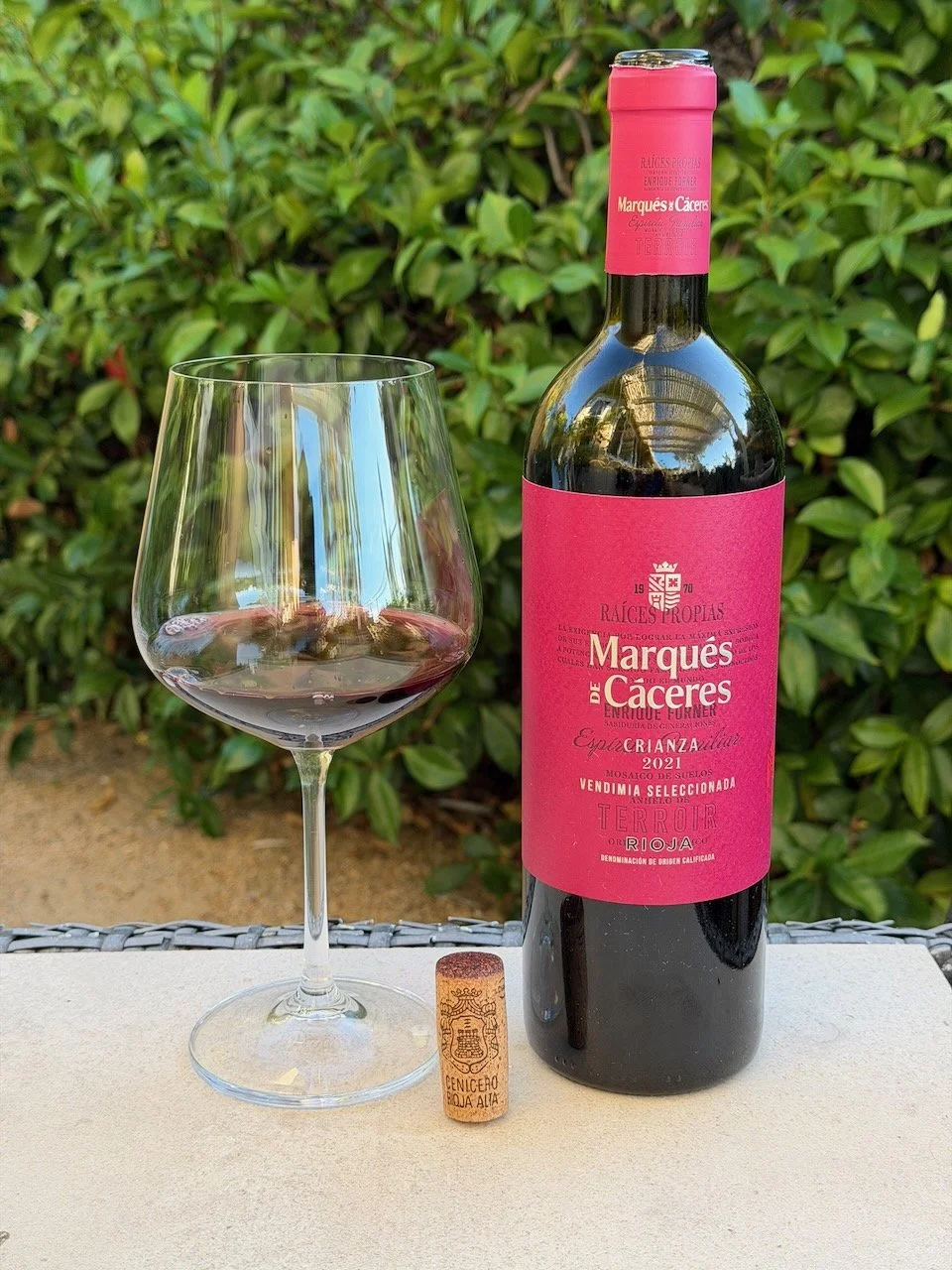
Behind the Cork™ - Marques De Cacres Crianza

2021 Marqués De Cáceres Crianza ($13.99)

Enrique Forner founded the Bodegas Marqués de Cáceres winery in Spain in 1970. Don Vicente Noguera, the 7th Marquis of Cáceres (granted by the King of Spain) and a Grandee of Spain (a high-ranking nobleman of the highest rank in Spain), was a childhood friend of Forner and business partner who gave the winery his name. They had a special relationship that was forged when they were children and lasted until their final days.

Today, Juan Noguera, Vicente’s son, preserves the title of Marquis of Cáceres and has retained a direct personal relationship with the Forner family.

This Marqués de Cáceres Rioja Crianza is made from Tempranillo with some small amounts of Garnacha, Tinta and Graciano. The grapes were fermented in stainless steel. Maceration with the skins lasts up to 20 days in order to extract color, aromas and structure. Malolactic conversion occurred in new oak barrels and stainless steel tanks. The wine was then aged for 12 months in French oak (60%) and American oak (40%). The barrels consisted of 25% new oak, 25% oak used for two vintages and the other 50% in oak barrels that were used for a maximum of 3-4 vintages.

This Marqués de Cáceres Crianza is medium ruby in color with aromas of cherry and fig with hints of tobacco. On the palate, this medium-full bodied wine has nice flavors of cherry and red plum with medium tannin and acidity. It finishes lean and smooth with a hint of oak.

This is a really nice wine that’s easy to sip by itself but also pairs well with dishes with tomato-based sauces, stews, steak, grilled vegetables, barbecued chicken, smoked dishes, peppers. It’s a great value too! This makes the Marqués de Cáceres Crianza a great fit as this week’s Behind the Cork™ Wine of the Week. Cheers!


Disclosure of Wine Sample Submission: I received this sample at no cost for review.

Media Sample Provided by Marqués de Cáceres, Imported by Vineyards Brands

How Do You Like Your Chardonnay - Bright and Crisp or Soft and Buttery? Part 2

Last time we looked at Chardonnay which is one of the most widely planted varieties. Although it is probably best known as the white grape of Burgundy and a major grape of Champagne. Chardonnay is a versatile grape, and its style can vary widely depending on where it’s grown and how it’s made.

Basically, Chardonnay produces wines of a light golden hue, with notes of citrus, green apple, with floral aromas. On the palate, Chardonnay has moderate acidity and moderate alcohol with a medium body. But beyond that, it’s said that Chardonnay is a bit of a chameleon — it reflects its winemaking process more than almost any other grape.

So, now let’s take a look at the soft and buttery style of Chardonnay.

The soft and buttery Chardonnay wines are the result of specific winemaking techniques that give the wine a rich, smooth texture and a creamier mouthfeel.

Here are some key factors that contribute to this style of Chardonnay:

1. Malolactic Conversion

  • This is the main reason for the buttery taste. In Malolactic Conversion, the harsh malic acid (the tart, green apple-like acid) is converted into softer lactic acid (found in milk and dairy products), which creates a smoother, creamier texture.

2. Oak Aging

  • Many Chardonnays are aged in oak barrels, which impart flavors like vanilla, toast, and butter. Oak aging also helps soften the wine’s structure, adding complexity and a smooth, creamy mouthfeel. When a Chardonnay undergoes both Malolactic Conversion and oak aging, it typically enhances those butter-like characteristics.

3. Lees Contact

  • “Lees” refers to the dead yeast cells left over after fermentation. Some Chardonnays are aged on the lees (sur lie), which can contribute to a fuller, creamier texture and develop subtle nutty or bread-like flavors. This can also increase the perception of softness in the wine.