Ever Wonder? What is a Claret Wine?

“Claret” (rhymes with Carrot) is a traditional British term for red wine from Bordeaux.

The term is derived from the word clairet in French which originally referred to a light-colored, pale red wine that was popular in medieval England after Bordeaux became part of the English crown in the 12th–15th centuries. They were short fermentation wines (1-2 days). The short fermentation and skin-contact time of these wines probably resulted in wines that we’d call a rosé today.

But, over time, the meaning has shifted away from those early pale red wines. Today, in Britain, claret simply means a dry red wine from the Bordeaux region of France. These blends are usually made from Cabernet Sauvignon, Merlot, and Cabernet Franc (sometimes with Petit Verdot and Malbec).

So, the term “Claret” isn’t an official French wine classification. And, you’re not going to find “Claret” on labels from France. But the term is still widely used in the UK and US for red wine blends.

Next time you see “Claret” on a wine label or on a wine list, give it a try! Cheers!
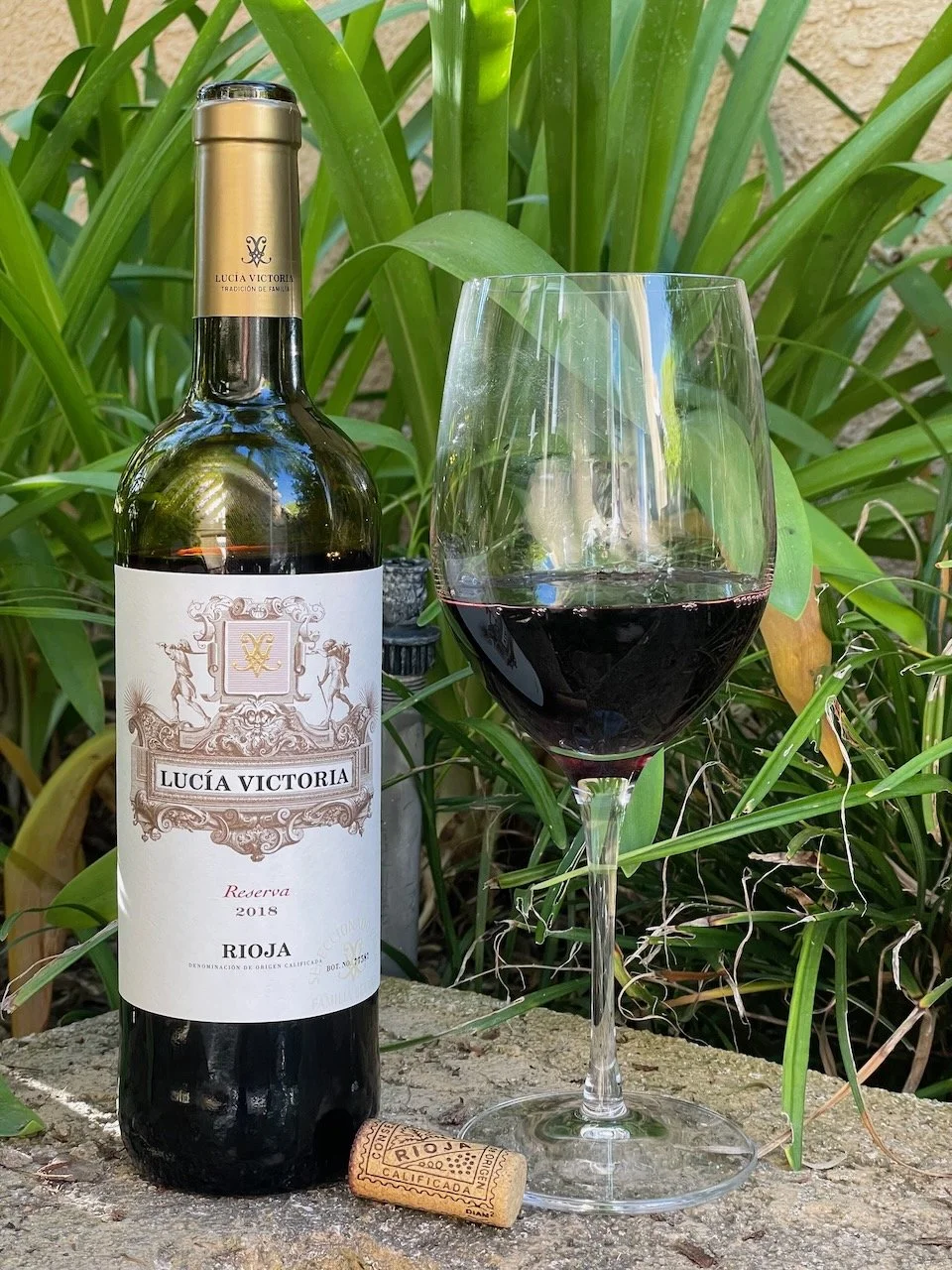
Behind the Cork™ - Lucia Victoria Reserva Rioja

2018 Lucía Victoria Reserva Rioja ($8)

D.O. 5 Hispanobodegas is a group of wineries which produces and distributes quality wines from the most emblematic Officially Certified Wine growing Regions of Spain: Rioja, Ribera del Duero and Rueda.

Their group is made up of a set of three wineries: Bodegas Valdelacierva (Rioja), Viñedos y Bodegas Gormaz (Ribera del Duero) and Bodegas GarciGrande (Rueda).

Their wines are based on the rigorous control of the production processes, from the raw material until it is in the hands of the consumer as well as in the continuous improvement of the vinification and aging processes. To this end, they have the most stringent quality and food safety certifications (ISO, BRC, IFS) in each of their group’s wineries.

This Lucía Victoria Reserva Rioja was bottled for D.O. 5 Hispanobodegas. It is produced from 50+ year old Tempranillo vines that are grown at at altitude of nearly 1500 feet. After fermentation, it is aged 24 months in French and American 225 liter oak barrels followed by 12 months in the bottle before being shipped.

The wine is a beautiful medium purple in color with aromas of red and black cherry, fig and plum. On the palate, this medium-full bodied wine has nice flavors of red and black cherry, medium tannin, medium-high acidity and has a spicy finish with very a subtle hint of tartness.

Finding a 2018 wine under $10 is fantastic. And, it tastes great too! This make the Lucía Victoria Reserva Rioja the Behind the Cork™ Wine of the Week. Cheers!

Reserva is Actually a Meaningful Term When It Appears on a Spanish Wine Label

In the U.S., the term “Reserve” on a wine label is not legally regulated. It can just be a marketing term to get consumer to believe the wine is somehow better than others. Or, it can actually mean that the winery has indeed gone above and beyond with higher quality grapes, longer aging or limited production. So, it’s buyer beware.

But, in Spain, the term "Reserva" is a legally regulated classification that indicates both minimum aging requirements and often a higher quality level compared to standard wines.

The term “Reserva” is regulated under Spanish wine laws (Denominación de Origen - DO, or Denominación de Origen Calificada - DOCa). A “Reserva” wine usually implies better grape selection and greater aging potential than a standard wine.

It should also be noted that “Reserva” is considered a step above "Crianza" and a step below "Gran Reserva" in aging hierarchy:

For Red (“Tinta”) wines:

  • Crianza = 2 years minimum aging with 1 year in oak

  • Reserva = 3 years minimum aging with 1 year in oak

  • Gran Reserva = 5 years total aging with 2 years in oak and 3 years in the bottle

So, next time you’re shopping for a Spanish wine, be sure to pay attention to the label. There are real differences. Cheers!

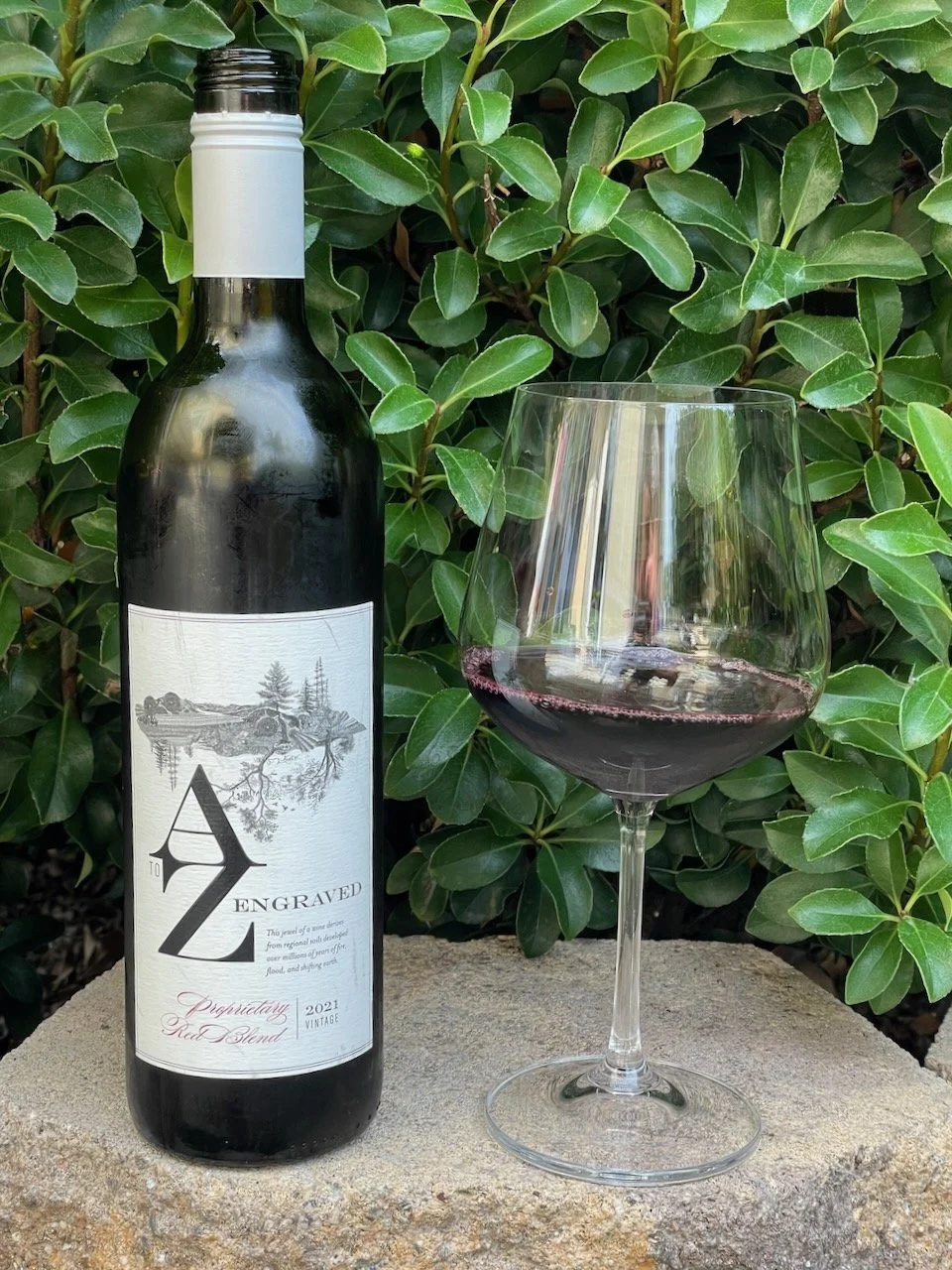
Behind the Cork™ - A to Z Engraved Proprietary Red Blend

2021 A to Z Engraved Proprietary Red Blend ($10)

A to Z Wineworks is owned by Ste. Michelle Wine Estates (SMWE), a Washington-based wine company. SMWE acquired A to Z Wineworks, including its Rex Hill subsidiary and winery facility, in September 2022.

A to Z Engraved Red Blend is a proprietary blend of grapes. Although A to Z was Oregon-based before the Washing-based Ste. Michelle acquired them, it’s unclear where the grapes for this red blend were grown - the label simply says “American.”

A bit of on-line searching seems to indicate that this wine has its foundation built on Syrah.

It is deep purple in color with very light aromas of dark fruit and tobacco. On the palate, this medium-full bodied wine has flavors of black plum and black cherry, moderate tannin and balanced acidity. It finishes lean with just a hint of fruity sweetness on the finish. [ABV: 13.9%]

This A to Z Engraved Red Proprietary Red Blend is tasty, having received a 91 point rating from Wine Enthusiast. And, at this price, is a great fit as the Behind the Cork™ Wine of the Week. Cheers!

Reader Asks: Does Non Alcoholic Wine Spoil Faster?

Photo by Lily Combs on Unsplash

An EverWonderWine reader recently had a bad experience with a non-alcoholic wine. It thickened and smelled bad just a few days after opening. The question asked was “What makes a non-alcoholic wine go bad quicker than regular wine?

There are several factors that could have contributed to the non-alcoholic wine spoiling rapidly.

Here are some of the factors:

  • Alcohol acts as a natural preservative. Regular wine usually has 12–15% alcohol by volume (ABV), which helps prevent spoilage by inhibiting bacterial growth.

  • Non-alcoholic wine has little to no alcohol (often less than 0.5% ABV), so it lacks that natural protection, making it more vulnerable to spoilage.

  • Without any alcohol, oxidation and microbial growth occur more rapidly after opening a bottle.

  • Without alcohol to inhibit growth, bacteria or wild yeasts can thrive, especially in a warm environment.

  • These microbes can metabolize the residual sugar and other compounds in the wine, producing by-products that change the texture, making the wine thicker or syrupy.

While alcoholic wine (especially red wine) can often last 3–7 days once opened (depending on storage), non-alcoholic wine typically lasts 2–3 days in the fridge after opening when also using a wine-pump stopper to reduce oxygen exposure.

So, once you’ve opened that bottle of non-alcoholic wine, your best bet is to finish it off! After all, it’s non-alcoholic! Cheers!