Behind the Cork™ - Fleurs de Prairie Rosé

2022 Fleurs de Prairie Rosé ($20)

"Fleurs de Prairie" is named in celebration of the free-spirited wildflowers carpeting their vineyards in the South of France. Crafted in South of France style, this wine is made by the family-owned Les Grands Chais de France. Fleurs de Prairie is a Mediterranean combination of sun, wind, mild water stress, and ocean influence that provide ideal conditions for growing grapes.

This rosé is produced from Grenache Noir, Syrah, Carignan, Cinsault, and Mourvèdre. The grapes are fermented in 100% stainless steel tanks and fermented separately to achieve the best characteristic of each varietal.

This Fleurs de Prairie is pale salmon in color with delicate aromas of strawberry and peach. On the palate it has delicate flavors of strawberry and candied cherry with refreshing acidity and a hint of tartness.

This Fleurs de Prairie is widely available and quite affordable for a French rosé. These factors make this wonderful rosé a great fit as the Behind the Cork Wine of the Week. Cheers!

Alcohol By Volume = 13%, Residual Sugar = 1.1 gm/L, pH = 3.33, Total Acidity = 3.32 gm/L


Disclosure of Wine Sample Submission: I received this sample at no cost for review. The opinions expressed are entirely my own.

Sample Provided by Deutsch Family Wine and Spirits via Forte Mare

Ever Wonder? What is Blanc de Noirs?

Have you ever seen a bottle of sparkling wine that has “Blanc de Noirs” on the label and wondered what it is?

Here are a few facts about Blanc de Noirs:

  • Blanc de Noirs is a term from the Champagne region in France. It is used to refer to champagne produced entirely from black (noir) grapes Pinot Noir and/or Pinot Meunier.

  • Blanc de Noirs means literally 'white of blacks' since the resulting color of this type of Champagne is white.

  • The reason that Blanc de Noirs is white is because the clear juice of the Pinot Noir and/or Pinot Meunier grapes is immediately separated from the black skins of the grapes. If the juice had been left in contact with the skins during fermentation, you’d get a typical red wine color.

  • Blanc de Noirs is different from the majority of champagnes that are made with a traditional blend of white and red grapes, usually Chardonnay, Pinot Noir and Pinot Meunier.

  • It is also different from Blanc de Blancs champagne, which is produced from Chardonnay. Other grapes such as Pinot Blanc and Arbane are also permitted to be used, as well as a number of other varieties, but they are less common.

  • Blanc de Noirs champagnes are typically richer, fruiter and more full-bodied than regular Champagne and Blanc de Blancs.

  • Blanc de Noirs sparkling wines are produced in the Champagne region's more southerly vineyards.

  • Blanc de Noir sparkling wines are made in the Champagne region of France using the traditional ‘Methode Champenoise’ where the secondary fermentation takes place in the bottle.

  • There is no legal requirement to identify a Champagne made from red grapes as being a Blanc de Noirs - it’s up to the maker to decide if they want to call it Blanc de Noirs or simply Champagne.

So, next time you see Blanc de Noirs you’ll know it’s made entirely from black grapes! Cheers!

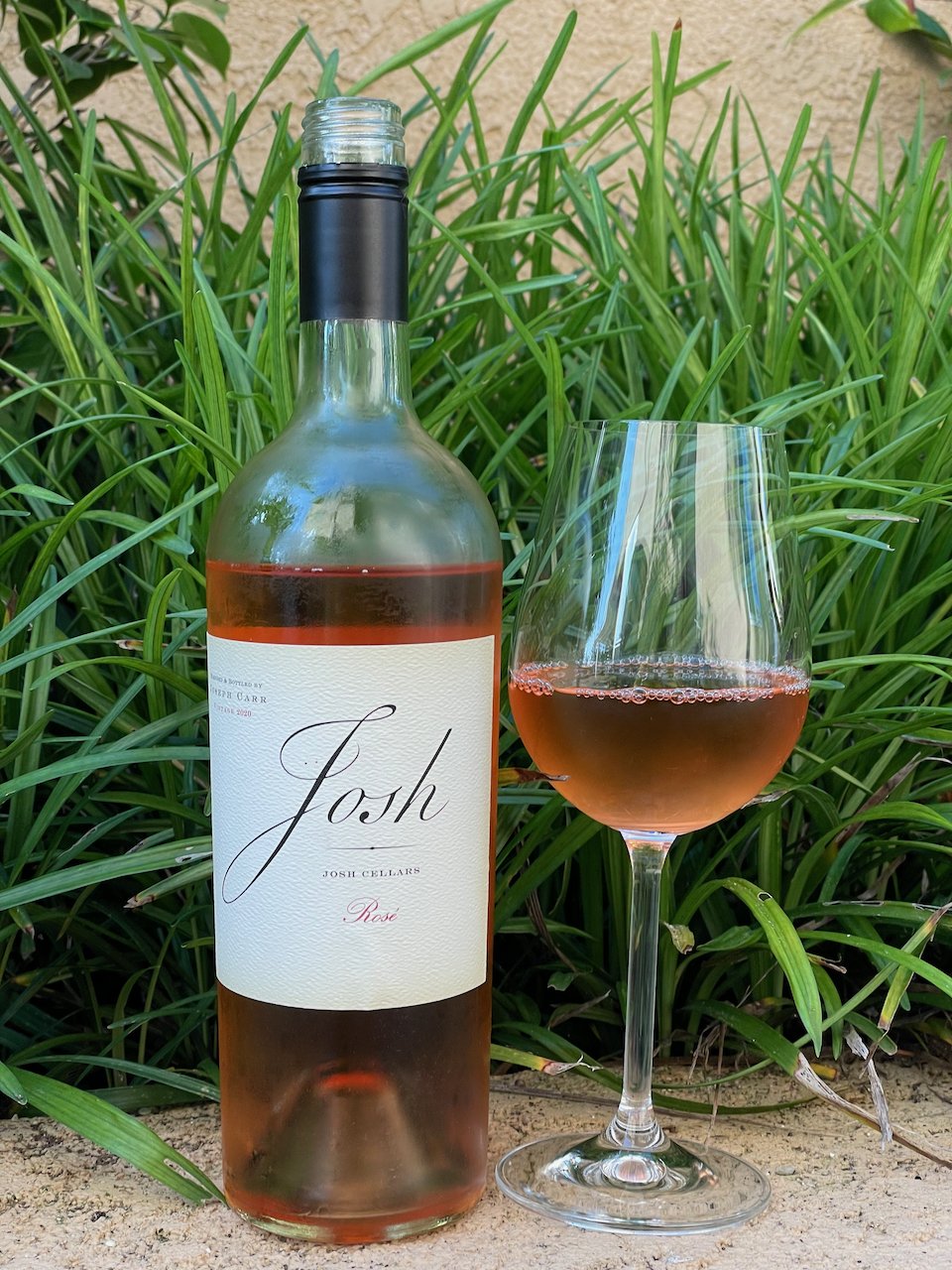
Behind the Cork™ - Josh Rosé

2020 Josh Rose ($14.99)

Josh Cellars is a negociant brand which means they don’t own a winery or any vineyards, just like many of the world’s greatest wineries in Bordeaux and Burgundy France. But, they do work with California’s best growers to produce great wines.

The grapes used to make this Josh Rosé were picked in cool conditions and moved immediately to the winery where they were pressed and the juice sent directly to a tank. This very brief period of time that the juice is in contact with the skins lead to the beautiful salmon color of this rosé.

This Josh Rosé has delicate red fruit aromas including strawberry and raspberry. On this palate, this light-bodied rosé has rich flavors of strawberry, melon and peach along with bright acidity. The bright fruit flavors make for a sweet flavor sensation, yet this wine (at 12.5% Alcohol by Volume) is considered ‘dry.’

This Josh Rosé is a wonderfully light and refreshing wine at a great price. Perfect as the Behind the Cork Wine of the Week. Cheers!


Disclosure of Wine Sample Submission: I received this sample at no cost for review. The opinions expressed are entirely my own.

Sample Provided by Josh Cellars via Forte Mare

Behind the Cork™ - Domaine Bousquet Sparkling Rosé

Domaine Bousquet Sparkling Rosé ($13)

Domaine Bousquet was founded on virgin land in 1997 in the Gualtallary sub-zone of Tupungato in Mendoza’s Uco Valley. Today, the estate, run by daughter Anne Bousquet and husband Labid al Ameri, is Argentina’s largest exporter of wines made from certified organic grapes. All wines are made from 100% certified organic fruit grown at a cool 4,000-foot-high altitude and crafted with a French winemaking sensibility.

This Sparkling Rosé is produced from 75% Pinot Noir and 25% Chardonnay grapes that are harvested manually. The first fermentation uses selected yeast for 15 days. The second fermentation takes place in stainless steel tanks and lasts for about 30 days.

This Domaine Bousquet Sparkling Rosé is a beautiful salmon color with delicate aromas and bubbles. On the palate this light-bodied wine has flavors of strawberry and raspberry with refreshing acidity.

This Domaine Bousquet Sparkling Rosé is a really wonderful sparkling wine that’s available at a great price which makes it a great fit as this week’s Behind the Cork Wine of the Week. Cheers!


Alcohol By Volume: 12.5%, Acidity: 7.8 g/L, pH: 3.26, Residual Sugar: 8.2 g/L


Disclosure of Wine Sample Submission: I received this sample at no cost for review. The opinions expressed are entirely my own.

Sample Provided by Domaine Bousquet (via Creative Palate Communications)

Ever Wonder? What is Blanc de Blancs?

Have you ever seen a bottle of sparkling wine that has “Blanc de Blancs” on the label and wondered what it is?

Well, Blanc de Blancs is a term from the Champagne region in France. It is used to refer to champagne produced entirely from white grapes, most commonly Chardonnay. Other grapes such as Pinot Blanc and Arbane are also permitted to be used, as well as a number of other varieties, but they are less common.

Blanc de Blancs is different from the majority of champagnes that are made with a traditional blend of white and red grapes, usually Chardonnay, Pinot Noir and Meunier.

It is also different from Blanc de Noirs champagne, which is produced exclusively from black (noir) grapes such as Pinot Noir and Pinot Meunier.

Blanc de Blancs champagnes are typically lighter, drier, and fruitier than Blanc de Noirs while Blanc de Noir wines can be richer with a fuller body.

Blanc de Blancs sparkling wines are produced in two sub-regions of Champagne France - Cote des Blanc and Cote de Sezanne.

Blanc de Blancs sparkling wines are made in the Champagne region of France using the traditional ‘Methode Champenoise’ where the secondary fermentation takes place in the bottle.

So, next time you see Blancs de Blancs you’ll know it’s made entirely from white grapes! Cheers!