
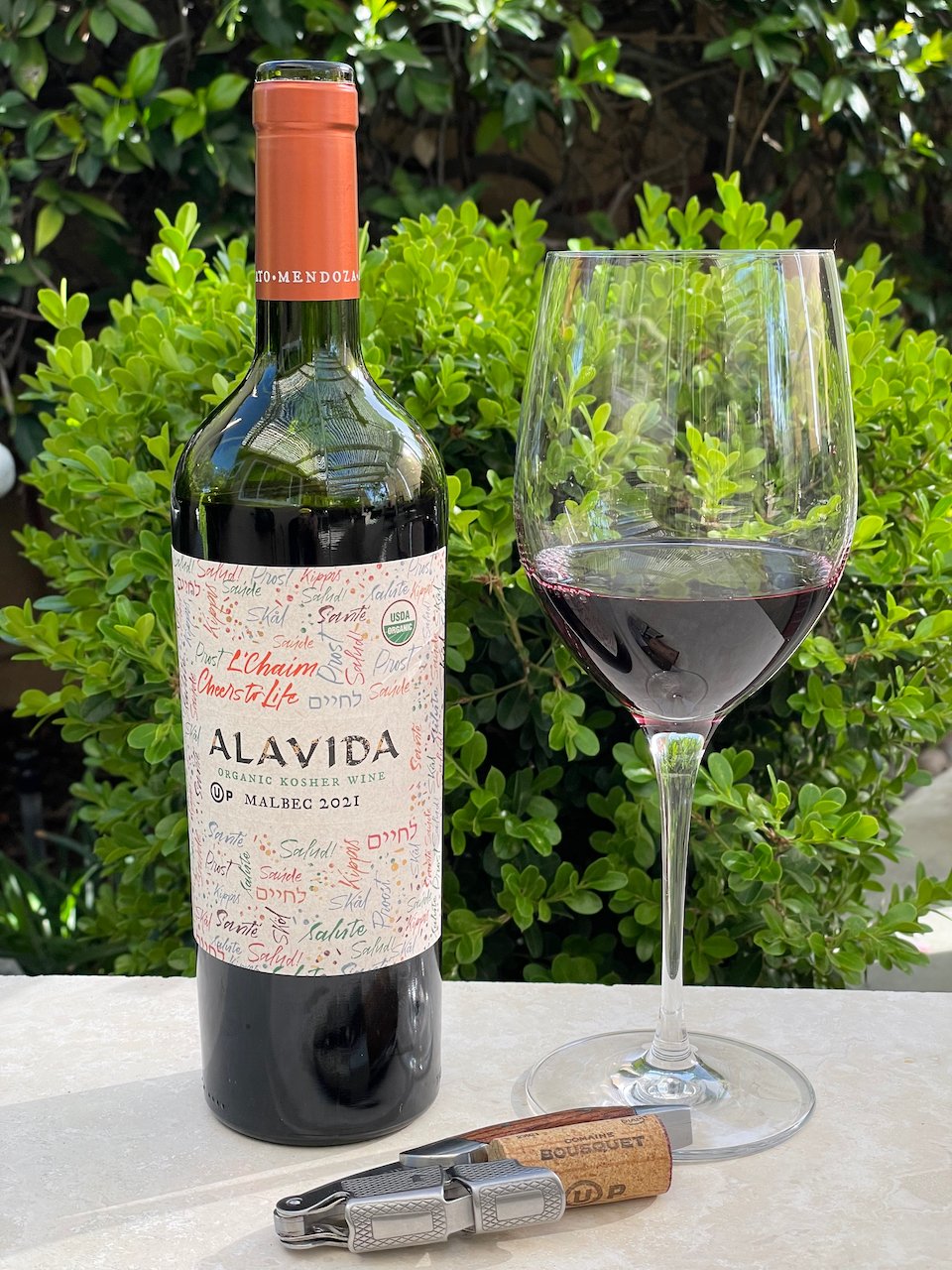
Behind the Cork™ - Alavida Malbec

2021 Alavida Malbec ($19)

World Malbec Day is coming up on Sunday, April 17th, an annual holiday that commemorates the founding of the first agricultural school in Argentina in 1853, which was instrumental in the early cultivation of Malbec in the South American nation. And, here’s a great way to celebrate!

This Alavida Malbec is USDA-certified organic and kosher. It’s also vegan, gluten-free and Ecocert-approved. And, it tastes great!

The name Alavida is composed from the Spanish “to life” which is ‘a la vida.’

The grapes for Alavida are grown above 4000 feet in the Andean foothills of the Uco Valley in Argentina. There, daily temperature swings can be up to 60 F resulting in more natural sugar from the hot days and more acidity from the cold nights - a great recipe for wine making!

The winemaking process for Alavida is almost identical to that used in making a non-kosher wine, with two exceptions. Ingredients such as yeast must be kosher, and the wine must be physically made by a sabbath-observant Jewish team under the supervision of a rabbi. For Alavida that means double the number of people involved: a Jewish team member to handle grapes and wine, paired with a home team member standing alongside and directing. For Alavida, that entailed five duos! Winemaker Rodrigo Serrano gave the work orders; his Jewish counterparts executed them.

This Alavida Malbec is medium purple in color with aromas of red fruit, spices, herbal notes and buttery-oak. On the palate have flavors of red fruits and red raspberry, medium tannin, medium-low acidity, some earthiness and hints of the oak on the finish.

Alavida Organic Kosher Malbec is a wonderful wine that is fully deserving of being a Behind the Cork™ Wine of the Week. Look for this one and raise a glass for World Malbec Day on April 17th. Cheers!


Disclosure of Wine Sample Submission: I received this sample at no cost for review. The opinions expressed are entirely my own.

Samples Provided by Origins Organic Imports and Domaine Bousquet (via Creative Palate Communications)
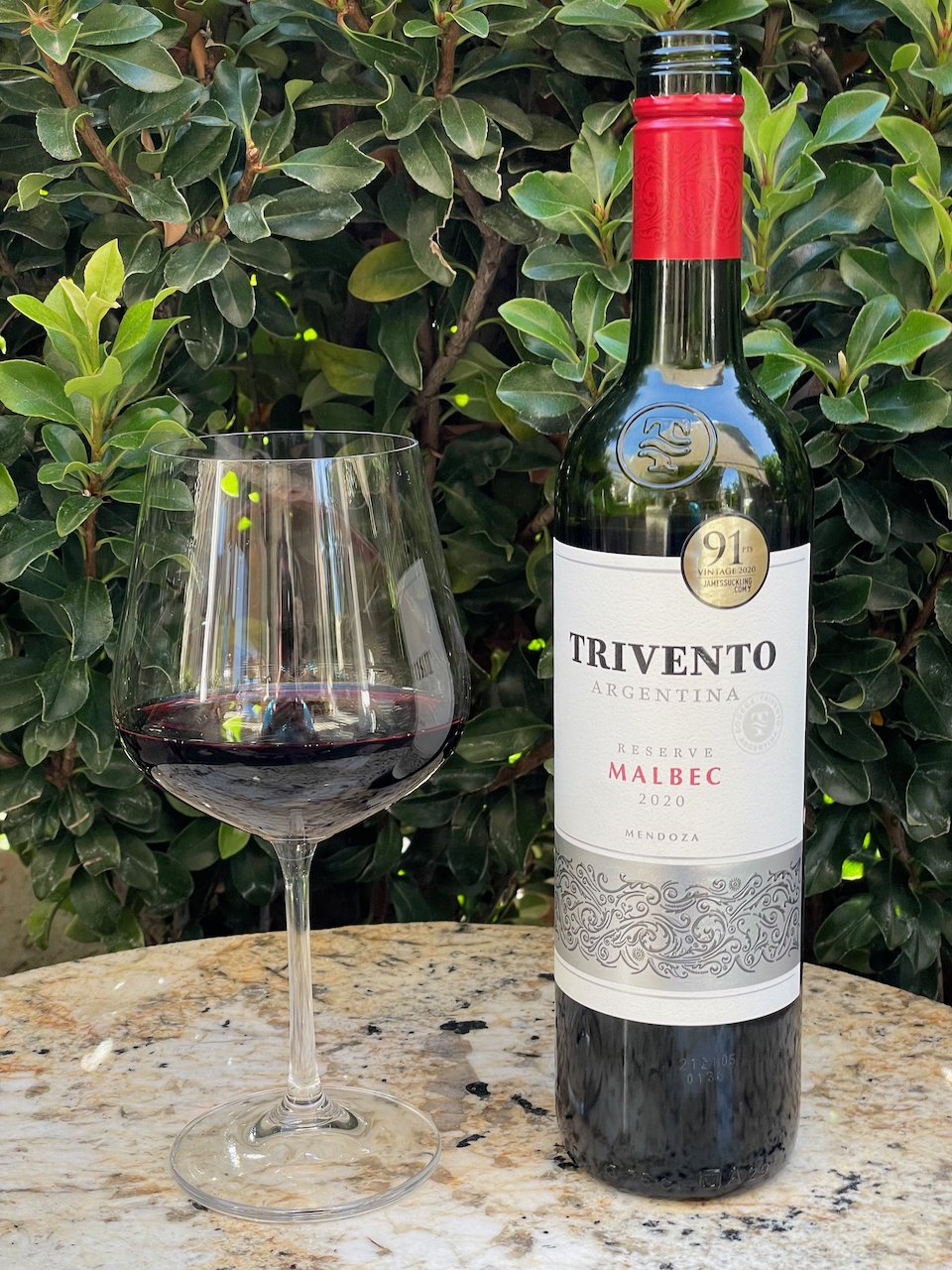
Behind the Cork™ - Trivento Reserve Malbec

2020 Trivento Reserve Malbec ($11)

World Malbec Day is coming up on Sunday, April 17th, an annual holiday that commemorates the founding of the first agricultural school in Argentina in 1853, which was instrumental in the early cultivation of Malbec in the South American nation. And, here’s a great way to celebrate!

This Trivento Reserve Malbec is from Mendoza’s Bodega Trivento which is tucked away in the towering Andes Mountains of Argentina

The team at Trivento—which means “three winds” in Spanish— sources fruit for the Reserve Malbec from a deliberate mix of new and old vines from two renowned sub-regions in Mendoza: Luján de Cuyo to the north and Valle de Uco to the south.

In Argentina, the term ‘Reserva’ is given to all red wines that have been aged in oak barrels for at least one year.

This Trivento Reserve Malbec is produced from 100% Malbec grapes that are de-stemmed and crushed. Maceration occurs prior to a 20-day fermentation in stainless steel tanks. It then undergoes natural malolactic fermentation before 20% of the wine is aged in French and American oak for six months.

This Trivento Reserve Malbec is deep purple in color with aromas of black cherry and plum. On the palate it has soft tannin, moderate acidity, vanilla and caramel flavors from the oak, and a light finish.

At $11 this is a wonderful wine that is fully deserving of being a Behind the Cork™ Wine of the Week. Look for this one and raise a glass for World Malbec Day on April 17th. Cheers!


Disclosure of Wine Sample Submission: I received this sample at no cost for review. The opinions expressed are entirely my own.

Samples Provided by Trivento (via Jarvis Communications)

The Serving Temperature of Your Wine Matters

The temperature at which a wine is served matters.  And, here's why.  The 'proper' serving temperature will ensure that you get the best experience from your wine.  Serve it too cold or too warm and you can loose a lot of the wine's character.

This is partly due to your nose and how a wine's aroma works along with its taste. A wine’s aroma is greatly affected by the wine's temperature.  A cold wine will have less of an aroma because fewer of the volatile compounds will be released from the wine. Conversely, a warmer wine will easily release these compounds and give you an opportunity to experience the wine's full aroma.

Then there's the way a wine tastes.  Serving a white wine too cold will mute its fruit flavors. White wines taste good when they are served cool because of their acidity and negligible tannin. The fruit flavors are zippy and bright and a bit of a chill will enhance this.  But full bodied white wines that have been aged in oak (e.g., Chardonnay) are best served not quite so cool to allow you experience the buttery and vanilla flavors that oak imparts.

Serving a red wine too cold will emphasize its acidity, bitterness and tannin.  But, serving a red wine at room temperature is a bit too warm and can emphasize the alcohol, yielding a burning sensation in your throat.

So, here are some general guidelines for the 'proper' serving temperatures of wines:

  • Sparkling Wine: 42° - 50° F

  • Light Whites: 46° - 54° F

  • Full Bodied Whites: 54° - 60° F

  • Rosé: 45° - 55° F

  • Light Reds: 50° - 54° F

  • Medium Reds: 57° - 63° F

  • Full Bodied Reds: 59° - 65° F

While most people don't have specialized multi-zone wine refrigerators to precisely control their wine temperatures, or take the time to use a fancy wine thermometer, here are a couple quick rules-of-thumb. 

  • Sparkling wine can be stored directly in a kitchen refrigerator and removed 30 minutes prior to serving

  • White wine can be placed in a kitchen refrigerator 30-60 minutes before serving. Or, if it's been stored in a kitchen refrigerator, simply remove it 30 minutes before serving 

  • Red wines can be placed in a kitchen refrigerator for 30 minutes prior to serving

If you really like your red and white wines at kitchen refrigerator temperatures (~34° F) or your red wines at room temperature, go ahead and continue enjoying them. But at some point, give these temperature suggestions a try. You just might find that your favorite wines are even better at the recommended temperatures. Cheers!

It's Time for Rosé!

In the past, rosé wines got a bad rap, and some of it was deserved. The White Zinfandel that became so popular in years' past has had a lot to do with rosé wines being greatly overlooked.

But rosés should not be rejected outright. There are many examples of rosés with great character.

Light rosés can have flavors of grapefruit, strawberry and sweet cherry, while darker, bolder rosés can have flavors of black currant and blackberry. These flavors come from the many varieties of grapes used to produce rosé.  Fruity rosé can come from the Grenache, Sangiovese and Zinfandel grapes while savory rosé is made from Tempranillo, Syrah and even Cabernet Sauvignon.  Other rosés are made from Mourvèdre, Pinot Noir, Cinsault and Clairette grapes.  Check the label. Nicer rosés will tell you the type of grape used in making the wine.

A key to finding dry versus sweet rosé is the wine’s alcohol content.  Sweeter wines, in general, have lower alcohol levels (not all the sugar was converted to alcohol during fermentation). All wines labels are required to show the percent alcohol of the wine. If it's down around 8 or 9 percent, it's usually going to be on the sweeter side.  In the 11 to 12 percent range, it will be mid-range between sweet and dry. And, above 12 percent it's going to be dry.  And, typically, rosés from Old World countries are going to be drier. French rosés from Provence are made of Grenache, Cinsault, Syrah and Mouvèdre, Spanish rosé (rosado) is typically made from the Grenache grape while Italian rosato is made with various grapes depending on where they are from. These are all excellent, dry rosés that are typically quite affordable (under $20).

Rosé wines go great with a large variety of foods and are typically served cool to cold.

Here’s to Spring and enjoying rosé wines! Cheers!