
Behind the Cork™ - Wine of the Week

IMG_1059.jpg

2015 Erath Pinot Noir ($13)

This Pinot Noir is from Oregon, a state that has gotten and continues to get a lot of attention for Pinot Noir.

While the Willamette Valley has gotten the most attention for their Pinot Noir, this one is a blend of different vineyard sites in Oregon.

Erath's goal with this wine is "to make the best Pinot Noir in the world for under $20."

As Pinot's should, this one has nice flavors of raspberry and cherry. It finishes with a bit of tannin from its aging in French oak.

The best Pinot Noir in the world for under $20?  I'll leave that up to you to decide. But it certainly qualifies for meeting the criteria to be featured in  Behind the Cork™ - Wine of the Week. It's a very affordable Pinot Noir that you should be able to find everywhere that wines are sold.
Tips on Letting a Wine Breathe

Years ago, I was visiting a friend who knew I enjoyed wines and wanted to share a bottle with me.  They opened the bottle and took a sip.  With a look of disappointment on their face, they proclaimed that the wine need some time “to breathe.” So, with the cork extracted, the bottle sat for an hour. At the end of the hour, the wine was proclaimed to be ready.

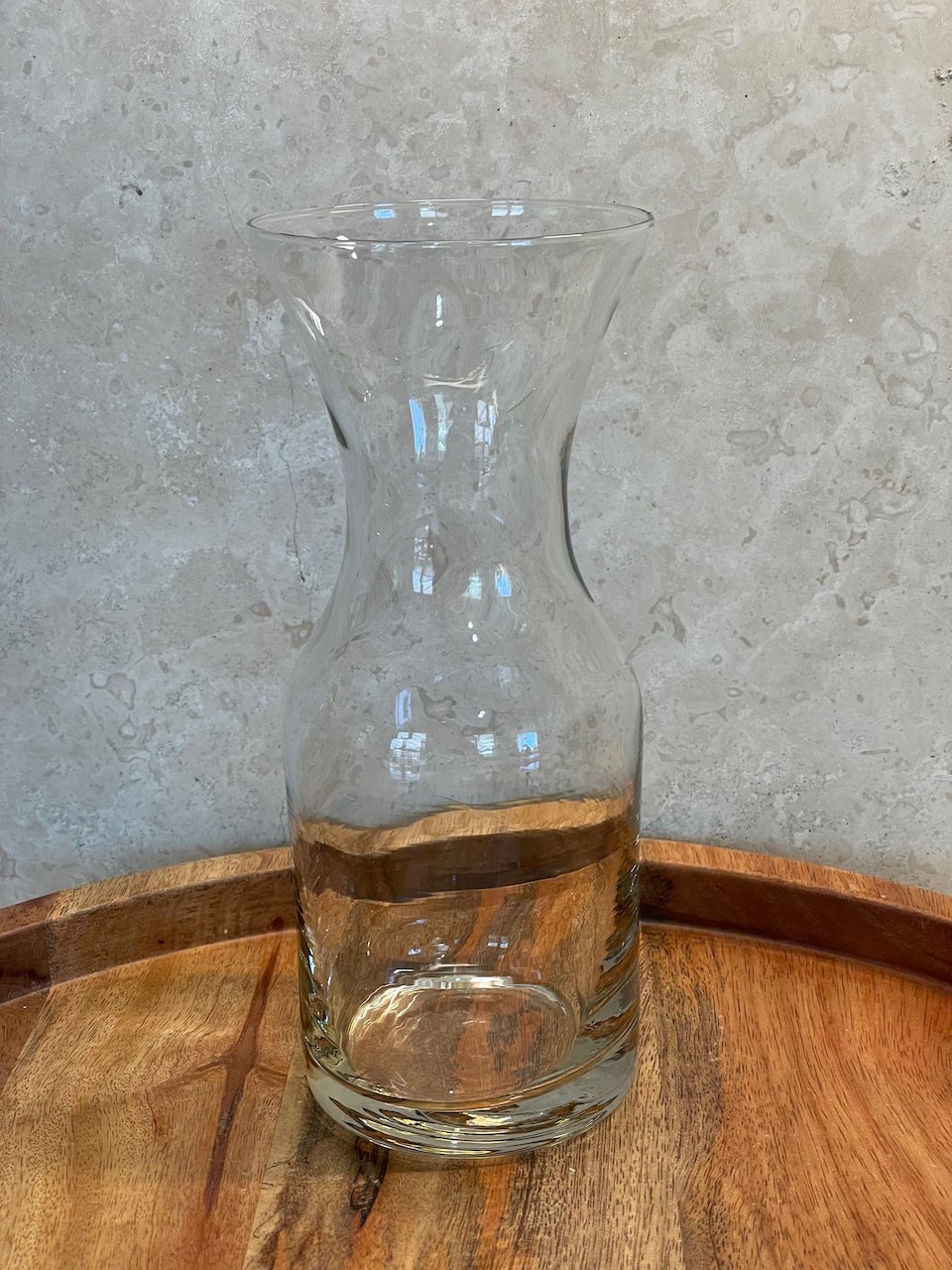
I've also encountered those who use a decanter to allow their wine to breathe.  But, all too often, the decanter ends up looking like the one pictured here. It's a beautiful carafe and it's a great addition to a bar or table for serving wine. Unfortunately, it's a bit too narrow. It doesn't give the wine enough room to truly breathe. But, compared to leaving the wine cooped-up in its bottle, this type of decanter is a definite improvement. Not only does it give the wine a bit more space, it also allows the wine to catch a bit of a breath as it's being poured from the bottle to the decanter. And, after an hour or two, the wine should begin to show signs of opening up and settling down a bit.

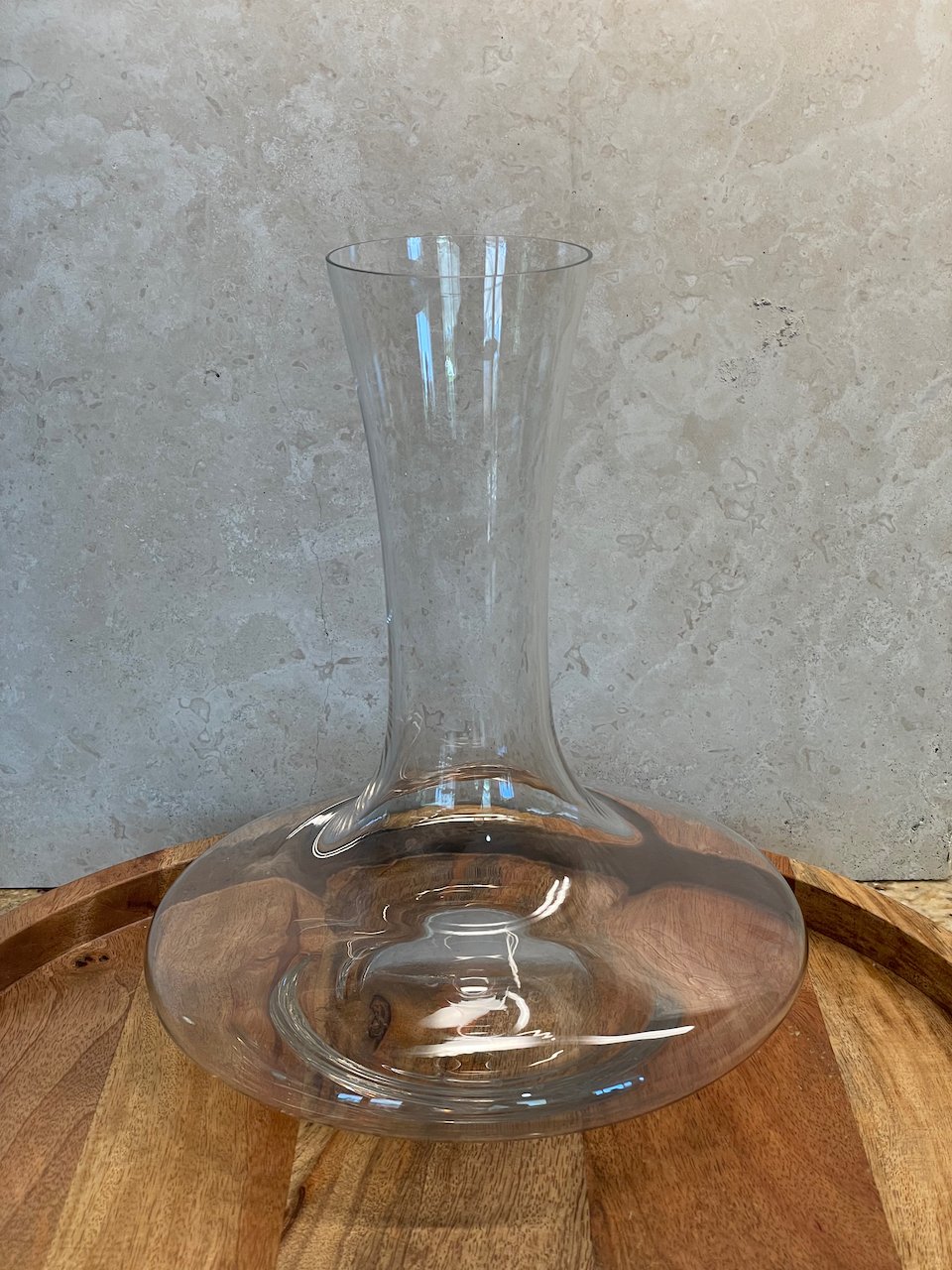
But to really give a bottle of wine a chance to breathe, you'll need some type of decanter that allows the wine to spread out and have a lot of surface area in contact with air.  The wide-base decanter pictured here is a great example. And, it's designed such that a single bottle of wine just fills the bottom and allows for the maximum amount of the wine's surface area to be exposed to air.

This whole discussion may leave you asking "Why do you want to intentionally expose wine to air? Doesn't that make the wine go bad?"  And, those are great questions. For answers, see my past blogs on "Why Decant Wine?" and "When to Not Decant a Wine."

Here's to enjoying whatever you drink! Cheers!

Behind the Cork™ - Wine of the Week

J Lohr.jpg

2016 J. Lohr Arroyo Seco Monterey Chardonnay ($10)

I recently visited J. Lohr in Paso Robles and gained a whole new appreciation for their wines and the man behind them all, Jerry Lohr.

This 100% Chardonnay from J. Lohr exhibits aromas of peaches, baking spices, a hint of vanilla.

While it was oak fermented and aged, it has retained nice acidity with white peach, apricot and subtle orange flavors.

As is always the case with the Behind the Cork™ - Wine of the Week features, this wine is very affordable, easily attainable and a nice accompanyment with any meal.

Definitely worth checking out. 


What is that Thing a Sommelier Wears Around Their Neck?

Maybe you've noticed a wine server at a nicer restaurant or in a movie wearing what looks like a large medallion around their neck. You typically can't miss it. It's large, shiny, and normally worn with a silver chain or a ribbon.

What might seem to be a large medallion is actually called a "tastevine" which is pronounced "Taht-vanN."  It's a French word for "taste wine." And, yes, it is (or was) used to taste wine.

This shallow silver metal cup is faceted and convex. And, its original design was intended to be used in the low lighting of a wine cellar. The shiny metal, the facets, its convex shape and its shallowness were designed such that in low light, a small quantity of wine could be poured into it and provide the wine maker with a better view of the color and clarity of the wine.

Today, a tastevin is more of a Sommelier's (“suh-mel-yay”) badge of tradition. A bit of Sommelier bling. But, a Sommelier may still open a bottle of wine either at your table or at a Sommelier station, and pour just a splash of wine in their tastevin to sip it to ensure the wine is not flawed.

So, next time you see a wine server wearing this device around their neck, you'll know that originally it had a very useful purpose. But today, it's a bit more of a show-piece. Cheers!


Behind the Cork™ - Wine of the Week

14 Hands.jpg

2014 14 Hands Columbia Valley Stampede Red Blend ($9)

I've recently read some nice things about 14 Hands Winery and, never having had their wines, I thought I'd give this one a try.

The Stampede Red Blend is a combination of Syrah, Merlot, Cabernet Sauvignon and Mouvèdre. Oh, and Viognier.  Yes, Viognier, a medium to full-bodied white wine that gives a bit of an aromatic kick to the Syrah base.

Each variety was vinified and aged separately in mostly neutral French and American oak for nearly two years with blending occurring just prior to bottling.

Right out of the bottle, this blend exhibited big red fruit aromas and the full-bodied flavors that are expected with a Syrah. Along plenty of tannin.

After decanting for an hour this wine really settled down and exhibited some smoothness and subtle hints of its oak aging.

This 2014 Stampede Red Blend received 88 points from Wine Enthusiast and 89 points from Wine Spectator. Very nice ratings, especially for $9 bottle of wine.  So, another great value wine. Check it out.