
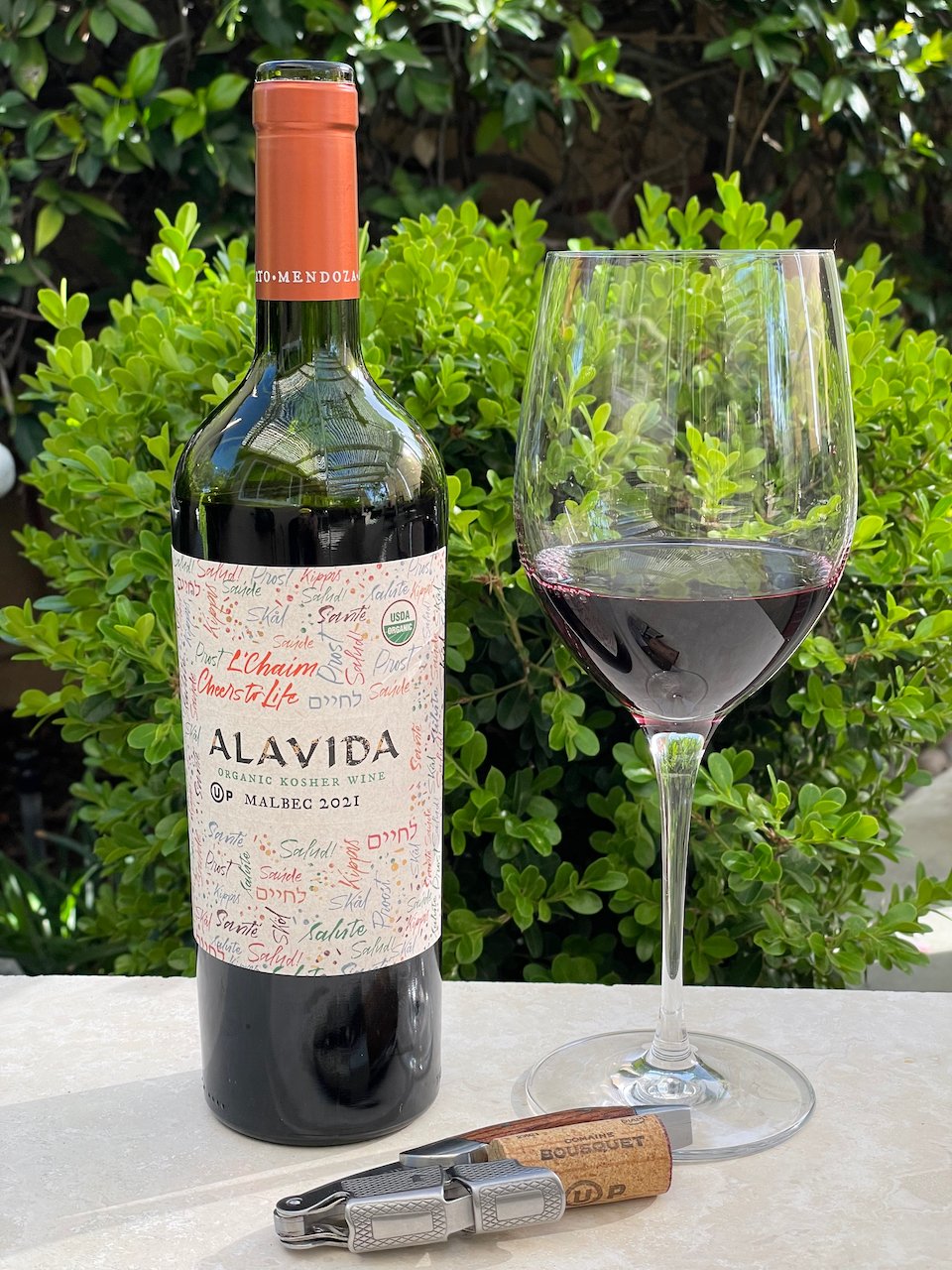
Behind the Cork™ - Alavida Malbec

2021 Alavida Malbec ($19)

World Malbec Day is coming up on Sunday, April 17th, an annual holiday that commemorates the founding of the first agricultural school in Argentina in 1853, which was instrumental in the early cultivation of Malbec in the South American nation. And, here’s a great way to celebrate!

This Alavida Malbec is USDA-certified organic and kosher. It’s also vegan, gluten-free and Ecocert-approved. And, it tastes great!

The name Alavida is composed from the Spanish “to life” which is ‘a la vida.’

The grapes for Alavida are grown above 4000 feet in the Andean foothills of the Uco Valley in Argentina. There, daily temperature swings can be up to 60 F resulting in more natural sugar from the hot days and more acidity from the cold nights - a great recipe for wine making!

The winemaking process for Alavida is almost identical to that used in making a non-kosher wine, with two exceptions. Ingredients such as yeast must be kosher, and the wine must be physically made by a sabbath-observant Jewish team under the supervision of a rabbi. For Alavida that means double the number of people involved: a Jewish team member to handle grapes and wine, paired with a home team member standing alongside and directing. For Alavida, that entailed five duos! Winemaker Rodrigo Serrano gave the work orders; his Jewish counterparts executed them.

This Alavida Malbec is medium purple in color with aromas of red fruit, spices, herbal notes and buttery-oak. On the palate have flavors of red fruits and red raspberry, medium tannin, medium-low acidity, some earthiness and hints of the oak on the finish.

Alavida Organic Kosher Malbec is a wonderful wine that is fully deserving of being a Behind the Cork™ Wine of the Week. Look for this one and raise a glass for World Malbec Day on April 17th. Cheers!


Disclosure of Wine Sample Submission: I received this sample at no cost for review. The opinions expressed are entirely my own.

Samples Provided by Origins Organic Imports and Domaine Bousquet (via Creative Palate Communications)
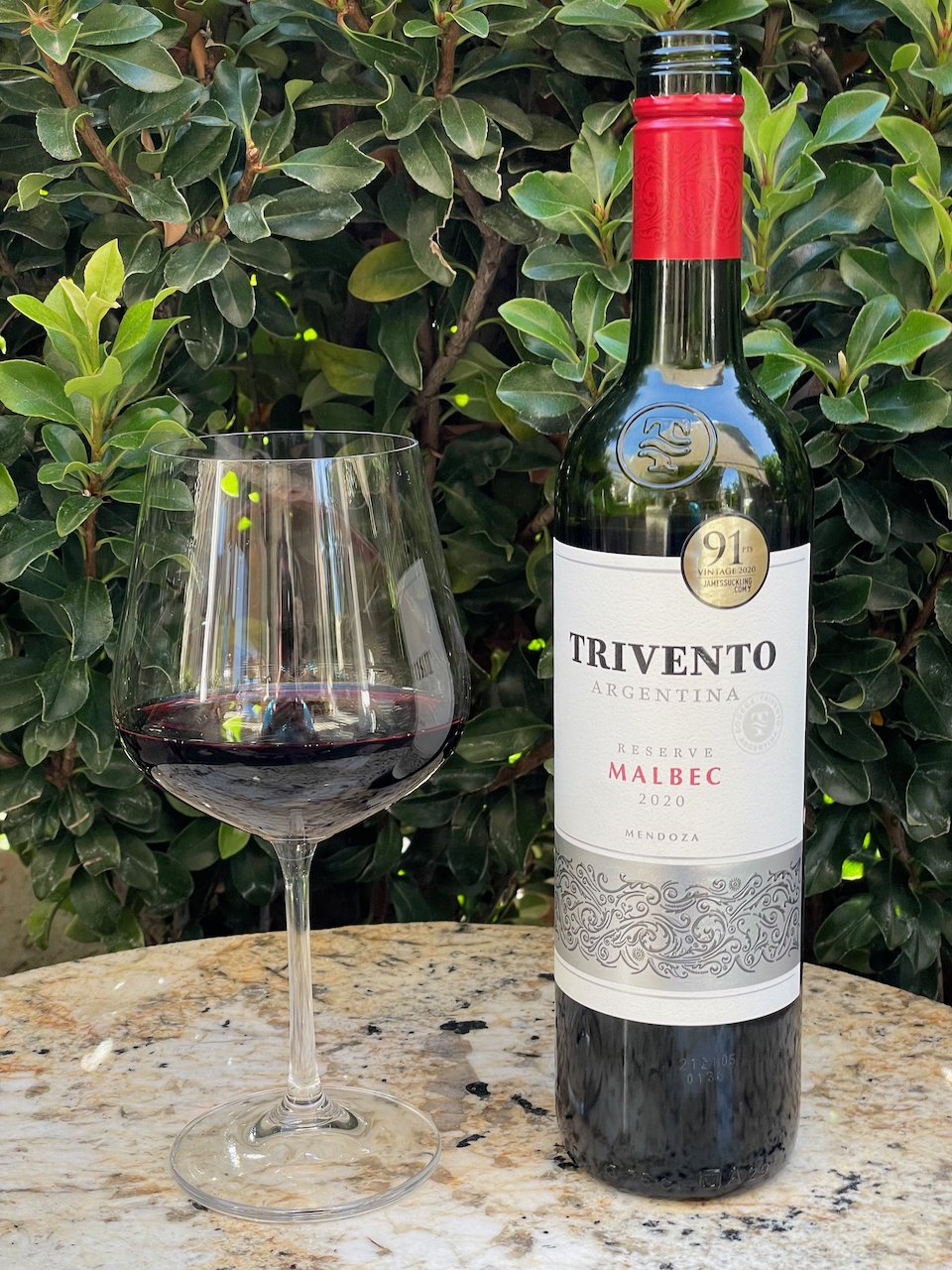
Behind the Cork™ - Trivento Reserve Malbec

2020 Trivento Reserve Malbec ($11)

World Malbec Day is coming up on Sunday, April 17th, an annual holiday that commemorates the founding of the first agricultural school in Argentina in 1853, which was instrumental in the early cultivation of Malbec in the South American nation. And, here’s a great way to celebrate!

This Trivento Reserve Malbec is from Mendoza’s Bodega Trivento which is tucked away in the towering Andes Mountains of Argentina

The team at Trivento—which means “three winds” in Spanish— sources fruit for the Reserve Malbec from a deliberate mix of new and old vines from two renowned sub-regions in Mendoza: Luján de Cuyo to the north and Valle de Uco to the south.

In Argentina, the term ‘Reserva’ is given to all red wines that have been aged in oak barrels for at least one year.

This Trivento Reserve Malbec is produced from 100% Malbec grapes that are de-stemmed and crushed. Maceration occurs prior to a 20-day fermentation in stainless steel tanks. It then undergoes natural malolactic fermentation before 20% of the wine is aged in French and American oak for six months.

This Trivento Reserve Malbec is deep purple in color with aromas of black cherry and plum. On the palate it has soft tannin, moderate acidity, vanilla and caramel flavors from the oak, and a light finish.

At $11 this is a wonderful wine that is fully deserving of being a Behind the Cork™ Wine of the Week. Look for this one and raise a glass for World Malbec Day on April 17th. Cheers!


Disclosure of Wine Sample Submission: I received this sample at no cost for review. The opinions expressed are entirely my own.

Samples Provided by Trivento (via Jarvis Communications)

Behind the Cork™ - Cabernet Sauvignon from Chile's Maipo Valley

Maipo Valley

Chile’s Maipo Valley is located in the Central Valley near Santiago, and just north of the Colchagua Valley. The Coastal Range separates the Maipo Valley from the Pacific coast on the west and in the east, the Andes Mountains separate Maipo from the Argentinean region of Mendoza.

The first grape vines were planted around Santiago in the 1540s but it wasn't until the 1800s that viticulture really began to expand in Chile.

The Maipo Valley is known for fine wines. It is said that Maipo is known for Cabernet Sauvignons with prominent black fruit flavors, spicy undertones, and bright acidity, while Colchagua Cabernet Sauvignons are more full-bodied with structured tannins.

Here are three fine examples of Cabernet Sauvignon from the Maipo Valley:

  • 2016 Echeverria Limited Edition ($25)

This Echeverria is produced from 85% Cabernet Sauvignon, 10%Syrah and 5% Carménère grapes. It was fermented in stainless steel vats for 8-10 days with an extended skin maceration for additional 10-15 days. It then underwent malolactic fermentation before being aged in French oak barrels for 12 months. The wines were blended and returned to barrels for an additional six months.

This wine is medium ruby in color with light aromas of red fruits and spicy herbal notes. On the palate this wine is medium-to-full bodied with spicy, peppery notes, medium tannin and medium acidity that finishes easy.

  • 2018 Miguel Torres Reserva Especial Cordillera ($25)

The Miguel Torres Reserva Especial Cordillera is from the area of Pirque, a mountainous area of the Maipo Valley. The growing season include the influence of the La Niña phenomenon that resulted in a cooling of the Pacific Ocean, resulting in somewhat lower temperatures than normal prior to harvest.

This Miguel Torres Cordillera is produced from 100% Cabernet Sauvignon grapes. They were fermented in stainless steel tanks for 14 days and then underwent malolactic fermentation in 100% French oak. It was then aged for 12 months in French oak, 20% new and 80% second use, before bottling.

This wine is deep ruby in color with aromas of black cherry and blackberries, with a touch of bell pepper notes. On the palate it is medium bodied with good acidity, moderate tannin and a light finish.

  • 2017 Vina Aquitania Lazuli ($45)

This Vina Aquitania Lazuli Cabernet Sauvignon is produced from 100% Cabernet Sauvignon grapes that range in age from 25 to 30 years old. It was fermented in stainless steel tanks with four days of cold soaking and six days of fermentation with pumpovers. It then underwent six additional days of post-fermentation maceration before malolactic fermentation in barrels. Aging occurred in French oak barrels (30% new) for 16 months.

This wine is medium ruby in color with aromas of black cherry and black fruit with light herbal notes. On the palate it is full-bodied and smooth with low acidity, light tannin and some spiciness on the finish.

Each of these Cabernet Sauvignon wines from Chile’s Maipo Valley are affordable and attainable and fit right in as Behind the Cork™ Wines of the Week. Cheers!


Disclosure of Wine Sample Submission: I received these samples at no cost for review. The opinions expressed are entirely my own.

Samples Provided by the featured wineries of Chile (via Creative Palate)

Behind the Cork™ - Cabernet Sauvignon from Chile's Colchagua Valley

Colchagua Valley

The Colchagua Valley is located in Chile’s Central Valley and stretches from the coastal hills that run the entire length of Chile's Pacific coastline and to the foothills of the Andes in the east.

Each of these wines is a “Gran Reserva” which, in Chile, means that it is their highest quality wine containing a minimum of 12.5% alcohol and have oak treatment.

The Cabernet Sauvignon of the Colchagua Valley are some of the best wines of Chile’s Central Valley and are available at great values with many in the $20 price range.

Here are three fine examples of Cabernet Sauvignon from the Colchagua Valley:

  • 2018 Los Vascos Cromas Gran Reserva ($22)

    Los Vascos is located in a closed valley, approximately 25 miles from the sea. The name, Cromas, was inspired by the colors of nature.

    This wine is produced from 85% Cabernet Sauvignon, 10% Syrah and 5% Carménère. After careful sorting and de-steming, grapes are placed in stainless steel tanks for fermentation. Regular pump-over ensure a gentle extraction of the tannins. After malolactic fermentation, 50% of the wine is transferred into French oak barrels for a period of 12 months.

    This wine is medium ruby in color with delicate aromas of red cherry and herbal notes. On the palate it is medium bodied with moderate acidity, light tannin and a balanced finish.

  • 2018 Maquis Gran Reserva ($20)

    Viña Maquis is located in the heart of the Colchagua Valley between the Tinguiririca River and the Chimbarongo Creek. Both waterways act as pathways for cool coastal breezes that moderate the warm summer temperatures.

    This wine is produced from 90% Cabernet Sauvignon, 6% Cabernet Franc, 3% Carmnere and 1% Petit Verdot. The grapes are 100% hand-picked and sorted. Fermentation occurred in stainless steel tanks for 21 days, Malolactic fermentation also occurred in stainless steel tanks. It was then aged for 12 months in French oak.

    This Viña Maquis is medium ruby in color with aromas of red cherry and plums. On the palate, this medium-bodied wine has red fruit flavors, medium-low acidity, light tannin and a light, easy finish.

  • 2018 Terra Noble Gran Reserva ($20)

This Terra Noble Cabernet Sauvignon from Colchagua comes from two different terroirs in the valley: 70% of the grapes are from the Los Lingues DO in the Colchagua Andes while the remaining 30% hails from the “Between the Ranges” (Entre Cordilleras) Marchigüe DO. The Los Lingues vineyard is planted in deep colluvial soils with high percentages of clay and stone, while the Marchigüe vineyard is alluvial, sandy and clay-rich. The former is warmer than the latter, where the Pacific breeze lowers the temperature.

This Terra Noble wine is produced from 100% Cabernet Sauvignon.

Fermentation takes place in stainless-steel tanks for a cold maceration of 4 - 6 days. Alcoholic fermentation took place between 25º -26º C with soft extractions by manual punch-downs that were carried out for 8 to 12 days. Then, the wine underwent a post-fermentative maceration of about 2 weeks, depending on the lot. Once the vatting process was finished, 70% of the wine was racked directly into new and used French oak barrels while the remaining 30% was placed in un-toasted foudre (large wooden vats) where it completed the malolactic fermentation. Aging was for 12 months.

This Terra Noble Cabernet Sauvignon is deep ruby in color with aromas of red fruits with herbal hints. On the palate it is smooth with medium-low acidity, moderate tannin and a light finish.

Each of these Cabernet Sauvignon wines from Chile’s Colchagua Valley are affordable and attainable and fit right in as Behind the Cork™ Wines of the Week.

Next time we’ll explore three Cabs from Chile’s Maipo Valley. Cheers!


Disclosure of Wine Sample Submission: I received these samples at no cost for review. The opinions expressed are entirely my own.

Samples Provided by the featured wineries of Chile (via Creative Palate)