Behind the Cork™ - Caposaldo Chianti

2024 Caposaldo Chianti ($12.99)
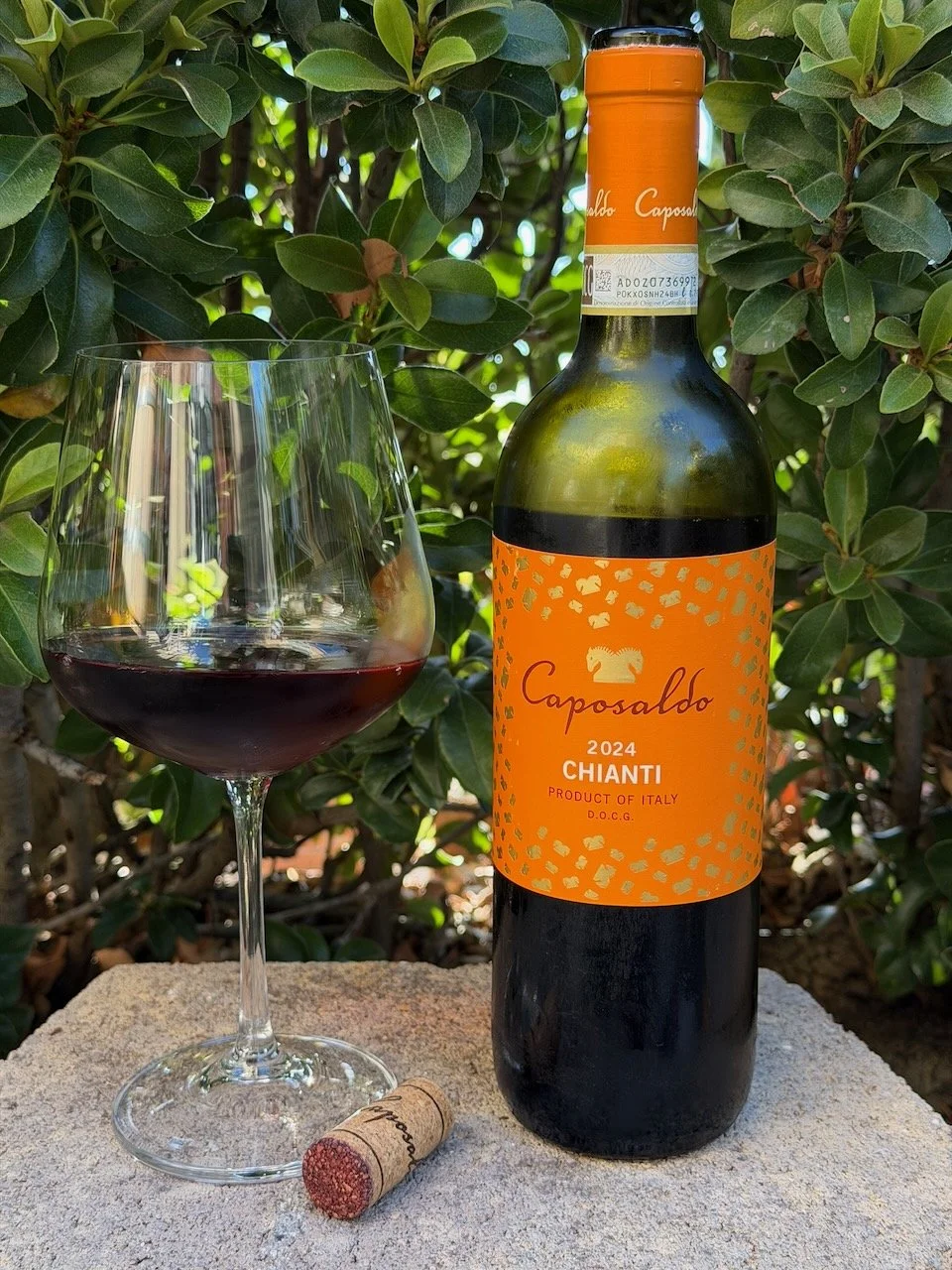
The name Caposaldo translates to “benchmark” in Italian—a bold claim that the wine backs up with a legendary backstory.

If you look closely at the label, you'll spot golden horse heads. These pay tribute to Caposaldo, a historic Roman racing horse favored by Emperor Nero. By conquering Rome’s Circus Maximus, the champion horse became the ultimate standard of excellence, a quality that Caposaldo wines aim to replicate in every bottle.

In the Chianti DOCG, every bottle must contain a minimum of 70% Sangiovese grapes. The website suggests that Caposaldo uses 75% Sangiovese, along with Merlot and Cabernet Sauvignon in this wine. These grapes are handpicked on the rolling hillside vineyards of Tuscany, Italy, specifically spanning across the hilly provinces of Arezzo and Siena.

The winery uses stainless steel tanks for fermentation. Then, 30 percent of the wine is separated to age for six months inside traditional oak vats before blending and bottling.

This 2024 Caposaldo Chianti is a medium-ruby color with delicate aromas of dark fruit. On the palate, this medium-full-bodied Chianti has rich flavors of black cherry, blackberry and plum. It has medium acidity and medium-high tannin. It finishes easy.

This 2024 Caposaldo Chianti is a great Italian wine that will pair well with most Italian dishes. But, it’s also great all by itself! And, at this price, it’s a great fit as this week’s Behind the Cork™ Wine of the Week. Cheers!


Disclosure of Wine Sample Submission: I received this sample at no cost for review. The opinions expressed are entirely my own.

Media Sample Provided by Caposaldo via Kobrand Wine and Spirits

How to Choose a Good Chianti

Chianti is a great wine to enjoy with an Italian meal. Whether it is spaghetti and meatballs, sausages or pizza, a Chianti is a great pairing. And it's not hard to find a good one for a very reasonable price.

Chianti is a region within Tuscany in central Italy, between Florence and Siena. And it produces the best known of the Italian wines. While the wines have been around since the Middle Ages, the Chianti region was officially established in the 18th century (1716 to be exact). But it wasn't until 1967 that the Chianti Denominazione di Origine Controllata (DOC) was created. Then, in 1984, the region reached Italy's highest level of wines, the Denominazione di Origine Controllata e Garantita (DOCG). This is important because DOC wines are the most commonly found wines in Italy, while DOCG wines only cover a handful of Italian wines with the highest of quality.

So, again, Chianti is a region, not a grape.  The wines of Chianti are made from the Sangiovese grape. Local laws require Chianti to have at least 70% Sangiovese with the more prestigious Chianti Classico having at least 80% Sangiovese.

When shopping for Chianti, look for the black rooster (gallo nero in Italian) on the neck of the bottle.  The black rooster indicates it is authentic Chianti Classico, making it easy to distinguish from the more common Chianti.

Some may also know of Chianti as the wine bottle in the straw basket.  While this was a distinguishing trait of Chianti in the past, most producers are now using the traditional styled wine bottle. But, if you're trying to create an Italian look for your meal, a bottle of Chianti with a straw basket base will certainly do. But if you're looking for a nicer bottle of Chianti, go with the rooster and one with DOCG on the bottle. Cheers!

Try A Different Wine for a Change

I just took a week-long trip to the east coast. Not a wine-focused trip. But, nonetheless, I did pick up a couple bottles to enjoy in the evenings. Being a Californian, it's really easy to immediately look on the shelves for a nice California wine.  But, this time I decided to try a different wine for a change.

Being on the east coast, and a bit closer to Europe (well, nearly halfway there!), I decided to pick one bottle of wine from France and one from Italy. While it can seem really tough to pick out French and Italian wines, I came at it from a simple approach. I simply looked for wines any wines that were in my typical price range. 

I started with the French wines.  I spotted several upper-shelf wines that fit the price range. But, then I spotted a Châteauneuf-du-Pape.  Knowing that great red blends come from this region, I picked up the bottle.

Then, I turned my attention to the Italian wines.  Again, scanning the upper shelves, I spotted several bottles of Chianti.  And, seeing a 2012 Chianti Classico Riserva (and spotting the Black Rooster), I picked it up. (And, yes, the 'Riserva' truly distinguishes it from the more common Chianti.)

In both cases, I was very pleased with each bottle of wine.  The Châteauneuf-du-Pape (a blend of up to 13 varietals) was rich and flavorful while the Chianti had wonderful bright cherry flavor.

I could have gone with a couple of bottles of go-to wine from California, but I'm really glad I tried something a bit different. And, you should too. It's a fun way to get exposed to some different flavors. And, you'll probably be pleasantly surprised with your choices.

Cheers!

Behind the Cork™ Wine of the Week

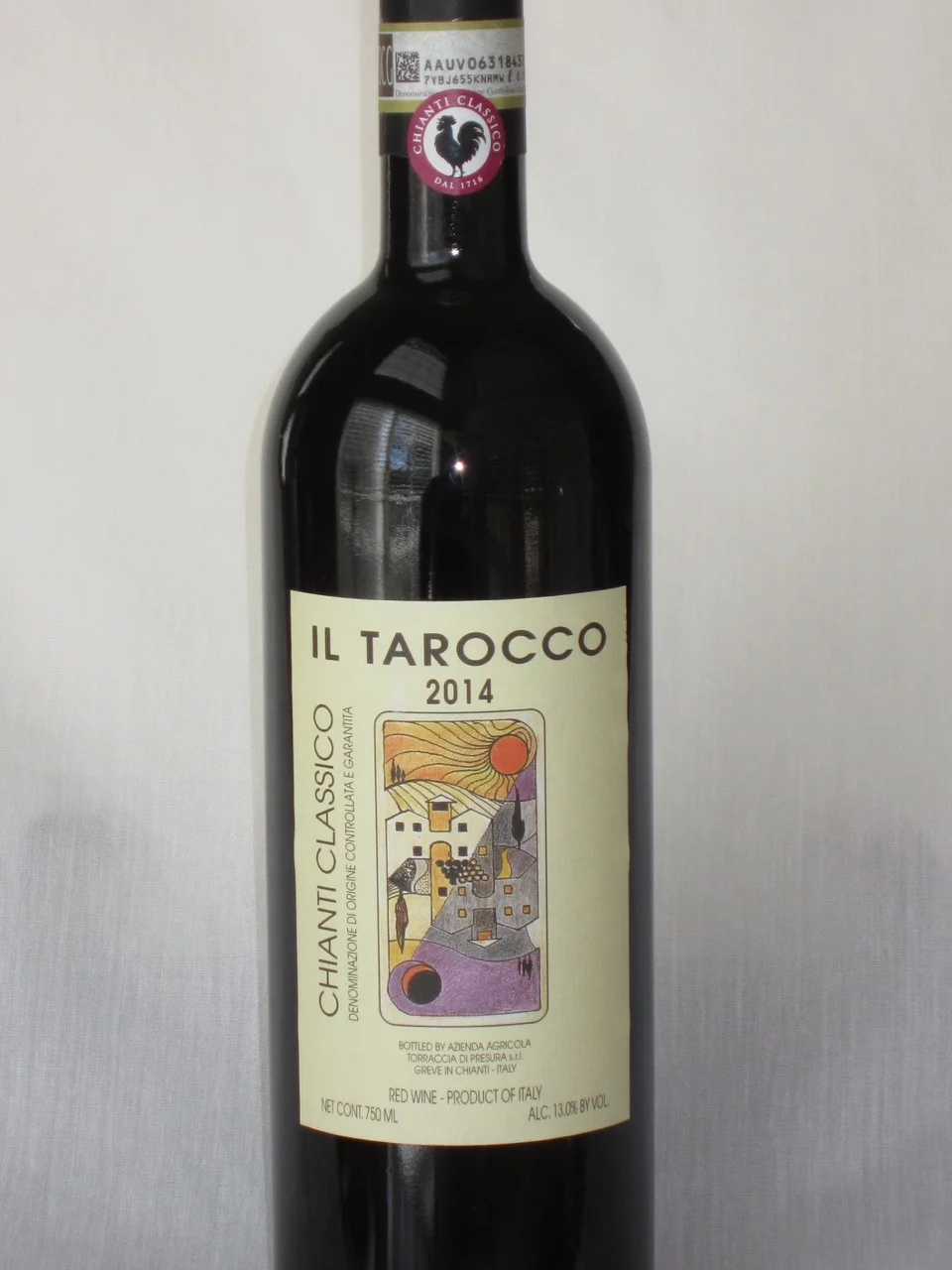
2014 Il Tarocco Chianti Classico ($10)

As you can immediately tell from the black rooster on the neck of the bottle, this is a Chianti Classico. The black rooster let's you know this is a nicer Chianti.  While Chianti is required to be made from at least 70% Sangiovese, and Chianti Classico must be at least 80% Sangiovese, the Il Tarocco is 90% Sangiovese along with 10% Canaiolo Nero. This is a great, affordable and attainable Chianti Classico. Enjoy with beef, pork and lamb dishes. Cheers!


Looking for a Nice Chianti? Look for the Black Rooster!

Chianti is a great wine to enjoy with an Italian meal. Whether it is spaghetti and meatballs, sausages or pizza, a Chianti is a great pairing. And it's not hard to find a good one.

Chianti is a region within Tuscany in central Italy, between Florence and Siena. And it produces the best known of the Italian wines. While the wines have been around since the Middle Ages, the Chianti region was officially established in the 18th century (1716 to be exact). But it wasn't until 1967 that the Chianti Denominazione di Origine Controllata (DOC) was created. Then, in 1984, the region reached Italy's highest level of wines, the Denominazione di Origine Controllata e Garantita (DOCG). This is important because DOC wines are the most commonly found wines in Italy, while DOCG wines only cover a handful of Italian wines with the highest of quality.

And in case you didn't know, Chianti is a region, not a grape.  The wines of Chianti are made from the Sangiovese grape. Local laws require Chianti to have at least 70% Sangiovese with the more prestigious Chianti Classico having at least 80% Sangiovese.

When shopping for Chianti, look for the black rooster (gallo nero in Italian) on the neck of the bottle.  The black rooster indicates it's Chianti Classico making it easy to distinguish from the more common Chianti.

Some may also think of Chianti as the wine in the straw basket.  While it was a distinguishing trait of Chianti in the past, most producers are now using the traditional styled wine bottle. So, if you're trying to create an Italian look for your meal, a bottle of Chianti with a straw basket base will certainly do. But if you're looking for a nicer bottle of Chianti, go with the rooster. Cheers!