The Art of Wine Making: Having a Trained Nose and Palate to Evaluate the Wine

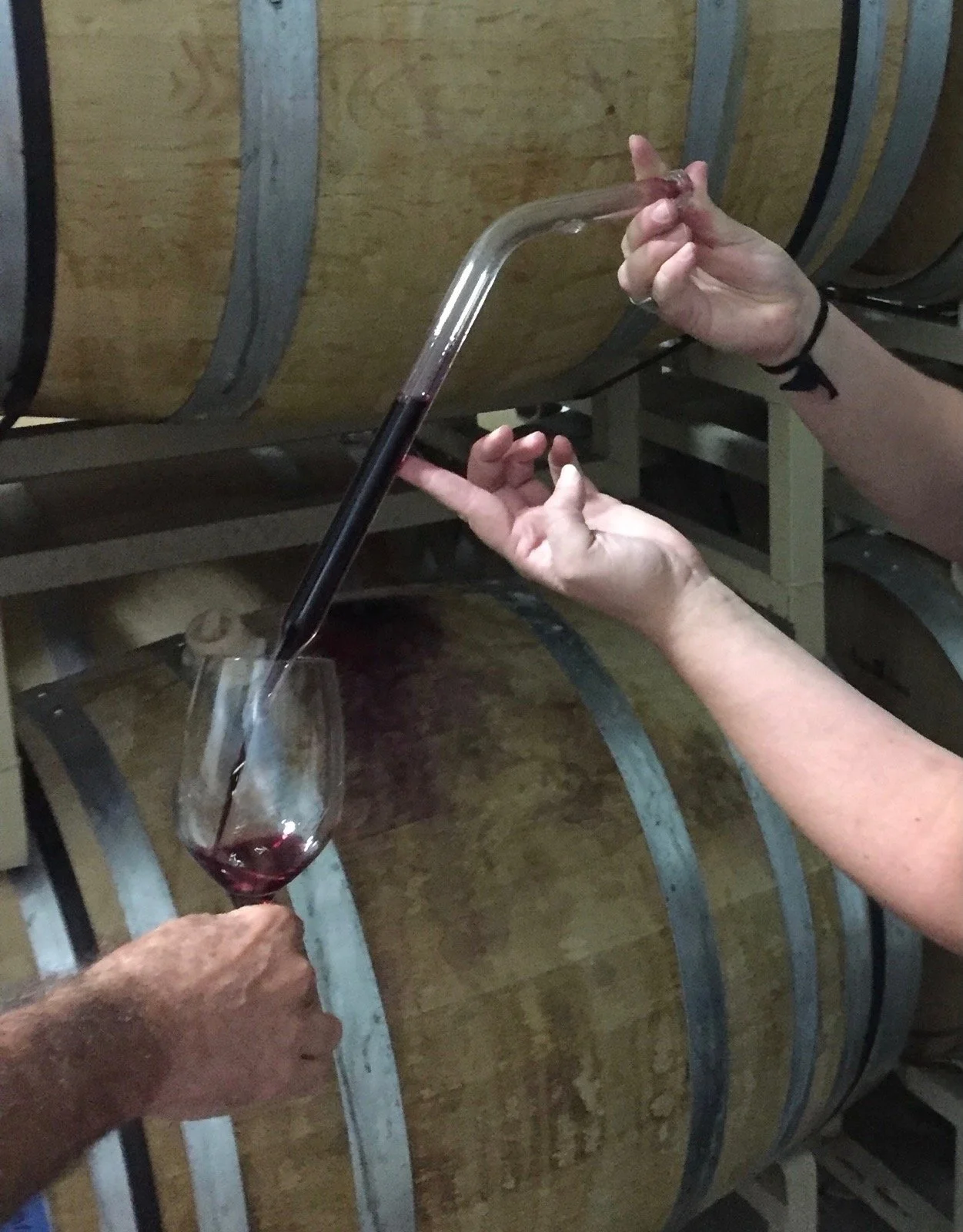
A wine maker using a Wine Thief to remove wine from a barrel for tasting

Winemakers rely heavily on their senses of smell and taste to evaluate the evolution of their wine from the grapes in the vineyard to the final product that goes in the bottle. While part of this process is science, a significant part is an art that wine makers develop over years of training and experience.

This training and experience are used throughout the wine making process. While there is science (i.e., chemistry) involved, the wine makers use their senses throughout the process:

  • In the vineyard, they can measure the grape’s sugar and acid levels, but a trained wine maker will also inspect the grapes, break them open, taste the juice, taste the seeds and evaluate the tannin

  • During fermentation, a wine maker will be constantly tasting the wine as the grape’s natural sugars convert to alcohol

  • Once the fermentation is complete, the wine maker is again smelling and tasting the wine as it ages

  • If the wine is being aged in oak, the wine maker will be evaluating how the flavors of the oak are integrating with the wine

  • Following aging, many wine makers will blend their wines in order to achieve the final aromas and tastes desired

  • Just prior to bottling, the wine maker will ensure the wine is properly filtered (or not) and ensure that the bottles and bottling process are clean and ready to go

I have always loved the words of a wine maker that I met early in my wine adventures who said that “Making wine is easy. Making good wine is hard.” It is the artistic side of wine makers that make the difference between an ordinary bottle of wine and an outstanding bottle of wine. Cheers!

Sip Your Wine for a More Enjoyable Experience

I had a recent conversation with another wine lover who complained that whenever their mother came over for a glass of wine she would down it like ice water. And, they noted, they had been serving their mother “really good bottles of wine.” So, they’ve now learned that “…going forward, when Mom comes over for a glass of wine, she’s getting the cheap stuff!

It’s easy to understand that someone might be inclined to “chug” a glass of wine like a cold beer or an easy-to-down mixed drink. But, drinking wine is a better experience if it is sipped rather than chugged.

One of the reasons for sipping wine is to include and enjoy the aroma. Our nose is actually very important to our ability to taste the flavors in wine. It’s like the old experiment where you pitch your nose and take a bit of an orange - you don’t end up “tasting” it. It’s not that your tongue doesn’t work with your nose pinched, but when your nose isn’t working your brain doesn’t get all the information about what’s in your mouth. So, a slow sip of wine, with your nose above the bowl of your wine glass, significantly enhances the overall ‘flavor’ of the wine.

Another reason for sipping wine is to enjoy the front, middle and finish of the wine. If you take the time to sip and really pay attention to the wine, you’ll notice that the “front end” of the wine will be different than the “middle” and the “end” or finish. On the front, you may experience bright fruit flavors (fruit-forward wines) along with the wine’s texture (usually the astringency of tannin, or lack thereof). In the middle, or mid-palate, is where a wine’s ‘structure’ is discovered. If everything comes together in a balanced manner, a good wine will have lots of interesting flavors in the middle. Conversely, a wine without any structure will seem to be empty or weak. Then, on the finish (after you swallow), you are likely to notice things like its mouthwatering acidity, or you may experience lingering sensations such as tartness or spiciness.

So, slow down and sip your wine. You’ll find that you’ll enjoy it even more. And, you might also consider keeping some of “the cheap stuff” on hand for you wine guzzling family and friends! Cheers!

Ever Wonder? What is the Right Amount of Wine to Pour into a Glass?

Well, first let me start by saying you can never have too much wine, right? While that may be true, you can actually have too much wine in your glass. Pouring the ‘right’ amount of wine into a wine glass can actually enhance your enjoyment of the wine.

While we taste with our tongue, it only provides us with a limited amount of information. If you’ve ever tried eating something (like a slice of orange) while holding your nose closed, you’ll know that food has limited flavor when you don’t include the food smells or aromas that enter through your nose.

This is true with wines. While our tongues can only detect the basic tastes (sweet, salt, bitter and sour), our nose is capable of detecting thousands of aromas. Put another way, taste refers to what’s going on inside our mouth including our tongue. But, aromas are detected inside our noses and relates specifically to our sense of smell. Put them both together and you get flavor!

Now, this is where the wine glass comes in. If you fill your wine glass to the top, as shown in the picture, and take a sip, you’ll certainly get taste on your tongue and a bit of aroma as the glass approaches your mouth. But, if instead you fill the glass just about one-third full, just to the point where the glass is at its widest point, you’ll leave the upper two-thirds for the aromas. And, by giving your glass a slight swirl (yes, wine drinkers swirl for a reason!), you’ll release even more aromas into the bowl of your wine glass. Then, when the wine glass approaches your mouth, take a sniff and then a sip. The wine will then have even more flavor.

This is a simple yet very effective trick to get even more enjoyment out of a glass of wine. Cheers!

Wine Fun Fact: The Difference Between Aroma and Bouquet

Recently, I posted a piece discussing how fermentation and aging affect a wine’s aroma. But, it was brought to my attention that the terms aroma and bouquet are different when it comes to wines. So, here’s a quick summary of each:

  • Aroma - Each grape variety (e.g., Cabernet Sauvignon, Zinfandel, etc.) has its own set of aromas. These aromas are fruit, herbal and floral scents that are just from the grape. These are also referred to as primary aromas.

  • Bouquet - The bouquet of a wine comes from the fermentation and aging processes. During the fermentation process, yeast turns the grapes’ natural sugars to alcohol. But, the yeast can also impart scents associated with bread, butter, cheese and earthiness, such as mushrooms. Aging a wine in oak barrels can impart scents of vanilla, caramel, chocolate, smoke and tobacco. These scents of a wine’s bouquet are also referred to as secondary aromas.

Aromas Play an Important Part in How a Wine Tastes

In a recent blog, I asked “What do you smell when you smell wine?” In wines, especially the red wines, there are a multitude of aromas that can be detected, with a little practice. And, these aromas play an important part in how the wine tastes.

I was unintentionally reminded of this fact recently. I have a couple of insulated wine tumblers that are great for keeping wines such as rosés and white wines chilled when outside on a hot day. These double-walled metal tumblers also come with a handy “sipper” top that’s perfect for avoiding spills and keeping the bugs out.

I’ve enjoyed using these tumblers but was constantly finding that the wines were just so-so. This went on for some time until one day when I wasn’t using the “sipper” top. My wine really tasted good, the way it should. Then, suddenly, I realized the issue with the “sipper” tops. They were not allowing me to get any of the aroma from the wine. And, that makes a big difference.

Just try pinching your nose shut while eating or drinking. Things just don’t taste the same. Without your sense of smell you have a reduced sense of taste for anything you eat or drink.

And, the same is true with canned wines. The small opening doesn’t allow for any of the aromas to reach your nose.

So, avoid drinking from a “sipper” lid or directly from a can. Then you’ll be assured that you are getting to enjoy the full flavors of your wine. Cheers!