

Cabernet Sauvignon 🍷
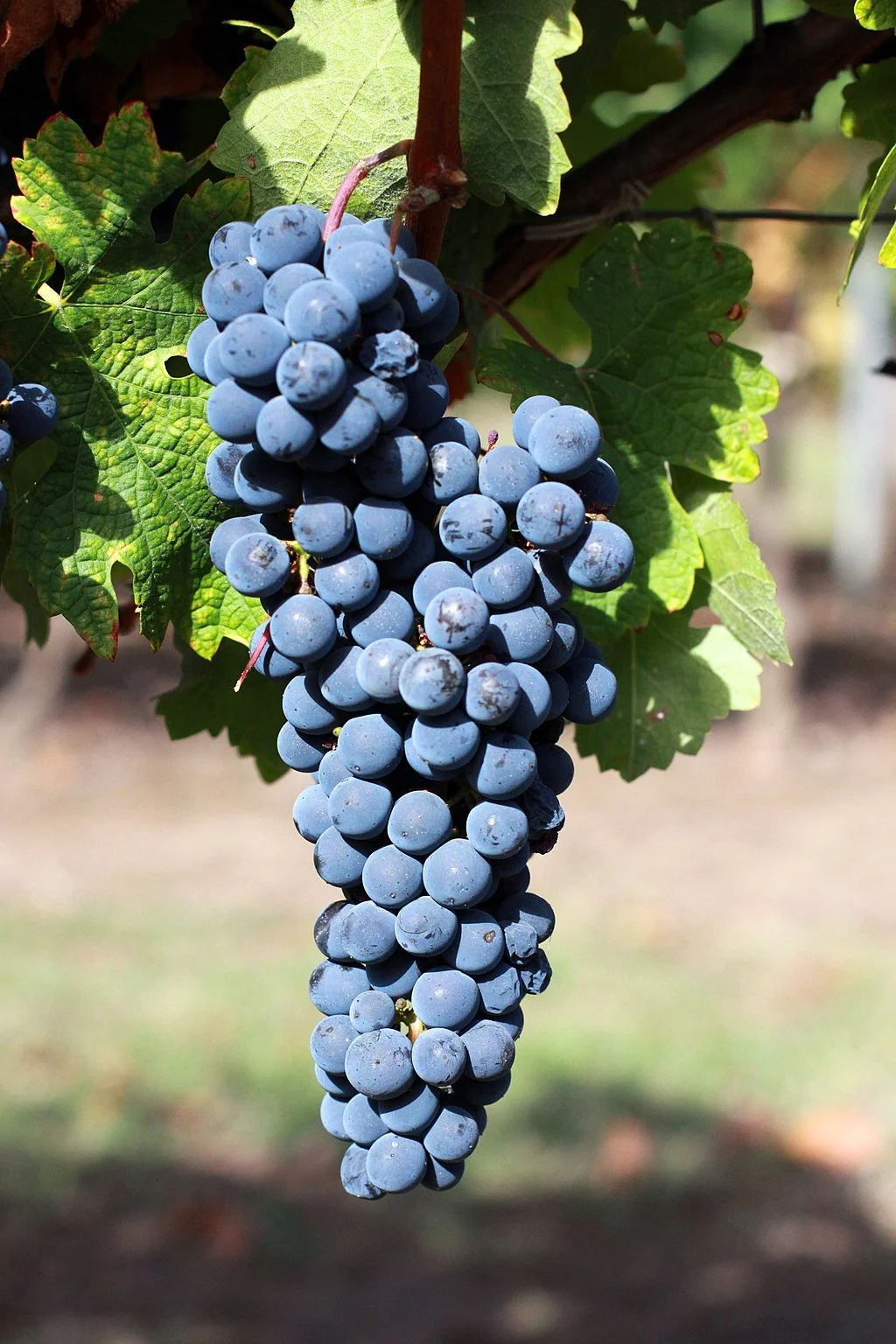
Photo by Christophe Eyquem, Wikimedia Commons
Widely considered the “King of Red Wines,” Cabernet Sauvignon is the world’s most widely planted and renowned red wine grape. It originated in 17th-century France as a cross between Cabernet Franc and Sauvignon Blanc. It is considered the foundation for wine blends in the Bordeaux region of France.
Today, Cabernet Sauvignon is grown around the world including France, U.S., Chile, Australia, Italy, Spain, China, South Africa and Argentina.
Cabernet Sauvignon is a red wine grape known for producing full-bodied, rich, and flavorful wines. It’s been called the “rockstar” of the wine world—it’s bold, versatile, and often takes the lead role in wine lists around the globe.
The high tannin content and acidity make Cabernet Sauvignon particularly well-suited for aging.
Wines produced from the Cabernet Sauvignon grape have aromas that include red (Cherry, strawberry) and dark fruits (black cherry, blackberry, black currant, plum and fig), dried fruit (raisins and prunes) and cooked fruits (jam and compotes). In addition to the fruit aromas, there can also be floral notes of rose, violet and lavender. Herbal notes include tomato leaf and green bell pepper. Leather is another common aroma.
Common flavors of Cabernet Sauvignon include black currant, blackberry and plum, leather and tobacco leaf. When aged in oak barrels it can take on flavors of vanilla, black pepper and some smokiness. It can finish with flavors of chocolate.
Depending on the wine, it can evolve over many years, sometimes even decades, in the bottle and properly stored, gaining layers of secondary and tertiary flavors.
Young Cabernet Sauvignon wines should be decanted for 1 hour or more and then served in a red wine glass with a large bowl to capture the aromas, at 60-68 °F.