Behind the Cork™ - Union Sacre Wines Gewurztramminer

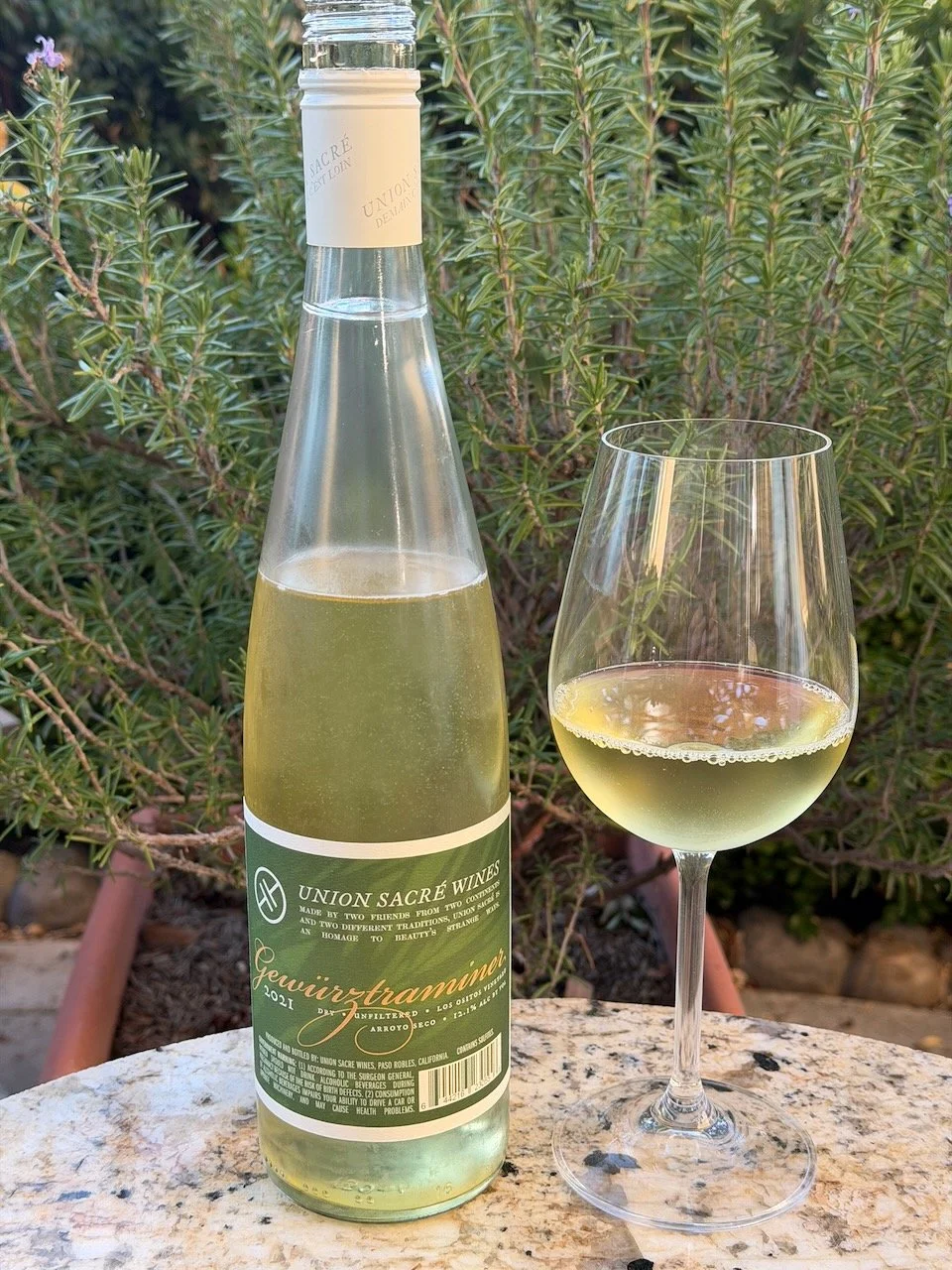
Union Sacré Wines Gewürztramminer ($19.99)

For winemaker Xavier Arnaudin, winemaking has always been about people. He was born and raised in France and started his career not in the cellar, but in the kitchen, studying to be a chef. In 1999 he left the Rhône Valley and headed to California where he met Phillip Muzzy. They dreamed of making wine and in 2014 produced their first vintage as Union Sacré Wines co-owners.

This 2021 Union Sacré Gewürztraminer is an "orange" wine from California's Arroyo Seco appellation. It’s called an “orange” wine because the grape skins spend an extended time in contact with the juice, producing its deep golden color. In this case, the 100% Gewürztraminer grape skins were fermented with 40 days of skin contact.

This wine is a golden color with green highlights. On the nose, it has aroma of grapefruit, orange zest, honeysuckle, with hints of spice. On the palate it has soft flavors of lychee, tangerine and tropical fruit along with a hint of spice on the soft, smooth finish. The acidity is well balanced. [ABV: 12.1%]

If you have any hesitations about Gewürztraminer, this is a really nice one that won’t overwhelm you with sweetness or acidity; it’s soft and smooth. And, at this price, is a great fit as this week’s Behind the Cork™ Wine of the Week. Cheers!

Some Thoughts About Gewurztraminer

Gewürztraminer is the name of the grape used to make Gewürztraminer wine. It originated in Germany and has spread to other wine-growing areas, especially Alsace in France, as well as parts of Italy, Austria, and even the U.S.

The grape itself is a mutation of the older Traminer variety, which dates back centuries. It’s known for its distinctive pinkish skin and aromatic qualities.

The name comes from the German words Gewürz, meaning "spice," and Traminer, referring to a variety of grape. So, it's essentially a "spicy Traminer" grape.

Gewürztraminer is best known for its aromatic, spicy, and floral notes.

Aromatics: Gewürztraminer is very aromatic. It often has intense scents of rose petals, lychee fruit, and spicy notes of ginger, cinnamon, and even hints of honey or sweet baking spices.

Flavor: The taste is slightly sweet with flavors that can range from tropical fruits (like lychee, pineapple, and passionfruit) to more floral and spiced elements (such as ginger, clove, and orange zest). It is typically a medium-body wine with a smooth, almost oily mouthfeel.

Acidity: Gewürztraminer typically has lower acidity than other white wines, making it a bit softer on the palate. The lower acidity balances the wine’s richness and fruitiness.

Regions:

  • Alsace, France: Alsace is perhaps the most famous region for Gewürztraminer, where it’s known for being a rich, aromatic, and slightly off-dry style. The cool climate in this area helps preserve the wine’s fresh flavors while allowing the grapes to ripen fully.

  • Germany: The wine produced here can be similar in style to that of France but it may a bit dryer (less residual sugar) and exhibit more minerality.

  • U.S.: In the United States, parts of California, Oregon, and Washington produce Gewürztraminer with a more fruit-forward profile, often with more tropical notes and a less pronounced spice character than those from Europe.

Gewürztraminer's bold aromatics and slight sweetness make it a fantastic match for a wide range of foods, especially dishes with some spice. So, if you're a fan of aromatic wines and enjoy something with a bit of personality and boldness, Gewürztraminer is a great choice. Cheers!

Behind the Cork™ - Laurent Dublanc Cotes du Rhone

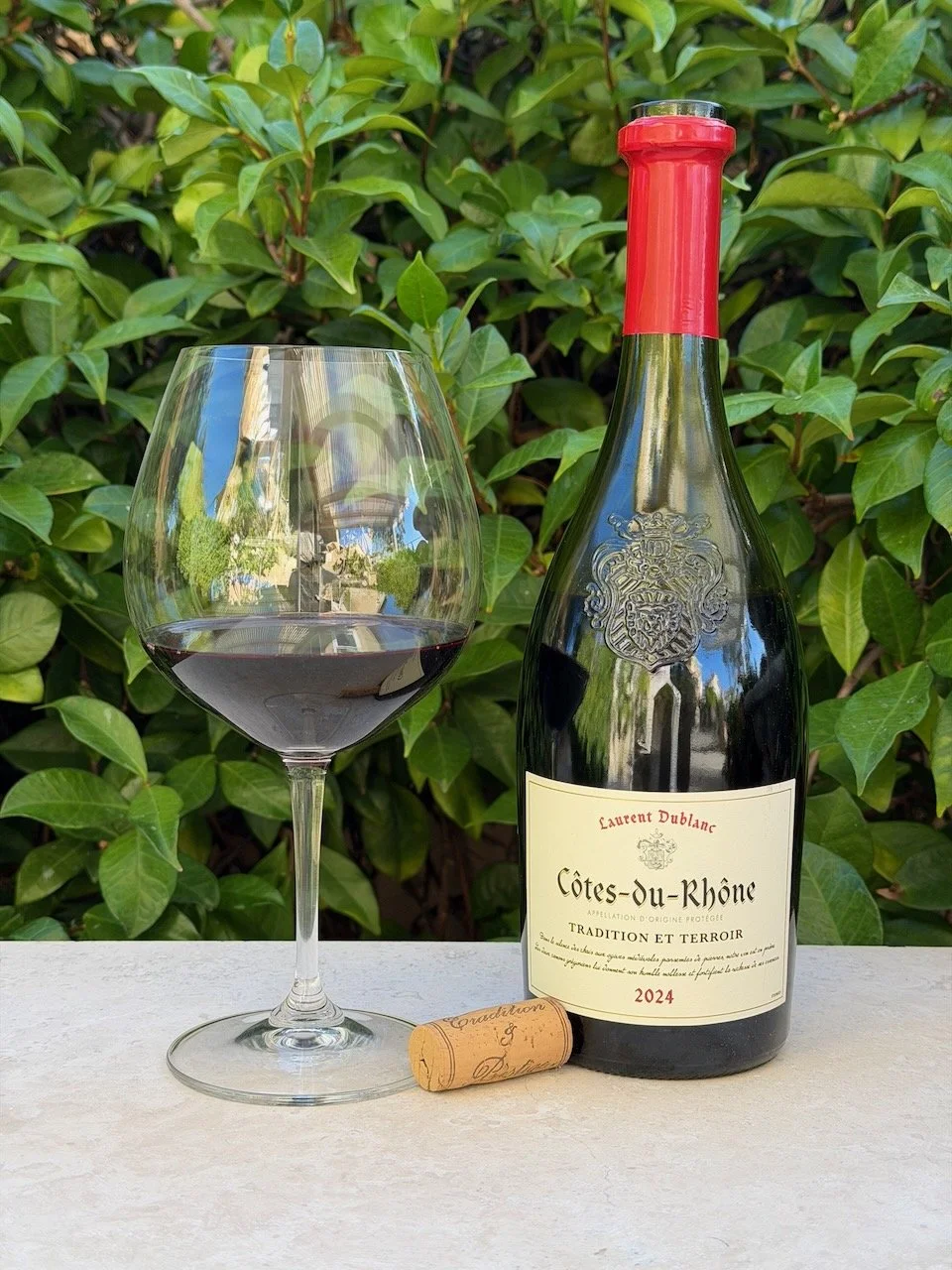
2024 Laurent Dublanc Côtes du Rhône ($7.99)

The Côtes du Rhône region is the largest AOC, accounting for two-thirds of Rhône's production.

Côtes du Rhône is a region-wide appellation for red, rosé and white wines covering the entire Rhône Valley. It includes more than 170 villages.

A small proportion of the appellation's wines are white, but the best known Cotes du Rhône wines are red blends based on Grenache, Syrah and Mourvedre (GSM blends) which produce bold and spicy flavors. 

This Laurent Dublanc Côtes du Rhône is a GSM blend that is deep purple in color with aromas of red fruit, plum with hints of herbs and just a bit of earthiness. On the palate, this wine is medium-bodied with moderate tannin, medium acidity with nice flavors of cherry, raspberry and stewed strawberries. It finishes soft with a bit of spiciness.

Laurent Dublanc Côtes du Rhône is a nice and easy-drinking wine at a great price. That makes it a great fit as this week’s Behind the Cork™ Wine of the Week. Cheers!

It's Not the Grape that Makes the Wine - It's How the Grape is Transformed

There are lots of wines being produced. Just look at the wine aisle at your local grocery story or wine shop. And then, look at how many different Chardonnay wines are offered. And how many Cabernet Sauvignons there are. And so on.

But, these wines are all different. Some Chardonnay’s are subtly different and others are hugely different. Same goes for the Cabernet Sauvignons. So, why are the Chardonnay’s different and why are the Cabernet Sauvignon’s different. It’s not always the grape, but instead how the wine maker uses the grape.

Here are just some of the factors that wine makers use that affect the final taste of the wine:

  • Whether the grapes were removed from the stems for fermentation or fermented as whole clusters

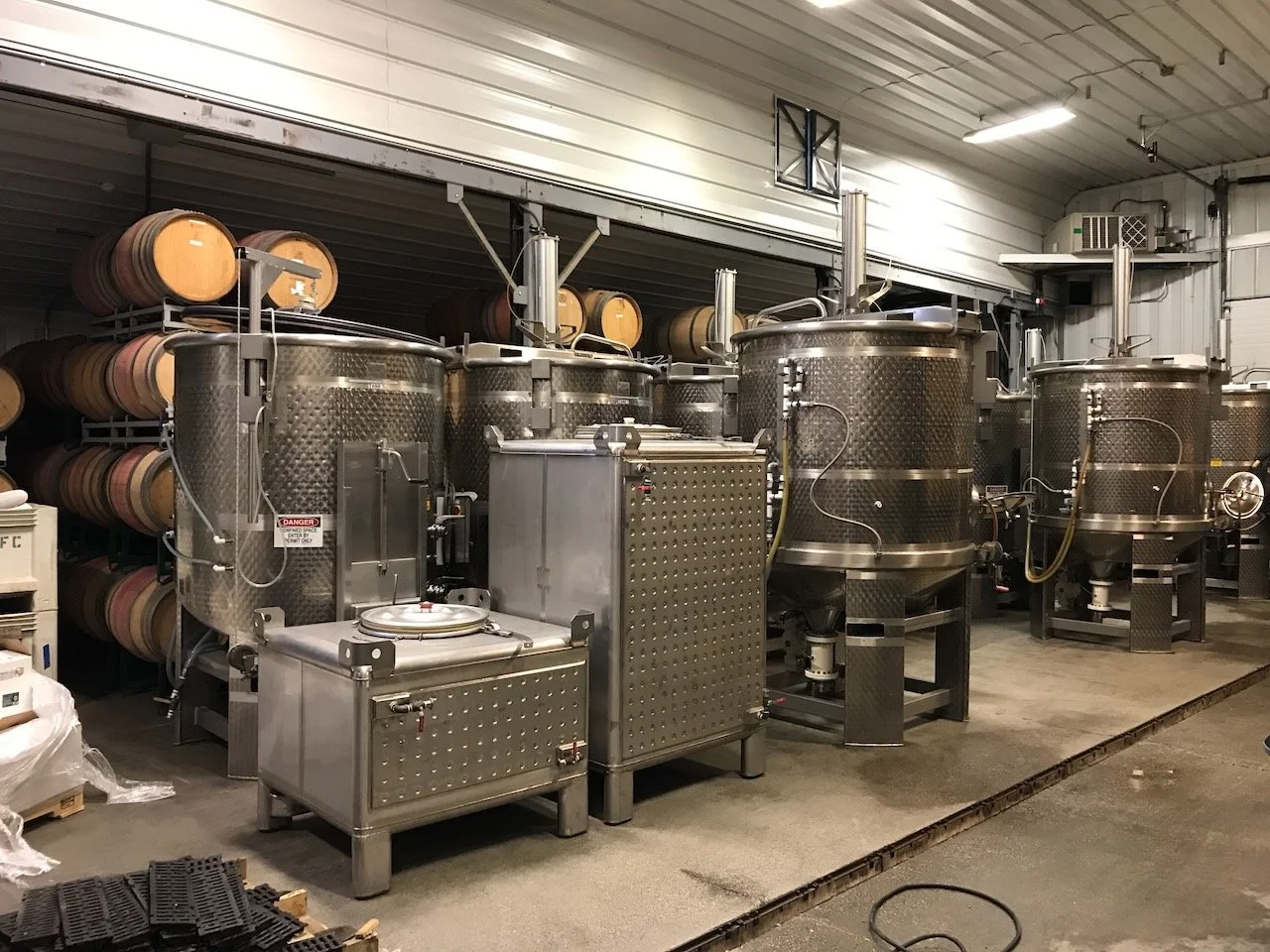
  • The fermentation vessel used - stainless steel tanks or oak barrels

  • The length of time the grapes soak (aka macerate) in their own juice

  • The length of the fermentation process and the temperature of fermentation

  • Whether the fermented wine undergoes Malolactic Conversion or not

  • How long the wine stays in contact with the dead yeast cells (aka resting on lees)

  • How long the wine is aged

  • The vessel used for aging (stainless steel versus oak)

  • The type of oak used in aging (French oak, American oak, Hungarian oak)

  • The filtering or ‘fining’ process used

  • The amount of time the wine spends in the bottle before being shipped for sale

Again, this is just an abbreviated list of variables in the wine making process. But it certainly illustrates the reasons that no two makers of a varietal wine end up with the same result. Cheers!