Behind the Cork™ - 9diDANTE Vermouth di Torino Superiore IGP

9diDANTE (“Nove di Dante” or Nine di Dante) vermouths are made at the historic Dr. M. Montanaro Distillery, just five miles from the town of Barolo, the heart of Piedmontese winemaking in Italy. They are a craft operation with just seven full-time employees working in the region’s oldest grappa di Barolo distillery dating from 1885.

In its name, “Dante” refers to Dante Alighieri, author of La Divina Comedia (1320), a revolutionary work in its day.

Vermouth di Torino Superiore IGP guarantees that a minimum 50% of base wine comes from Piedmont, and stipulates a minimum alcohol content of 17% alcohol. At 9diDANTE, 100% of the base wine and at least a third of the herbs (including wormwood) are sourced from the surrounding DOC vineyards and hillsides at their home in Alba.

Their production is done in six steps: (1) Acquire the wine, (2) add spirit, (3) add selected herbs and spices individually macerated in alcohol, (4) let the vermouth rest for one and two months, (5) filter and (6) bottle.

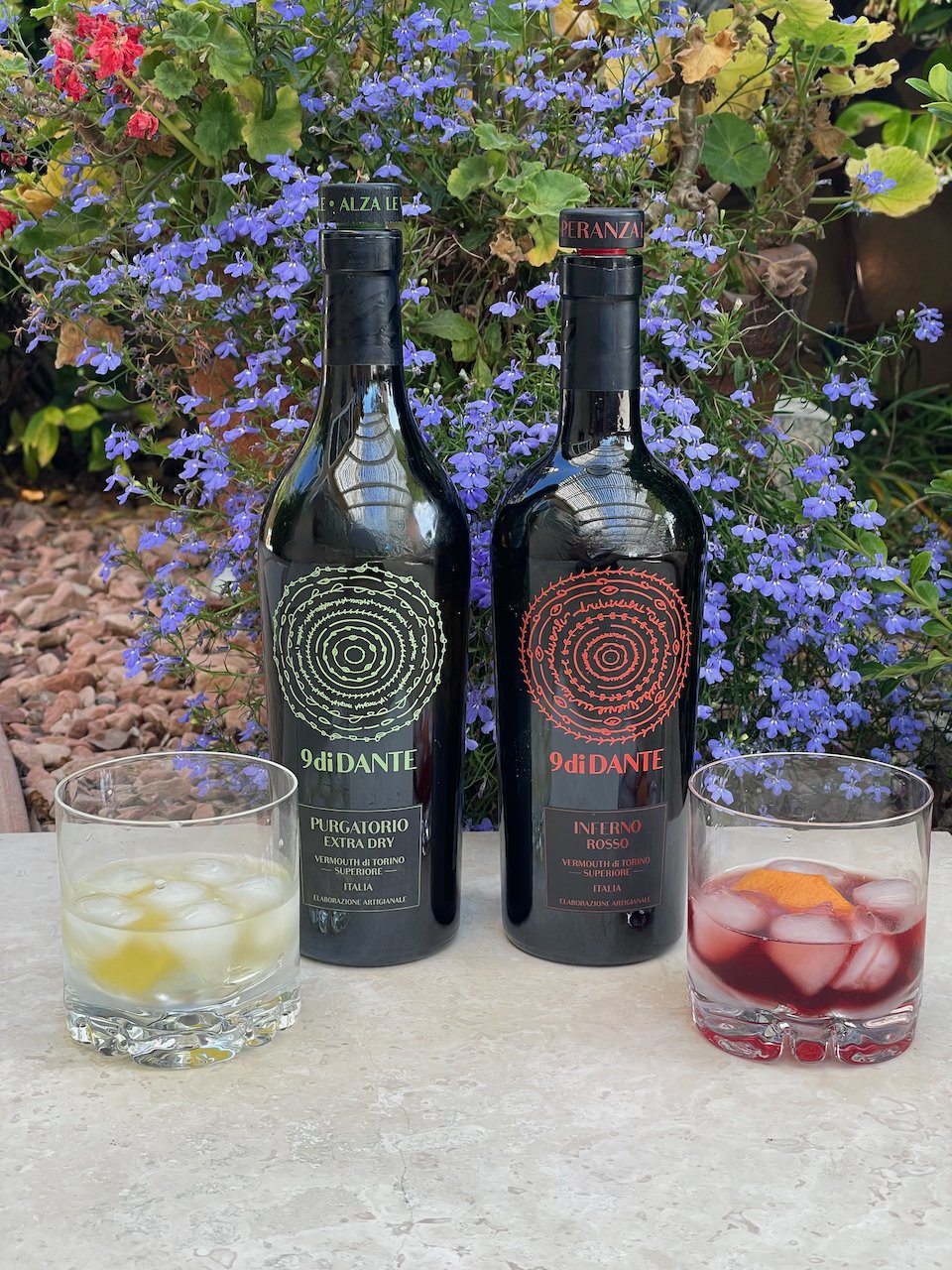
Served over ice with a twist of Orange peel

9diDANTE Inferno Rosso Vermouth di Torino Superiore IGP ($32)

This Vermouth is produced from a 50/50 blend of Piedmont DOC Dolcetto (Dol-CHET-oh), a red wine grape, for structure and color, and Cortese (kort-tay-zay), a white wine grape, for a lively acidity. It has a 75% wine base.

This naturally red vermouth exhibits the sour cherry notes from Dolcetto, followed by notes of orange zest, forest fruits and cardamom.

INFERNO is bright ruby in color. On the nose it has notes of cherry from the Dolcetto followed by aromas of orange zest, vanilla and fruits of the forest. On the palate is has distinct cherry notes along with cardamom and basil, some sweetness and finishes with a slight tartness.

Served over ice with a twist of Lemon peel

9diDANTE Purgatorio Extra Dry Vermouth di Torino Superiore IGP ($35)

This Vermouth is produced from 100% Piedmont DOC Arneis (ar-NAYZ), a white wine grape. It has a 84% wine base.

Pergatorio is pale yellow in color. On the nose it has very faint floral notes. On the palate is has characteristic pear and apricot notes of Arneis wines, citrus and herbal notes, with touches of sage, mint and thyme with a refreshing finish.

9diDANTE was developed to drink “da solo,” that is to say straight. Enjoy it lightly chilled, served neat or on the rocks with a twist of orange or lemon, as an aperitivo. It can also be used in a myriad of cocktails. Or, simply check out the 9diDANTE Cocktail Guide on their website.

These craft Vermouths are delicious and very affordably priced. That makes them a great fit as this week’s Behind the Cork™ Wines of the Week. Cheers!


Disclosure of Wine Sample Submission: I received these samples at no cost for review. The opinions expressed are entirely my own.

Media Samples Provided by 9diDante

Some Fun Facts About Vermouth

Here are a few fun facts about Vermouth:

  • Vermouth’s history dates back to ancient civilizations. Its origins have been traced to ancient China, where it was initially used for medicinal purposes. It then gained popularity in Europe, particularly in Italy and France, during the Middle Ages.

  • The name "vermouth" is derived from the German word "wermut," which means wormwood. Wormwood is a key ingredient in vermouth and is known for its bitter flavor. It was historically believed to have medicinal properties and was used to treat various ailments.

  • Production

1.     The first step in vermouth production is selecting a base wine. This wine serves as the foundation for the vermouth and can vary in style and grape variety depending on the desired flavor profile.

2.     The base wine is typically fortified by adding a neutral grape spirit, usually brandy. This step increases the alcohol content of the wine and helps preserve the flavors.

3.     After fortification, the base wine is infused with a mixture of botanicals, herbs, and spices. Common botanicals used in vermouth production include wormwood, gentian, citrus peel, chamomile, cinnamon, cloves, and cardamom.

  • Rosé vermouth is a relatively newer variation of traditional vermouth. It combines the aromatic flavors of vermouth with the fruity notes of rosé wine. Rosé vermouth is authentically made from red wine grapes – others are colored with a dash of caramel coloring.

  • Vermouth can be enjoyed in a variety of ways:

1.     On its own over ice with a twist of lemon or orange peel

2.     Served with a splash of soda water

3.     Used as a key component in cocktails such as the Negroni, Spritz, Martini or the Manhattan

  • Like wine, vermouth production varies by region, each with its own unique characteristics. For example, Italian vermouth tends to be sweeter and more full-bodied, while French vermouth often has a drier profile with pronounced herbal notes.

  • In recent years, there has been a resurgence of interest in artisanal vermouth production. Many craft distilleries and wineries are experimenting with small-batch vermouths, often using locally sourced botanicals and innovative techniques to create distinctive flavor profiles.

Look for a couple of really nice artisanal vermouths to be featured as the next Behind the Cork™ Wines of the Week. Cheers!

Behind the Cork™ - Vermut Flores Rosé

Vermut Flores Rosé ($19)

As was noted in a previous blog, vermouth is a wine - a fortified wine. A fortified wine that is infused with a mixture of botanical products including fruits, herbs, spices and roots. After the wine is aromatized and fortified, the Vermouth may be bottled dry, or sweeteners such as sugar may be added to create the sweet style of Vermouth, like this one.

This Basta Spirit Flores Rosé vermouth is from Uruguay and is made from Tannat grapes that are pressed and left in brief contact with the skins to create a rosé which acts as the base wine for the Vermouth.

Flores is a family of vermouth based on Tannat wine. Their Rojo and Rosado varieties are produced from Tannat. Albariño wine is used for the Flores Blanco Vermouth variety.

Vermut Flores Rosé is produced from a combination of twenty-seven (yes, 27!) different botanicals that make up its formula. Among them are Wormwood, Cardamom, Gentian, Quina and Coriander.

It was included as one of the Wine Enthusiast 2022 Top 100 Spirits of the Year as well as receiving a 94-point rating!

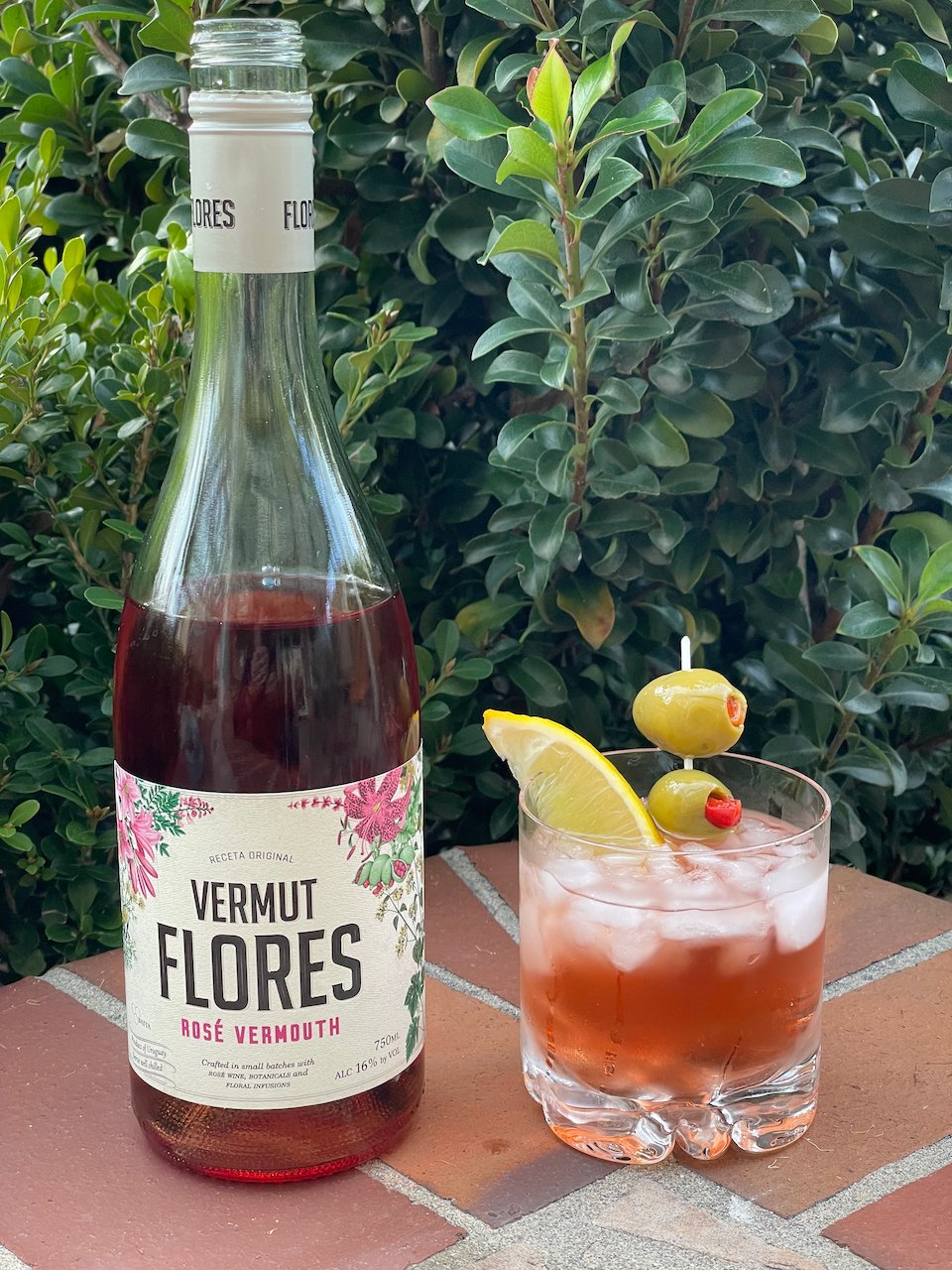
Vermut Flores Rosé is a bright and crisp vermouth. You can drink it alone, with a slice of lemon, lime, or orange, with or without olives, with or without tonic water. But, always include a good amount of ice!

Basta Spirits’ Vermut Flores is this week’s Behind the Cork™ Wine of the Week. Cheers!


Disclosure of Wine Sample Submission: I received this sample at no cost for review. The opinions expressed are entirely my own.

Media Sample Provided by Basta Spirit who Produces Vermut Flores

Did You Know that Vermouth is Actually a Fortified Wine?

Wormwood

Photo by Simone Garritano on Unsplash

You probably know Vermouth simply as an ingredient in a cocktail such as a Martini or Manhattan. But, did you know it’s actually a wine?

Vermouth is actually a fortified wine that is flavored with various botanicals, herbs, spices, and sometimes fruits.

According to records, vermouth was first produced in the late 18th century for medicinal purposes with aromatics playing the healing role.

Wormwood (shown in the image) is credited for the original naming of Vermouth since the German word for Wormwood is “Wermut.”

The process of making vermouth involves the following steps:

  • Base Wine Selection: Vermouth begins with a base wine, which is usually a neutral white wine but it can also use rosé from red-wine grapes.

  • Fortification: The base wine is then fortified with a neutral grape spirit or brandy to increase its alcohol content. This fortification helps preserve the wine and creates a stable base for the addition of botanicals.

  • Botanical Infusion: The fortified wine is then infused with a blend of botanicals, which can include herbs, roots, barks, flowers, and spices. Common botanicals used in vermouth production include wormwood, gentian, chamomile, orange peel, cinnamon, cloves, and cardamom. The specific botanical blend used varies depending on the individual producer and their desired flavor profile of the vermouth.

  • Maceration: The botanicals are typically macerated, or steeped, in the fortified wine for a period of time to extract their flavors. This process can last from a few hours to several weeks, depending on the desired intensity of flavor.

  • Filtration and Blending: After the maceration period is complete, the infused wine is filtered to remove any solid particles and then blended to achieve the desired flavor profile and consistency. Some vermouths even undergo oak aging to further develop their flavors.

  • Sweetening: Depending on the style of vermouth being produced, a sweetening agent such as caramelized sugar or grape must may be added to achieve the desired level of sweetness.

  • Bottling: Once the vermouth has been blended and sweetened, it is bottled.

Like wine, the production of vermouth is a careful balance of art and science, with each producer having their own unique recipe and production techniques.

Behind the Cork™ - Basta Spirit Vermut Flores Rosé

Basta Spirit Vermut Flores Rosé ($16)

In a little bit of a ‘twist’ this week’s Behind the Cork™ Wine of the Week is a vermouth, from Uruguay.

As was noted in a previous blog, vermouth is actually a wine - a fortified wine. And, it’s infused with a mixture of botanical products including fruits, herbs, spices and roots. After the wine is aromatized and fortified, the Vermouth may be bottled dry, or sweeteners such as sugar may be added to create the sweet style of Vermouth, like this one.

This Basta Spirit Flores Rosé vermouth is from Uruguay and is made from Tannat grapes that are pressed and left in brief contact with the skins to create a rosé. It’s 27 different botanicals include roots, barks, herbs, fruit and flowers such as rose, hops, chamomile and elder-flower.

It is sweet to the taste and makes for a refreshing cocktail when served over ice with tonic water, a slice of lemon and olives (as shown) or as a spritz with sparkling wine and a slice of orange. One way or another, this Basta Spirit Flores Rosé makes for a delightfully refreshing drink. Cheers!


Disclosure of Wine Sample Submission: I received this sample at no cost for review. The opinions expressed are entirely my own.

Sample Provided by Basta Spirit via Creative Palate Communications